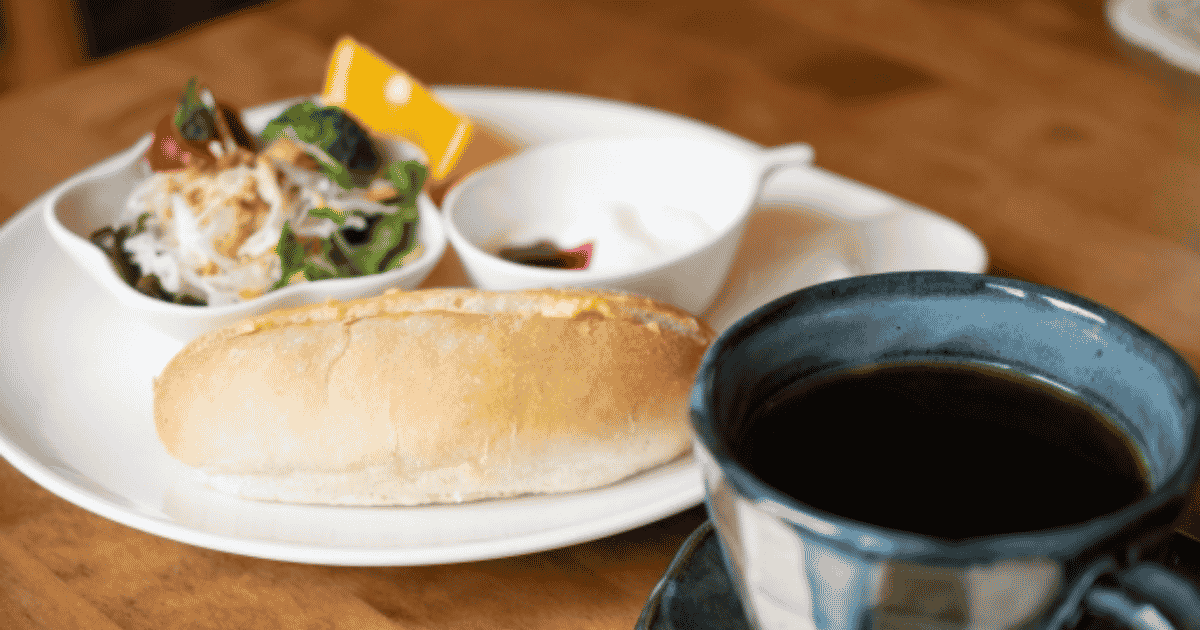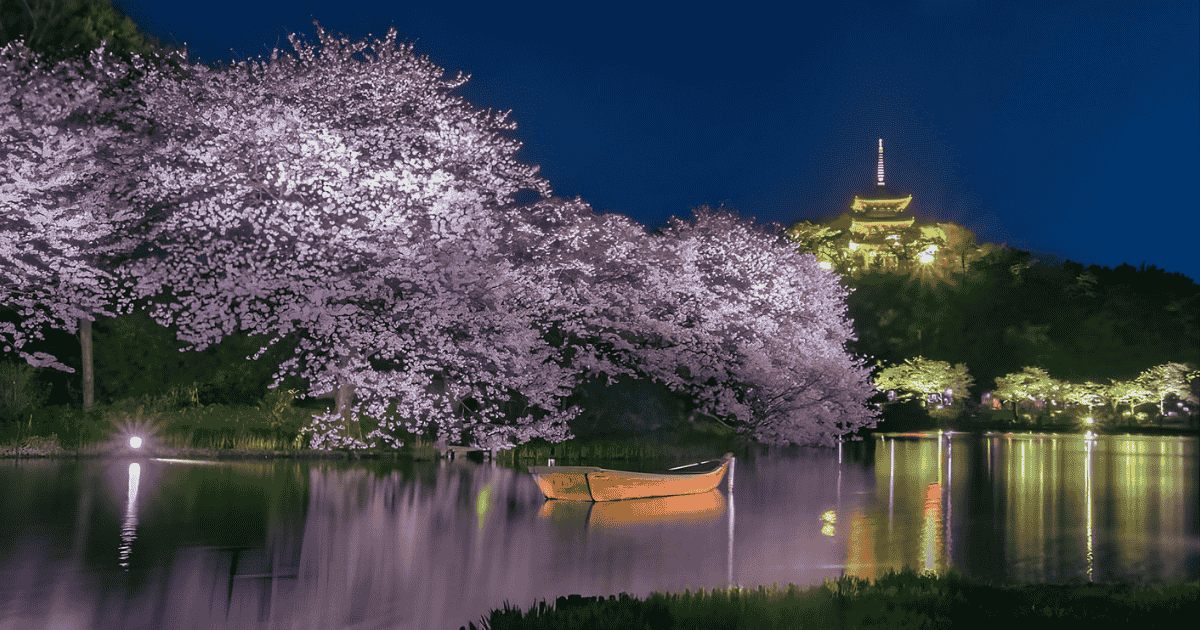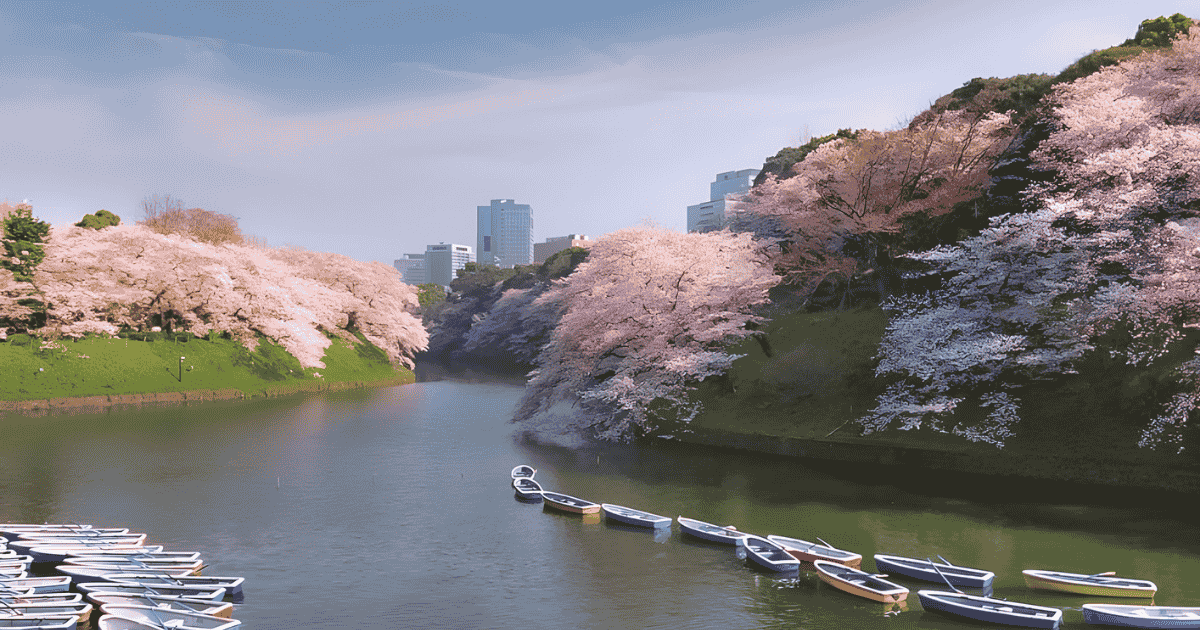
Order a bowl of miso soup in Sapporo, then try the same dish a week later in Kyoto, and you might wonder if they are even the same dish. Japan looks like one country on a map, but it rarely behaves like one on a plate, in a festival, or even in the words people use for “thank you.”
Travel far enough within this one country, and the food changes, the dialect changes, even the shape of a festival float changes — sometimes within fifty kilometers.
Most English-language explanations of why that happens don’t hold up well, though.
A lot of them repeat the same handful of myths: that a “divine wind” saved Japan from the Mongols, that samurai and ninja were basically the same thing, that Okinawa and Hokkaido are just watered-down, “less Japanese” versions of the mainland.
None of that is quite right. So before we get to the real reasons Japan tastes and feels so different from region to region, let’s clear up what actually happened — using Japan’s own national archives, geneticists, archaeologists, and government cultural agencies as sources, rather than unverified online trivia.
Table of Contents
ToggleOne Nation, Infinite Local Cultures
A Country Bigger Than It Looks
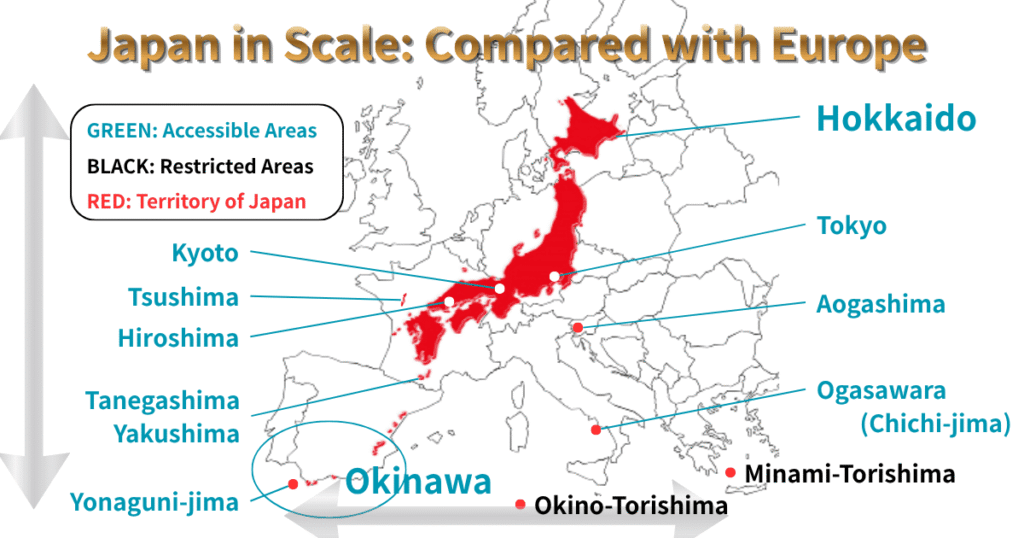
Look at a map of Japan. One fact jumps out right away: this country stretches almost 3,000 kilometers, both north-to-south and east-to-west. North to south, that’s about the same as the distance from northern Scandinavia to the Mediterranean Sea. East to west, that’s about the same as the distance from Spain and Portugal to Greece.
Note: These distances reflect Japan’s full geographic extent, including its exclusive economic zone. The main island chain that most travelers visit spans a shorter distance of around 2,500 kilometers.
One Nation, Every Landscape
And yet, in spring the whole country turns pink with cherry blossoms. In autumn, it turns bright with colorful leaves. In winter, the mountains in the center of the country, and the land stretching north from them, get some of the heaviest snow on Earth.
Japan consists of over 14,000 islands, with nearly 70 percent of its land covered by mountains. In the south, there are islands with coral reefs and blue water. In the north, wide open plains appear.
So Japan is not one landscape. It is dozens of landscapes, stacked on top of each other, separated by ridges and valleys. For most of history, people could not cross these easily.
Fifty Kilometers, A Different Japan
This one fact about the land explains something visitors notice within a few days of arriving: how different one part of Japan can feel from the next. The food changes. The way people talk changes. Even the shape of a festival float can change within just 50 kilometers.
Why History Matters for Modern Travelers
This is not a guide for learning history for its own sake. It’s the story of why Japan looks, tastes, and feels the way it does today. We wrote this so that when you stand in front of a five-story pagoda in Kyoto, or eat a bowl of ramen in Sapporo, you understand exactly what forces, built up over hundreds of years, put it there.
There’s a second reason for this blog post too. A lot of English-language content about Japanese history gets basic facts wrong: who the samurai really served, what a shogun really was, why Okinawa and Hokkaido are even part of Japan.
We’re going to walk through the real history here, using Japan’s own national archives, language researchers, and government cultural agencies like the Agency for Cultural Affairs. Each part connects directly to something you can see, eat, or do when you visit.
We start almost 40,000 years ago, long before Japan even had a name.
The Deepest Roots: Japan Before Japan
The First Craftsmen
Long before there was a country called Japan, there were mountains, rivers, and coastlines. These natural features were already shaping how people lived.
At the very latest, the first humans reached the Japanese islands more than 43,000 years ago. About 42,000 years ago, they made what are now known as some of the oldest polished stone tools ever found in the world (dated to approximately 42,300 years ago at the Kamuri site in Hiroshima).
This early craftsmanship suggests that Japan’s passion for skilled art and precise detail may span tens of thousands of years.
About 30,000 years ago, a huge volcanic eruption near what is now Kagoshima changed the shape of the land. It split these early hunting and gathering groups into small, separate groups, cut off from each other by steep or thick terrain.
Then, about 21,500 years after that, 16,500 years ago, people in Japan made what are now known as some of the oldest pottery ever found in the world.
Over time, this pottery got cord-mark patterns pressed into it, and became what we call Jomon pottery. This marks the start of the Jomon period, one of the longest-lasting cultures on Earth. It went on for more than 10,000 years.
Ten Thousand Years of Peace
Studies of human bones from the Jomon period have found something surprising: the rate of death by violence between people was much lower than in other hunter-gatherer societies around the world at the time.
This doesn’t mean there was zero conflict. But it suggests that, for thousands of years, this society solved most of its problems without organized war.
Here’s another interesting point. Japan’s modern prefecture borders were drawn in the Meiji era. But there’s a fascinating theory that the regional and cultural boundaries they reflect actually go back tens of thousands of years, to the Paleolithic and Jomon periods.
According to research by archaeologists who worked as cultural heritage investigators for the Agency for Cultural Affairs (source: “The History of Japan’s Boundaries: How Did Regional Differences Begin?” by Kazutaka Moriaki and Toshihide Omi), the borders where stone tool and pottery styles changed back then line up remarkably closely with today’s prefecture borders, which trace back to old provincial borders.
Of course, some people argue that these ancient borders were probably more of a gradual blend than a sharp line. But it’s possible that the prefecture borders we take for granted today actually carry memories of the natural environment and human life going back to ancient times.
In short, Japan’s distinct regional identities were formed early on, shaped by physical barriers like mountain ranges that defined natural communities. That has been true since people first arrived on these islands more than 38,000 years ago, all through the long stretch of time before a single word of Japanese history was ever written down.
The Birth of a Nation
About 3,000 years ago, wet rice farming arrived from the Asian mainland, and the Yayoi period began. Rice farming needed teamwork, irrigation, and stored food surpluses.
A stored surplus meant something new too: inequality, and the need to defend it. For a society with little evidence of large-scale warfare, this marked a significant shift toward organized conflict.
Villages grew into fortified settlements. Fortified settlements grew into societies led by chiefs. These societies grew into regional powers, fighting over the best rice-growing land.
By the third century CE, a group of allied communities centered on the Nara basin — known to history as the Yamato state — began pulling these scattered communities together into something like one shared culture. In time, its rulers claimed to be descendants of the sun goddess Amaterasu, and used this claim as the basis of their authority.
But — and this matters throughout this whole blog post — actually holding day-to-day political power was the exception for most of Japanese history, not the rule, for the people who held the title of emperor. The core of what an emperor was is not a “worldly political ruler” but a “religious and ceremonial authority.” This is a big difference from royal families in the rest of the world.
This imperial family line is shown, tracing back to a time before written history, in Japan’s oldest surviving book, the Kojiki, put together in 712, and the Nihon Shoki that followed it in 720. This family line has continued without a break ever since. It has become the oldest continuing hereditary royal family in the world.
Myriad Deities and the Spirit of Nature
This period is also when the spiritual bond between Japanese people and their land took shape. For people who lived off nature’s gifts, mountains were not just obstacles — they were sacred.
Rivers were not just water sources — they were seen as purifying. This nature-based worldview later became formalized as Shinto.
It’s why so many of Japan’s shrines are built at the foot of mountains, next to waterfalls, or on small islands offshore. It’s also why Japan has an estimated 80,000 Shinto shrines today: in the old worldview, every piece of land needed its own guardian spirit.
Travel tip: if you visit Izumo Taisha, one of Japan’s oldest and most important shrines, or the torii gate that rises out of the sea at Miyajima, you’re looking at something older than written history — a relationship with nature, and a pattern of many small, local spiritual centers, instead of one single one.
Kyoto: A City Built for the Seasons
A Capital Built by Design
In 794, the imperial court made a decision that would shape Japan’s cultural center for the next thousand years. It moved the capital to a new city called Heian-kyo, “the capital of peace and calm.” Today, we call it Kyoto.
Over the next four centuries, real political power slowly shifted to top advisers who supported the emperor from behind the scenes, or ruled using the emperor’s authority.
Freed from the daily business of running the country, the Heian court created something the world had rarely seen: a highly refined, non-military noble culture that turned watching the seasons change into an art form.
This is the age of Murasaki Shikibu’s “Tale of Genji,” often called the world’s first novel. It’s also the age of seasonal poetry, layered silk robes matched exactly to the month’s colors, and games of guessing incense scents.
The idea of “mono no aware” — a bittersweet feeling about the beauty in things that don’t last, especially cherry blossoms — comes directly from this time.
When tourists and locals gather under sakura trees together today, they’re taking part in a tradition of beauty that is well over a thousand years old. The poem that became the words for “Kimigayo,” Japan’s national anthem, was also written around this time, in the early Heian period, around the late ninth or early tenth century.
How an Ancient Epidemic Gave Birth to Kyoto’s Greatest Festival
This period also gave Kyoto one of its most famous festivals. In 869, a plague swept through the city. The court held a ritual procession with 66 ceremonial spears — one for each province in Japan at the time — to calm the angry spirits believed to be causing the sickness.
That ritual became the Gion Matsuri, still held every July with its tall wooden floats. It’s a direct early example of a pattern we’ll see again and again in this blog post: Japanese festivals are rooted in calming spirits and cleansing communities, not just having fun.
The Heian Women Who Shaped Classic Japanese Literature
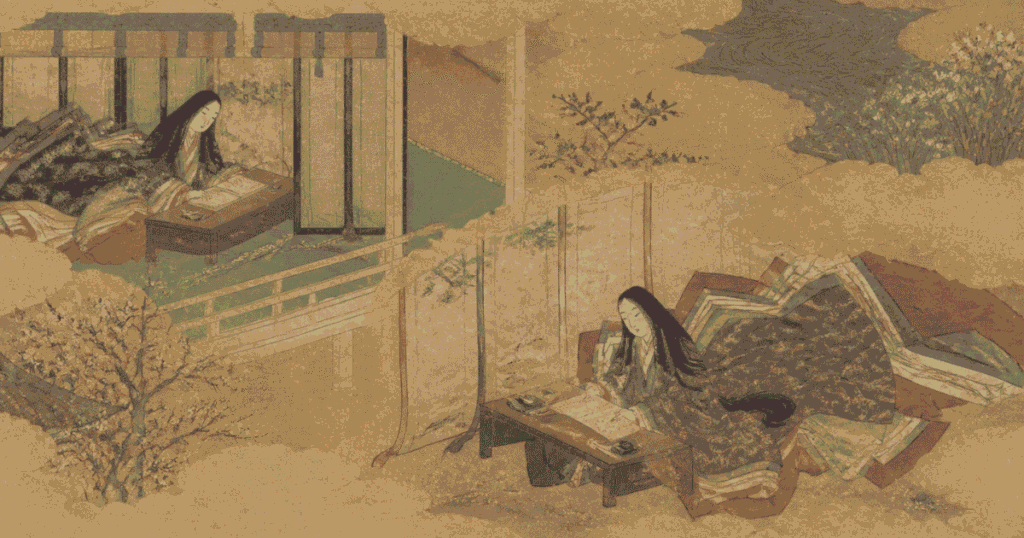
Much of what survives from this era survives thanks to women writers at court. They wrote in Japanese, not the formal Chinese used by men, using a new phonetic writing system called hiragana that had just been developed at court.
Sei Shonagon’s “Pillow Book” — a collection of sharp, witty notes about court life — and Murasaki Shikibu’s “Tale of Genji” together give us an amazing window into how that world actually felt from the inside.
These female writers captured everything from the incense a courtier chose for his robes to the exact shade of purple fashionable that season, alongside games of kemari and elaborate poetry contests.
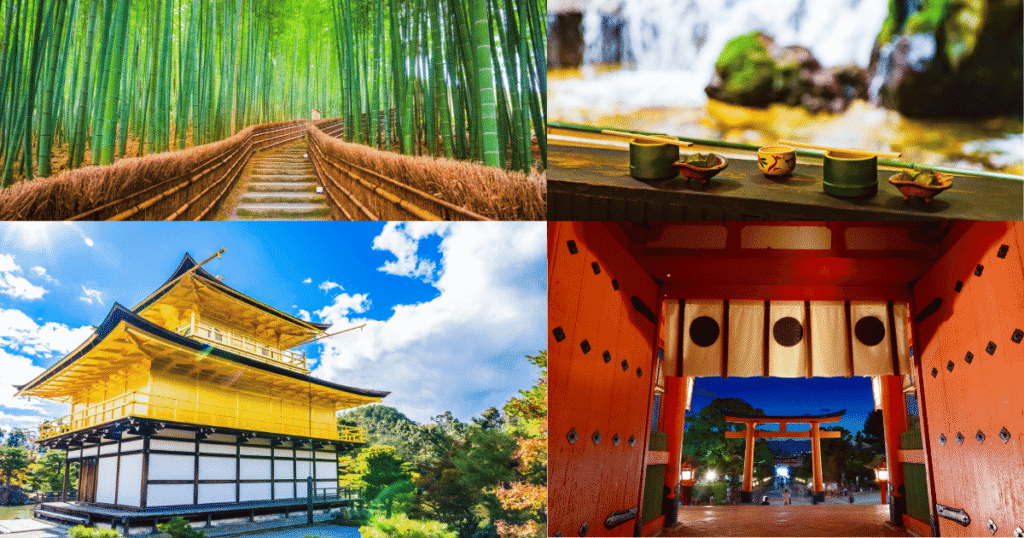
Travel tip: nearly every major shrine and temple you visit in Kyoto — from Kiyomizudera with its wooden platform, to the thousands of red gates at Fushimi Inari, to the moss gardens of Arashiyama — sits inside this thousand-year-old idea of sacred geography and seasonal beauty.
Just outside the city, Byodo-in temple in Uji, whose Phoenix Hall is pictured on the back of the 10-yen coin, was originally a Heian-era noble’s country home.
Kyoto’s UNESCO World Heritage sites were built to be viewed through the seasons, and the city rewards visitors who return in spring, summer, autumn, and winter to see it change.
Samurai, Shoguns, and the Age of Warring States
When Warriors Outgrew Their Masters
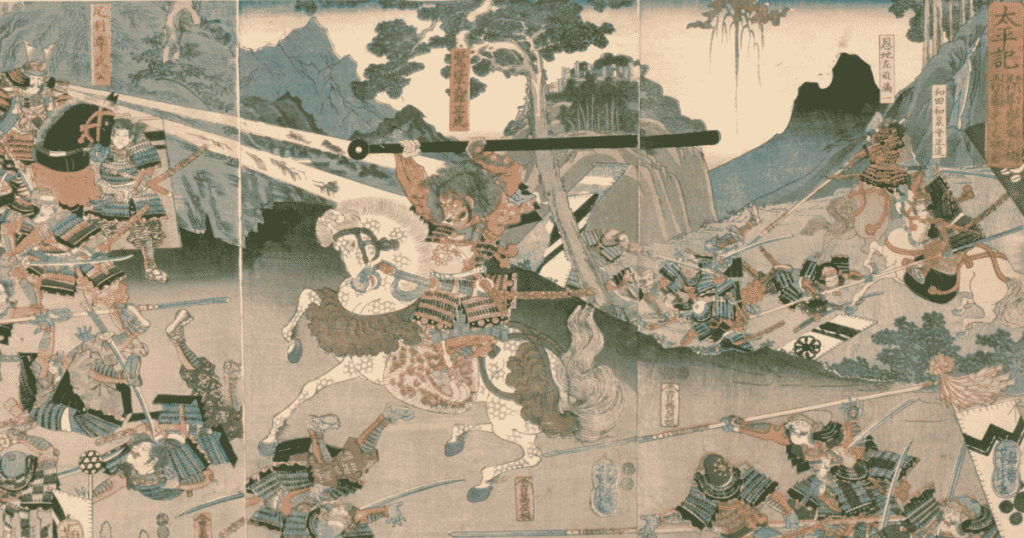
By the twelfth century, the elegant Heian court relied on private estates owned by nobles, temples, and shrines. These estates hired professional warriors, called bushi, to protect land and enforce order.
Over time, these warriors became more powerful than the nobles who hired them.
In 1185, the warrior Minamoto no Yoritomo defeated his rivals and gained the right, granted by the imperial court, to appoint military governors and tax collectors. Most historians and textbooks today treat this as the true start of Japan’s first samurai government, the Kamakura shogunate.
Yoritomo was later given the title of “shogun,” meaning “great general,” from the emperor in 1192. But 1192 was really just the year he received the title. Yoritomo ruled before that point with real military and political power himself, and built his new center of power in the coastal town of Kamakura.
This is a difference worth remembering, because a lot of English sources get it wrong: Japan’s emperor stayed the symbolic and religious head of the country, while the shogun held the actual political power. These two systems existed side by side, and neither fully replaced the other.
Debunking the Divine Wind Myth of the Mongol Invasions
Across a huge stretch of Eurasia, from Europe to East Asia, the Mongol Empire was taking over. Japan felt this too.
In 1274, and again in 1281, the Kamakura shogunate faced two full Mongol invasion fleets, and turned both of them back.
A popular legend later credited this to the “kamikaze,” or “divine wind” — storms that scattered the invading ships. That story shaped Japanese ideas about divine protection for centuries afterward.
But the historical record tells a more down-to-earth story. Samurai built forts and fought hard at Hakata Bay, holding the invaders off the beaches — in the second invasion, for almost two months.
Most historians now agree that this defense was the deciding factor, and that the storms which came later were a real, but secondary, blow to an army that was already tired and stuck in place.
The “divine wind” legend was later spread by temples and shrines hoping for rewards from the shogunate. Centuries after that, it was brought back as wartime propaganda. The more accurate story is a story about the samurai themselves.
Zen, Tea, and the Warrior’s Code
Rule by warriors passed from the Kamakura shogunate to the Muromachi shogunate. It was during this period that samurai culture fully took shape: codes of loyalty and honor, the tea ceremony, ink painting, rock gardens, and Noh theater, all things that still shape Japan’s image abroad. The Golden Pavilion and Silver Pavilion in Kyoto — Kinkaku-ji and Ginkaku-ji — both date from this time.
It’s also worth clearing up a common mistake here: samurai and ninja are not the same tradition. Samurai were warrior nobles bound by formal rules of service. Historical ninjas were pragmatic scouts and intelligence agents, far removed from the pop-culture myth of shadowy, magic-using assassins created much later.
The War That Planted a Thousand Local Cultures
After this, the power of the Muromachi shogunate almost completely broke down, and Japan entered an age when local lords, called daimyo, fought over land for more than a hundred years.
These competing daimyo each built castle towns as centers for government, defense, and, more and more, local industry.
This is the direct ancestor of the regional differences you’ll taste and see today.
A daimyo who controlled a good harbor built up a fishing and shipping economy. A daimyo who controlled mountain passes built up forestry, mining, or special crafts.
The Warring States era laid the groundwork for Japan’s regional diversity long before the Edo period turned those local identities into official domain policy.
Travel tip: castles like Himeji, gleaming white and beautifully kept, or Matsumoto, with its dramatic black walls, are not just pretty backdrops for photos. They were command centers for these independent local economies, and the castle towns around them still carry special crafts and foods that trace back to daimyo policy from four or five hundred years ago.
The Shogun's Japan: Two Hundred Years of Peace, Two Hundred Local Cultures
The Shogun Who Built Tokyo
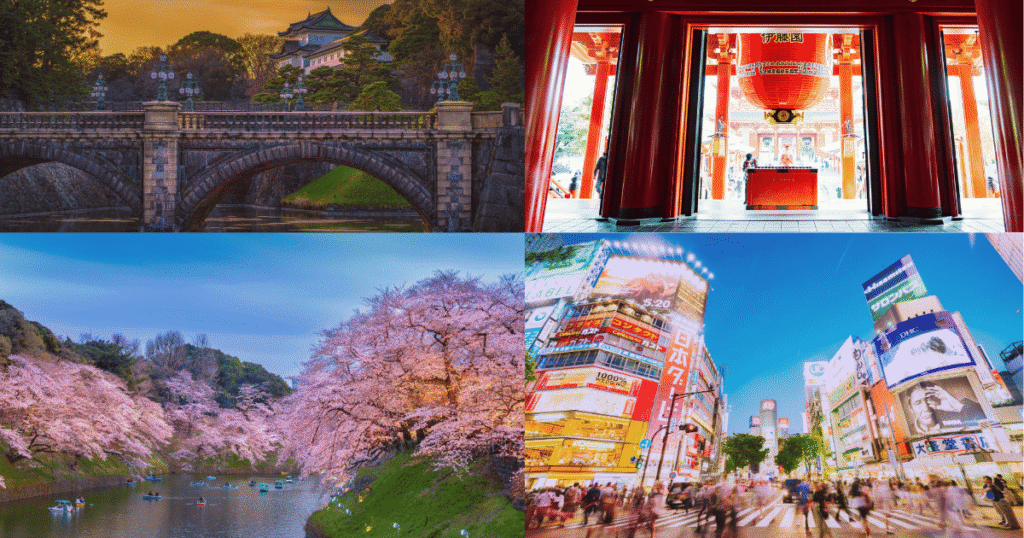
The warrior Tokugawa Ieyasu ended the fighting, received the title of “shogun” from the emperor, and in 1603, opened his shogunate in a fishing village called Edo. By the eighteenth century, this town had grown into the largest city in the world.
Today we call it Tokyo. This is the era most foreign audiences picture when they hear the word “shogun,” and for good reason: the Edo period lasted over 250 years of fairly peaceful life, and it’s when much of what feels “typically Japanese” today came together.
Tokugawa society was organized into four strict classes, in this official order of status: samurai, farmers, craftspeople, and merchants. But merchants, officially at the bottom, often became the richest people in the country as trade grew.
Osaka in particular grew into the country’s business center, earning the nickname “the nation’s kitchen” for its role as the central trading hub for rice and goods from across the whole country. Osaka still carries this merchant identity today.
270 Feudal Domains: Japan’s Local Identity
The clever system at the heart of Japan’s regional diversity was the han, or domain. Japan was split into roughly 270 domains.
Each was ruled by a daimyo who answered to the shogun, but who governed almost everything else on their own: taxes, local infrastructure, and, above all, economic policy.
Many domains competed by developing their own special local products.
For example, Kaga domain, in what’s now Ishikawa and Toyama prefectures, centered on modern Kanazawa, perfected gold leaf work and lacquerware.
Hizen domain, in what’s now Saga and Nagasaki prefectures, centered on modern Saga city, built up a pottery industry around the town of Arita.
Kyoto’s Nishijin district perfected a whole tradition of woven textiles, backed by both the imperial court and the local domain.
This is one of the clearest, most direct historical reasons why food, crafts, and customs are still so different from one prefecture to the next.
The Roads That Carried a Culture
The shogunate also required domain lords to travel to Edo regularly and keep a residence there. This created the Tokaido and Nakasendo highways, which connected Edo and Kyoto and grew and developed as a result.
This led to large-scale, regular movement of people, goods, and culture, and the post towns that grew up along these roads each developed their own special local foods to serve travelers.
A Closed Door, A Golden Age
Food culture from across Asia reached Japan along with trade. Even after the Edo shogunate closed the country almost completely to foreign trade and travel from the 1630s onward, one exception remained: tightly controlled trade with the Dutch and Chinese through the man-made island of Dejima, in Nagasaki harbor.
With outside influence limited for more than two centuries, Japan’s existing arts, food, and local customs had the calm and stability to grow deeper and mature into the forms we recognize today, without being interrupted by outside change.
At the same time, foreign elements that had already arrived were adapted to suit Japanese taste, sometimes transforming into something completely different:
A Portuguese sweet bread called “pão de Castela” (bread from Castile) evolved into Japan’s own fluffy sponge cake, kasutera.
A Portuguese word for a frying coating became the origin of the name for tempura, now one of Japan’s most famous dishes worldwide.
This was also the age of ukiyo-e woodblock prints and kabuki theater. These popular art forms flourished because Edo’s merchant class had money, free time, and a closed domestic market to spend it on.
Edo itself, built mostly of wood, was packed with a population that soon topped one million people. Crowds filled its streets, and fast, cheap street food you could eat standing up — hand-pressed sushi, buckwheat soba noodles, and grilled eel on a skewer — laid the foundation for what the world now calls “Tokyo-style” food.
Travel tip: when you walk through preserved post towns like Magome or Tsumago on the old Tokaido or Nakasendo roads, or try a local specialty food while traveling, or admire lacquerware in Kanazawa, you’re experiencing the direct legacy of shogunate policy from three or four hundred years ago.
One Country, A Thousand Flavors
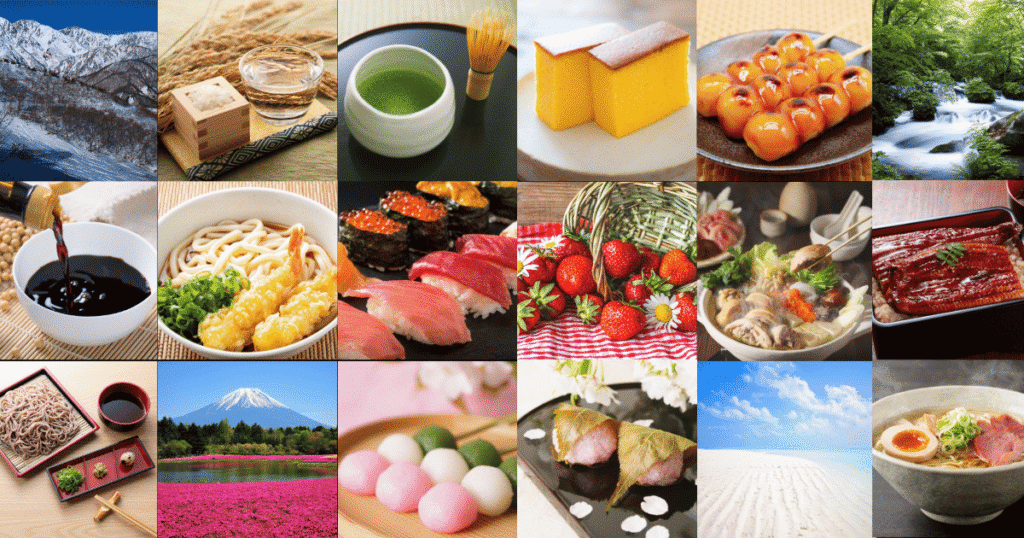
Here’s something that surprises travelers more than almost anything else: even though you’re traveling within the same country, Japan, the food culture and seasoning are barely the same from one region to the next.
This section explains why. It comes down to two forces you’ve already met in this blog post, working together: geography, and the 270-year domain system.
You Are What Your Mountains Grow
Japan covers a huge range of latitude and climate, so the raw ingredients available in each area are simply different.
In cold northern regions like Hokkaido and Tohoku, harsh winters pushed people toward preservation methods like fermenting, salting, and smoking. This gave us foods like:
Akita’s kiritanpo hot pot, made from grilled, pounded rice on cedar skewers
Hokkaido’s rich dairy and seafood tradition, built around cold-water fish, scallops, and crab
Along almost every coastline, fresh fish and shellfish naturally shape the local diet — but even that isn’t the same everywhere. The Sea of Japan side and the Pacific side have completely different ocean currents, so different things get caught.
In the mountains, where fresh fish was harder to get, people relied on:
Sansai (wild mountain vegetables)
Freshwater fish
Preserved regional specialties, like Nagano’s oyaki dumplings or Yamanashi’s hoto — a thick noodle and vegetable stew born from a landlocked, mountainous domain.
When Lords Became Foodies
On top of this geography, the domain system stacks another layer. Because each domain ran its own economic policy for more than 250 years, local lords actively pushed their own special products, and that history is still on your plate today.
Kaga domain, in what’s now Ishikawa, built up a refined sweets and gold-leaf culture that still defines Kanazawa’s food scene.
Satsuma domain, in modern Kagoshima, developed its own pork- and sweet-potato-based food, through early trade with the Ryukyu Kingdom, which we’ll cover in more detail soon.
One Soy Sauce, A Thousand Recipes
Even basic seasonings found all across the country come in very different regional styles.
Soy sauce is lighter in color and saltier in the Kansai region, made this way so it doesn’t overpower a delicate kelp-based broth. In the Kanto region, it’s darker and stronger, made to stand up to a bold bonito-based broth.
Miso ranges from Kyoto’s sweet, pale white miso to the dark red, strong miso of the north.
Even sake, brewed from local rice, local water, and local yeast, has its own true sense of local character — the same rice can taste different depending on which prefecture’s water was used to brew it.
A Tale of Three Dishes
The same idea applies to whole categories of food, not just single dishes.
Hot Pot, Regional Style
Take hot pot, or nabe: Hokkaido’s ishikari nabe is built around salmon and miso, reflecting the region’s rivers and cold-water fish, while Fukuoka’s mizutaki is a delicate chicken-broth hot pot that reflects Kyushu’s chicken-farming tradition.
The Noodle Divide
Take noodles: Kagawa prefecture, on the smaller island of Shikoku, loves its chewy udon noodles so much that people call it “Udon Prefecture,” while mountainous, buckwheat-growing Nagano built its identity around soba.
Even ramen — a fairly modern dish — split into clear regional styles the moment it spread nationwide by train in the twentieth century: rich pork-bone broth in Hakata, lighter miso-based broth in Sapporo, and soy-based broth with fried garlic in Kitakata.
Each city treated the same basic Chinese-inspired noodle soup as a blank canvas for whatever local ingredients and local pride demanded.
Two Teas, One Leaf
Take tea too: the shade-grown, sweeter matcha of Uji, near Kyoto, and the sun-grown, grassier sencha of Shizuoka, come from the same tea plant, grown under two different regional traditions that go back centuries.
This is how local nature, combined with centuries of ongoing local government, created this amazing variety of food.
Travel tip: this is the single best reason to eat your way across Japan instead of staying in one city. A bowl of miso soup, a plate of sushi, even a simple grilled fish, can taste meaningfully different in Sapporo, Kanazawa, Kyoto, and Fukuoka.
Now you know exactly why: geography gave each region different ingredients, and centuries of domain rule gave each region the drive and the identity to perfect its own way of using them.
Why Japan Has 80,000 Shrines and Endless Festivals
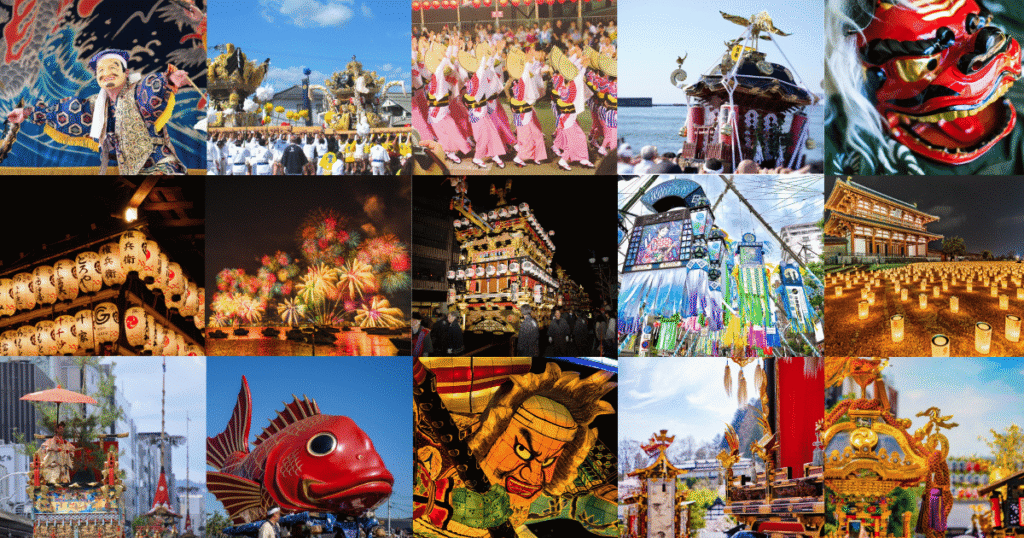
Japan is thought to host tens of thousands of local festivals, or matsuri, every year.
If you go to several in different areas, you’ll notice something interesting: they often share a similar basic structure. A portable shrine called a mikoshi, or an elaborate float called a dashi, is carried or pulled through the streets, along with drums, flutes, and chanting. Yet the exact costumes, songs, and local legends are completely different from town to town.
The reason for this pattern goes back to Shinto belief, and to the same era of plague-calming rituals that gave us Kyoto’s Gion Matsuri. Many matsuri exist to honor a local guardian spirit, ask for a good harvest or a good fishing season, or cleanse the community of bad luck.
Supported by that same network of 80,000 Shinto shrines across Japan, almost every village, town, and city neighborhood once had its own shrine and its own guardian spirit. On top of that, local rulers actively supported these shrines and local identity as a matter of civic pride.
So even though the basic religious structure stayed the same nationwide, festival culture didn’t become all the same — it actually grew stronger and more local.
That’s why you get so many completely different styles of festival across Japan:
The huge, glowing warrior lantern floats of Aomori’s Nebuta Matsuri
The wild dancing of Tokushima’s Awa Odori
The fast, rough cart-pulling of Osaka’s Danjiri Matsuri
Travel tip: If you can, plan part of your trip around a local matsuri, not just the famous national ones. The smaller, very local festivals — often just a neighborhood shrine, a handful of drummers, and a mikoshi carried by local residents you could talk to afterward — are where you’ll see this mix of ancient religious structure and strong local pride most clearly.
One Ancient Ancestry, Three Regional Paths
Shared Jomon Roots, Different Historical Mixtures
During the Jomon period, Jomon people and Jomon culture spread across almost the whole Japanese island chain, from Hokkaido in the north to Okinawa in the south.
This shared ancestry is the deepest layer under everything in this section.
Here’s an interesting piece of data: According to research presentation materials by Prof. Naruya Saito (in Japanese) at a meeting hosted by the National Institute for Japanese Language and Linguistics, the Ainu people of Hokkaido, the Ryukyuan people of Okinawa, and the Yamato Japanese of Honshu, Shikoku, and Kyushu all carry Jomon DNA.
About 66 percent for the Ainu, and about 27 percent for the Ryukyuan people, based on the Funadomari Jomon genome. Estimates for the Yamato Japanese based on the same genome are around 13 percent, though separate studies using other Jomon genomes have found a range of 12 to 20 percent.
The Mainland Pattern: High Yayoi Admixture
In Honshu, Kyushu, and Shikoku, this Jomon population mixed heavily with Yayoi-period migrants who began arriving from the Asian mainland around 300 BCE.
Over time, as this culture absorbed many influences from the mainland, the people who called themselves the Yamato Japanese created their own culture, under the real authority of the Yamato imperial court centered on the emperor.
The Northern Branch: Strongest Jomon Genetic Legacy
In the north, the Jomon-descended people of Hokkaido had steady contact — and eventually intermarried — with people who moved south from Sakhalin. By around the thirteenth century, the time of the Kamakura shogunate, this mix of long-established local people and northern newcomers became a distinct people known as the Ainu.
Some Ainu communities, especially in southern Hokkaido, also kept up trade relationships with Yamato Japanese.
The Southern Branch: Island Isolation and Distinct Heritage
In the south, the Jomon-descended people of the Ryukyu Islands developed on their own, largely outside the reach of the Yamato imperial court’s real authority.
Out of that independence, the Ryukyu Kingdom was born in the fifteenth century, uniting the islands under its own king at Shuri Castle. Its people became known as the Ryukyuan people.
In 1609, though, the Satsuma domain of southern Kyushu brought the kingdom under its economic influence. Trade and cultural contact grew, but the kingdom formally continued to exist for another two and a half centuries.
A Spectrum of Cultures from a Common Origin
In 1869, the northern island was officially made part of Japan and renamed Hokkaido. In 1879, the Ryukyu Kingdom was officially ended, and its land became Okinawa Prefecture.
With that, three peoples who had followed separate paths since the Jomon era — the Ainu in the north, the Yamato Japanese on the main islands, and the Ryukyuan people in the south — were brought together for the first time in history, under one modern nation.
Travel tip: many travelers to Japan follow the “golden route” connecting Tokyo, Osaka, and Kyoto. But it’s worth planning trips that also let you enjoy the culture of Hokkaido and Okinawa, both of which are very different from Yamato culture.
In Hokkaido, Ainu cultural centers and craftwork connect you to a heritage tied to the deepest layer of Japanese ancestry, shaped by its own northern character.
In Okinawa, the language, food, and music of the former Ryukyu Kingdom reflect a culture that grew from the same Jomon roots as the rest of Japan, but was polished over centuries of its own independent, wide-reaching trade.
Building Modern Japan
In 1868, the Tokugawa shogunate fell, and a new government was formed under the young Meiji emperor.
Ito Hirobumi, who led the drafting of the 1889 Meiji Constitution, is recorded as having pushed back during discussions at the Privy Council, when an adviser argued that the constitution should not define the emperor’s powers at all.
Ito’s reply was, in essence, that the whole point of making a constitution was, first, to limit the sovereign’s power, and second, to protect the rights of the people. In other words, this constitution wasn’t built to make the emperor’s power unlimited — it was built to limit that power through a set of rules, and to protect the rights of the people.
On paper, the emperor was named the nation’s sovereign, but in practice, day-to-day political decisions were made, and the responsibility for them was carried, by ministers of state.
Here too, Japan carried forward a pattern that repeats throughout its history: the emperor as the nation’s center of authority, more than as the hands-on holder of political power.
Japan entered a new age with one overriding goal: modernize as fast as possible, to avoid the colonization happening elsewhere in Asia at the time. Over the following decade, the 270 domains across the country were abolished, and Hokkaido and Okinawa were also officially brought into the nation.
For the first time in history, this meant that the Ainu of the north, the Yamato Japanese of the main islands, and the Ryukyuan people of the south all existed together within one unified modern nation.
Even so, regional food, crafts, and local dialects didn’t disappear. They have stayed remarkably intact right up to today.
These many different cultures were connected by a railway network that was built quickly and spread across the whole country during Japan’s modernization.
Travel tip: modern train travel, especially the shinkansen network, is not just a convenient way to get around. It’s the same nineteenth-century idea — connecting once-isolated regional cultures — now running at 280 kilometers an hour. Riding it between cities is, in a very real sense, retracing the history you just learned.
Four Seasons, A Thousand Colors
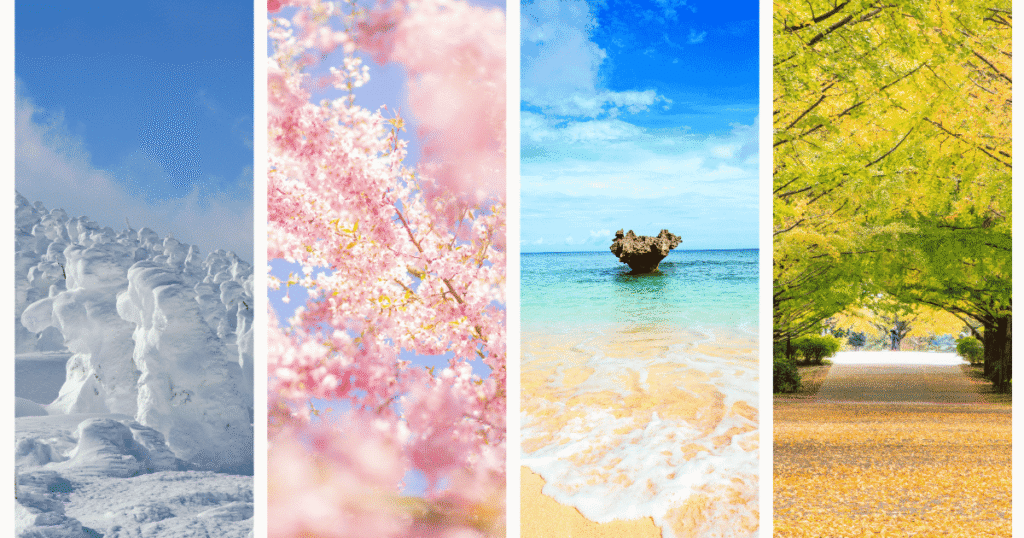
Everything you’ve learned so far explains why Japan is so different from place to place.
This final section is about when and how to actually experience that difference, because Japan’s geography — stretched across a huge range of latitude and longitude, with mountains covering 70 percent of the land, and coastlines touching two very different seas — makes it one of the most dramatic countries on Earth when it comes to seasonal change.
Japan’s geography isn’t just long from north to south. Its width from east to west matters just as much, and that width creates its own drama too.
At the exact same latitude, a mountain range running down the middle of the country means the Sea of Japan side and the Pacific side can feel like completely different countries in winter — one buried in some of the heaviest snowfall recorded anywhere on the planet, the other clear and dry on the very same day.
The Four Seasons
Chasing the Cherry Blossom Front: Spring in Japan
Let’s start with the seasons. Cherry blossoms don’t bloom across Japan all at once. Some early-blooming cherries open as early as January, but the well-known “sakura zensen,” or cherry blossom front, starts in the south in late March and moves north over about six weeks, reaching Hokkaido as late as early May.
This means you can experience the same spring more than once on a single trip, just by traveling north as the season moves.
To see exactly where the peak bloom is happening today, check out our real-time Japan cherry blossom map to plan your route along the front.
Chasing Peak Colors: Autumn Foliage Across Japan
Autumn works the opposite way. The “koyo zensen,” or autumn color front, starts in the northern mountains and Hokkaido in September and moves south for two months, ending in low-lying Kyoto and Kansai as late as early December. If you plan carefully, you can chase bright red maple leaves across the country for almost ten weeks.
Festivals and Fireworks: Summer’s Vibrant Energy
Summer brings fireworks, drumming, and yukata robes at matsuri all across the country. By now, you understand the deep history behind these festivals much better.
Between the famous cherry blossoms of spring and the maple leaves of autumn, Japan also has quieter seasonal color that a lot of visitors miss completely.
Azaleas light up hillsides and temple gardens in pink and red from April to May. Hydrangeas turn blue and purple through the rainy season in June. In August, big yellow sunflowers bloom, and from September into October, fiery red spider lilies bloom.
Snow and Hot Springs: Winter’s Mountain Magic
Winter turns mountain regions, especially the Japan Alps and Tohoku, into some of the snowiest inhabited places on Earth. It also feeds a hot-spring culture that belongs uniquely to this cold season.
Even in winter, kan-botan — peonies specially grown using special techniques to bloom in winter — delight people with their big clusters of flowers.
Japan’s Nature
The mountains themselves are not just scenery. Since the Jomon era we talked about earlier, mountains have been treated as sacred. This gave rise to shugendo, a tradition of mountain training that blends Shinto and Buddhist belief, and it still shapes pilgrimage routes like the Kumano Kodo in the Kii mountains and the three sacred peaks of Dewa Sanzan in Tohoku.
Even Mount Fuji is registered as a UNESCO World Heritage site, not just for its natural beauty, but specifically as a sacred site for pilgrimage and artistic inspiration — the very same mix of nature worship and art you learned about in the Heian and Jomon sections of this blog post. Hiking in the Japan Alps, or soaking in a mountain onsen after a day of trekking, connects you directly to this ancient spiritual bond with high places.
The Sea
The sea tells two completely different stories, depending on which coast you’re on.
The Sea of Japan side, facing the Asian mainland, gets harsh winter winds that bring heavy snow to places like Niigata and Toyama, and, every winter, some of the country’s most prized crab, landed at ports along that coast.
The Pacific side is shaped by the warm Kuroshio current, which supports different fisheries, including the tuna and bonito that helped build the darker soy sauce food culture of Edo-period Kanto, and brings a milder climate to major cities like Tokyo and Osaka.
Far to the south, Okinawa, with its coral reefs and clear water for diving, belongs to a warm, tropical ocean environment closer in character to Taiwan and the Philippines. Meanwhile, drift ice from the Sea of Okhotsk reaches the eastern coast of Hokkaido every winter, making it one of the southernmost places on the planet where you can actually walk on sea ice.
Food
Food follows this same seasonal calendar too. Matsutake mushrooms, gathered from mountain pine forests, are an autumn treat that can sell for extraordinary prices for just a few weeks each year. Fugu, or pufferfish, prepared only by specially licensed chefs, is traditionally a winter dish, believed to warm the body during the cold months.
Ayu, a small river fish grilled whole over charcoal, is very much a taste of early summer, caught fresh from clear mountain rivers right as the rainy season ends.
Plan Your Trip Around This History
For planning purposes, here’s a rough shape for a Japan trip built around the history in this blog post.
Late March into April is best for cherry blossoms in Kyoto and Tokyo, moving to Tohoku and Hokkaido in late April and early May for the same blossoms further north.
If you visit in rainy June, be sure to visit a spot known for its beautiful hydrangeas.
High summer, July and August, is festival season nationwide, and the best window for mountain hiking before autumn’s shorter days set in. It’s also a fun time to travel around chasing fireworks displays held in different regions across the country.
Late September through October rewards a trip north, to Tohoku and Hokkaido, for the first autumn color, while November into early December shifts that same experience south to Kyoto and Kansai.
Winter, from December through February, belongs to the Sea of Japan coast for hot springs, snow, and crab; to the Japan Alps and Tohoku for skiing; and to Sapporo especially, for its huge snow festival each February — while during those same winter weeks, Okinawa stays warm enough for reef diving.
Travel tip: because of this range, Japan rewards repeat visits in different seasons more than almost any other country. The same nation that shows you snow monkeys bathing in Nagano hot springs in February can show you coral reef diving in Okinawa the very same week.
The Japan You're About to Walk Into
We started this blog post with a simple fact: Japan is a long, narrow, mountainous island nation surrounded by ocean — and because of that, its exclusive economic zone ranks sixth largest on Earth.
It’s the fact that Japan stretches across a range of latitude and longitude wide enough to hold completely different climates at the exact same moment.
Everything we’ve covered since then — the isolated valleys of the Jomon period, the sacred geography of Kyoto, the rival castle towns of the samurai era, the 270 domains of the Edo period, the cultures of Okinawa and Hokkaido, the railways of modern Japan — all of it explains how that geography turned into the country you can actually visit and taste today.
The next time you eat a bowl of ramen that tastes completely different from the one you had two cities ago, or you come across a small local festival with drums and a mikoshi you’ve never heard of, you’ll realize that thousands of years of mountains, isolated valleys, competing domains, and strong local pride are still alive right in front of you.
Local ways of speaking are shifting under the pressure of a standard national language, spread by television and schools. In small towns, people openly worry about who will carry their local festival forward as the population grows older and smaller. This is exactly why so many regions now welcome curious travelers into these traditions, instead of keeping them closed off.
The Japan you’re about to visit is not a museum of its own history. It’s a living, still-changing story, playing out between 270 old domains and one modern, unified nation — and you’re about to walk right into the middle of it.
If you found this blog post useful, our next posts will dig deeper into individual regions, so you can plan a trip around exactly the history you just learned.
8 Travel Myths About Japan, Debunked
Everything above comes from Japan’s own national archives, geneticists, archaeologists, and government cultural agencies. Here’s the short version—the myths you’ll hear most often, and what the record actually shows.
Myth 1: Japan is a tiny, cramped island nation.
Japan’s main island chain stretches about 2,500 kilometers—comparable to the distance from Scandinavia to the Mediterranean. It’s larger than the UK or Germany.
Myth 2: Japan is just endless megacities or snow.
Red-crowned cranes dance through sub-zero winters in the north while coral reefs and turquoise water stretch across the south. Roughly 70% of the country is mountains.
Myth 3: Samurai and ninja were basically the same thing.
Samurai were warrior nobles bound by formal rules of service. Historical ninja were pragmatic scouts and intelligence agents—nothing like the shadowy, movie-era assassin myth.
Myth 4: A “divine wind” saved Japan from the Mongols.
Samurai held the beaches at Hakata Bay for weeks during both invasions. The storms came later, hitting an army that was already losing. The legend was spread afterward by temples hoping for rewards, then revived centuries later in wartime storytelling.
Myth 5: Okinawa and Hokkaido are just “lesser” versions of mainland Japan.
All three regions share Jomon roots, but each followed its own path—roughly 66% Jomon ancestry survives in the Ainu, 27% in Okinawans, and about 13% in mainland Japanese, based on the Funadomari Jomon genome (Prof. Naruya Saito, NINJAL).
Myth 6: The Shogun was a king who replaced the Emperor.
The Emperor remained the nation’s spiritual and ceremonial authority for over a thousand years, while the Shogun held military and civil power. Neither fully replaced the other.
Myth 7: Japanese culture developed in total isolation.
Japan absorbed influences from across Asia for centuries, then refined them—preserving architectural styles and rituals in places like Nara and Mount Koya that have vanished in their places of origin.
Myth 8: Japanese people eat sushi and tempura every day.
Local soul food—from Hakata’s tonkotsu ramen to Kagawa’s udon—is what locals actually travel for. Even basic seasonings like miso and soy sauce vary dramatically from region to region.
Want the full story, including where to see each of these in person? Watch the video:
Your 3-Route Japan Cheat Sheet
| Route 1: Classic Golden | Route 2: Samurai & Spiritual | Route 3: Beyond the Mainland | |
|---|---|---|---|
| Duration | 7–10 days | 10–14 days | 14+ days |
| Best for | First-time visitors | History and spirituality lovers | Repeat visitors and nature lovers |
| Main route | Tokyo → Kyoto → Osaka | Tokyo → Nikko → Kanazawa → Kyoto → Mount Koya | Mainland + Hokkaido or Okinawa |
| Myths covered | 6, 7 | 3, 7 | 5, 2 |
| Highlights | Tokyo's cityscape, Kyoto's imperial culture, Osaka's food culture | Nikko's Tokugawa shrines, Kanazawa's castle town, temple stay on Mount Koya, Himeji Castle | Hokkaido: Kushiro Wetlands, Lake Kussharo, red-crowned cranes / Okinawa: castle ruins of the Ryukyu Kingdom, beaches |
| What to eat | Edomae sushi, Osaka takoyaki | Kanazawa seafood, shojin ryori on Mount Koya | Sapporo miso ramen, Okinawa soba |
| Best season | Cherry blossoms (late Mar–Apr), autumn leaves (Nov) | Autumn leaves (Oct–Nov); snowy Nikko also works | Hokkaido: summer and winter / Okinawa: spring to early summer |
| Travel time guide | Tokyo–Kyoto: ~2hr 15min by bullet train | Many travel days—limit yourself to 4–5 bases | Tokyo–Sapporo: ~1.5hr by plane / Tokyo–Naha: ~3hr |
| Watch out for | Crowds and high hotel prices in blossom/autumn seasons | Many transfers; send luggage ahead by delivery service | Leave buffer time for weather delays |
| Options | Day trip to Nara | Kamakura, Aizu-Wakamatsu, Kakunodate, Hagi, Shikoku's 88 Temple Pilgrimage | Okinawa's outer islands, Shiretoko |