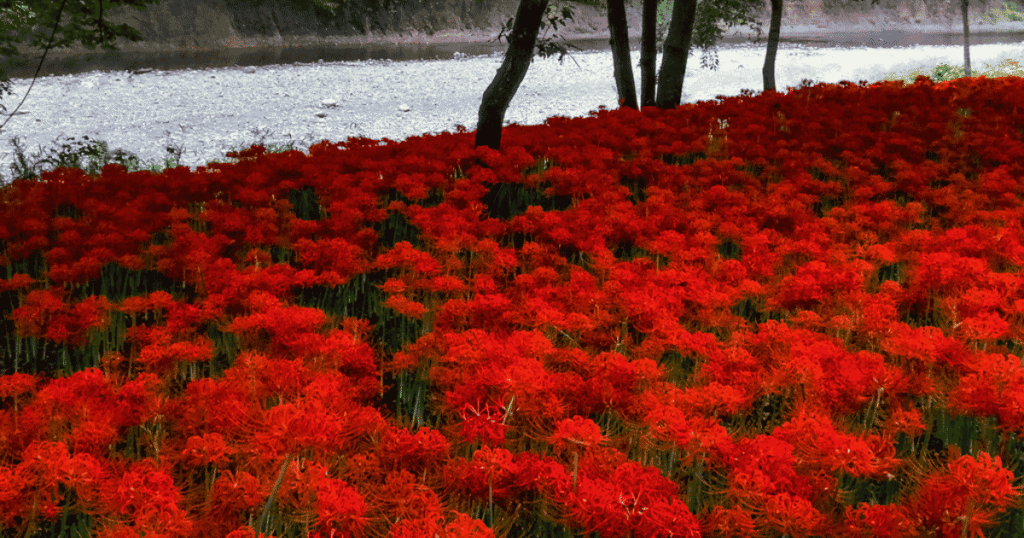
Every autumn, a quiet area in Saitama Prefecture turns into a beautiful sea of bright red. Kinchakuda Manjushage Park is famous for having Japan’s largest display of higanbana (red spider lilies). With over 5 million flowers covering the forest floor, it looks like a magical “red carpet” straight out of a fantasy movie.
Located just about an hour away from Tokyo, Kinchakuda is the perfect place for an autumn day trip. However, since these flowers only bloom for a very short time, you need to plan ahead. In this complete guide, we’ll cover everything you need to know: how to check the blooming status online, how to get there easily by train, photography rules, and tips for the local festival to make sure you have an amazing trip.
What is Kinchakuda Manjushage Park? (Hidaka, Saitama)
The Legend of the "Red Carpet": Over 5 Million Higanbana Blossoms
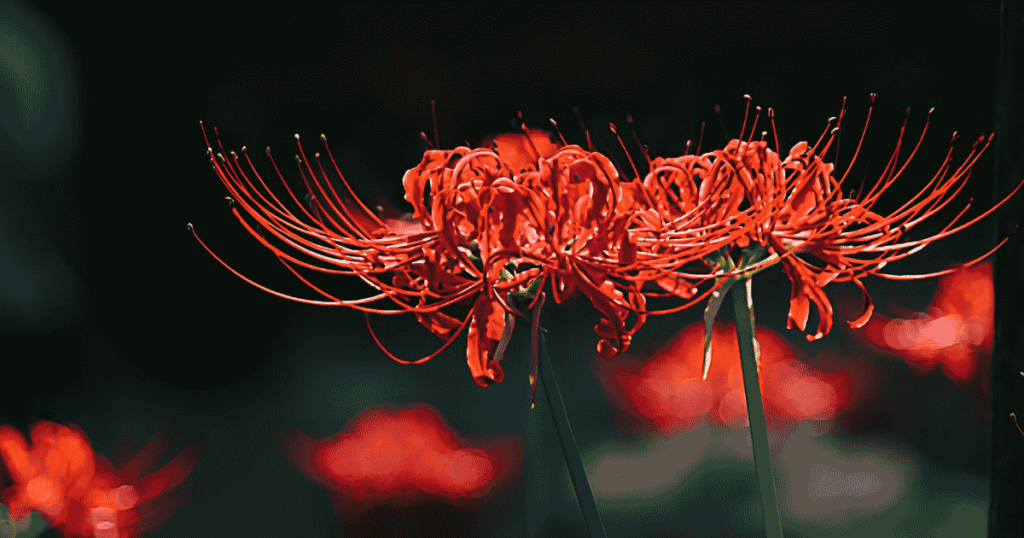
Like crimson flames—red spider lilies standing out in full glory.
The star of the show at Kinchakuda is the higanbana (彼岸花), which is commonly called the red spider lily in English. In Japanese culture and old stories, these flowers have deep meanings. People often connect them with the autumn equinox, the journey to the afterlife, and sad or loving memories.
What makes Kinchakuda so special is how close together the flowers grow. In other places, you usually see red spider lilies growing in single lines along rice fields. But at Kinchakuda, more than 5 million flowers grow tightly together under a beautiful ceiling of green trees. Walking along the forest paths feels just like walking through a bright red river.
Where is Kinchakuda Located? (Komahongo, Hidaka City)
Kinchakuda is located in the Komahongo area of Hidaka City, Saitama Prefecture. The name “Kinchakuda” literally means “drawstring purse field.” This unique name comes from the shape of the land. The clear, winding Koma River flows around the area in a nearly perfect circle, making it look just like a traditional Japanese drawstring purse (kinchaku).
When is the Best Time to Visit Kinchakuda? (Peak Season & Timing)
Autumn Magic: Mid-September to Early October
The red spider lilies at Kinchakuda usually start to bloom in the autumn. The best time to see them is from mid-September to early October. The exact peak changes every year depending on the summer heat and rain, but the most beautiful “full bloom” (mankai) usually lasts for about a week to ten days during this period.
The Kinchakuda Red Spider Lily Festival Guide
When the flowers are blooming their best, the park holds the annual Kinchakuda Manjushage Festival. During the festival, you need to pay a small admission fee (usually around 500 yen) to help take care of the park. The gates officially open at 8:00 AM and close at 5:00 PM.
💡 How to Check the Live Blooming Status Before You Go
Because the peak bloom changes every year, the most common question travelers ask on forums like Reddit is: “Are the flowers blooming right now, or am I too late?”
To make sure you don’t waste a trip, you should check the current conditions before you go.
Where to Check: The official Kinchakuda Management Office checks the flowers every day from September through October.
Useful Tip for International Travelers: The official website is only in Japanese, and there is no direct link to this live page on the main English menu. We highly recommend using your browser’s translation tool (like Google Translate or Safari Translation) to read the page. The page has clear, daily photos of the fields, so you can see exactly how they look before you hop on a train!
How to Get to Kinchakuda from Tokyo (Perfect Day Trip)
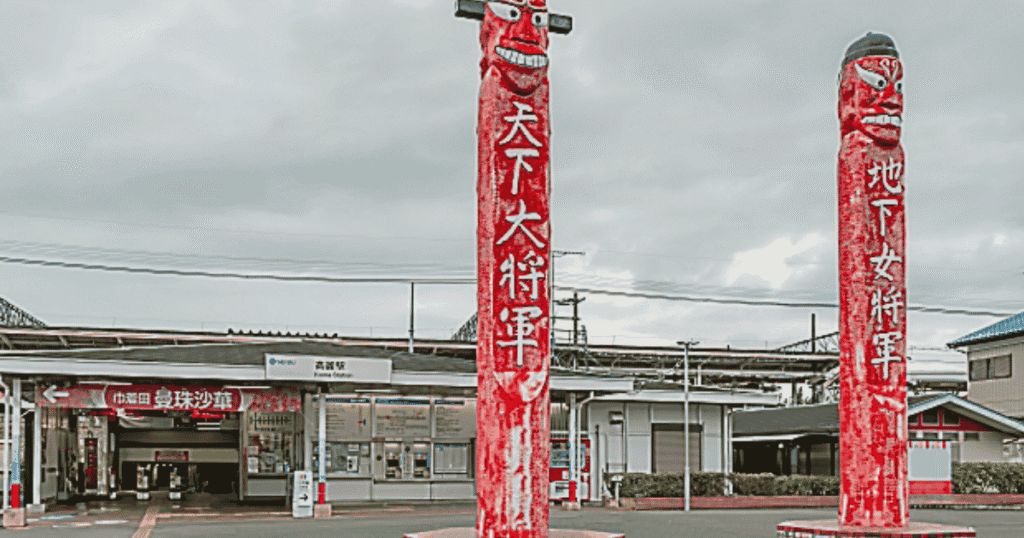
The entrance to Kinchakuda: Koma Station plaza featuring its iconic wooden Jangseung monuments.
Access by Train: Seibu Ikebukuro Line to Koma Station
Taking the train is the smartest, fastest, and most stress-free way to get to Kinchakuda from Tokyo.
First, go to Ikebukuro Station in Tokyo. From there, take the Seibu Ikebukuro Line bound for Hanno or Seibu-Chichibu. Make sure to catch a Semi-Express, Express, or Limited Express train (like the “Chichibu” or “Musashi”). Avoid the local trains, as they stop at every single station and take much longer.
You will need to change trains at Hanno Station. After that, just get off at Koma Station (Koma-eki). The whole trip takes about 60 to 75 minutes.
⚠️ Navigating Train Schedules at Koma Station
During the festival, Koma Station doesn’t get completely packed or chaotic inside, but there is one important thing you must keep in mind: trains do not come very often.
On this part of the line, trains run much less frequently than in central Tokyo. In fact, there are only one or two trains per hour. Because of this, we highly recommend checking the train timetables on Google Maps or Navitime before you leave. Make sure to give yourself plenty of extra time so you don’t have to rush or panic if you miss a train!
Walking to the Park from Koma Station
From Koma Station, Kinchakuda Manjushage Park is a nice 15-minute walk.
The Route: The path takes you along beautiful country roads with some gentle hills.
Navigation Tip: There are signs along the way to guide you, but they are mostly in Japanese. If you cannot read Japanese, it is very easy to get lost. We strongly recommend keeping Google Maps open on your smartphone during the walk so you can find your way easily from the station to the park gates.
🚗 Why You Should Avoid Access by Car at All Costs
If you are thinking about renting a car or taking a taxi, please don’t! Driving to Kinchakuda during the spider lily season is a very bad idea.
The roads leading to the park are narrow country lanes, and the local parking lots fill up fast because they are very small. During the peak weeks of the festival, hundreds of local tourists try to drive there, creating terrible, long traffic jams. Because the roads are so tight, once you get stuck in traffic, it is almost impossible to turn around or escape. Unless you plan to arrive super early in the morning, you should definitely stick to the train!
Crowds and Photography: How to Get the Perfect Shot
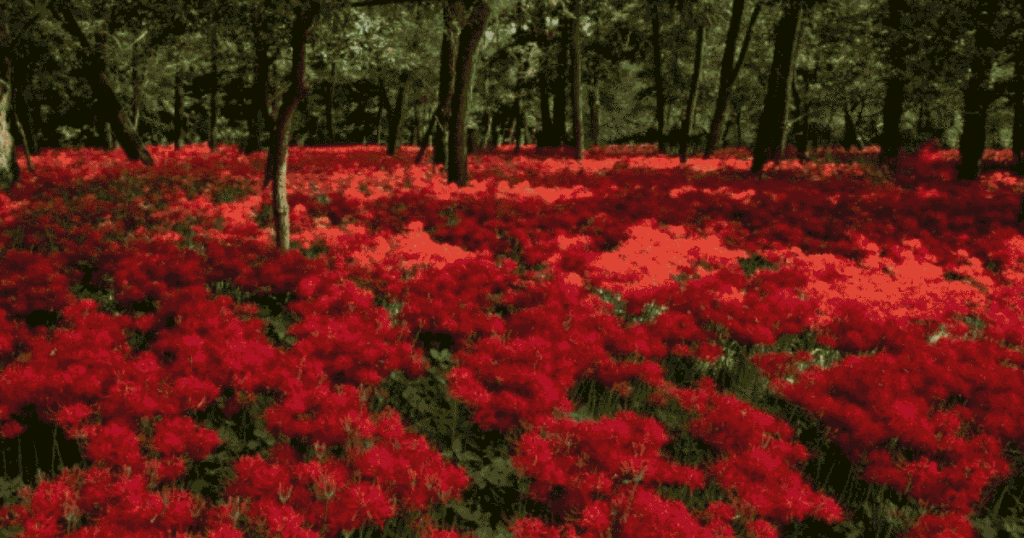
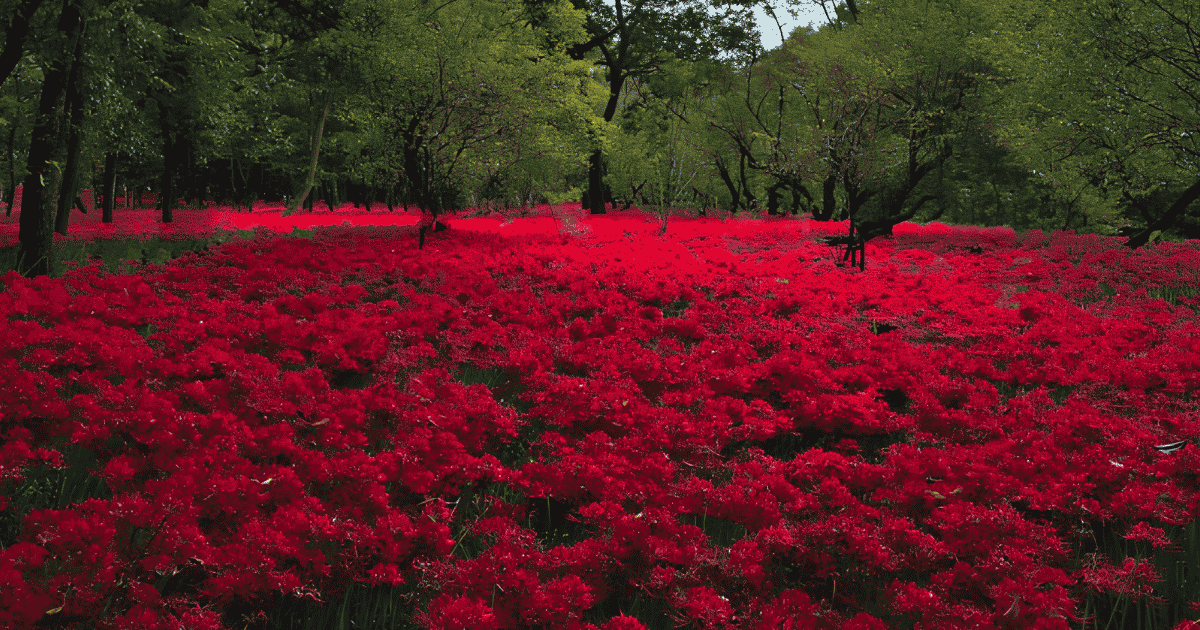
Red spider lilies glowing under the gentle morning sunlight through the trees.
The Best Time of Day to Avoid the Crowds
Kinchakuda is a paradise for people who love photography. But if you want to get the perfect photo, you need to be smart about your timing.
The Golden Hours: The absolute best times to go are right when the park opens at 8:00 AM, or just before it closes at 5:00 PM.
Why It Works: These times are great for two reasons. First, you will completely avoid the big tour crowds that come during the day. Second, the light is magical. In the early morning and late afternoon, the sun sits low in the sky, creating soft, angled rays that shine through the tree branches. This beautiful dappled light illuminates the translucent red petals perfectly, creating a mystical, glowing effect in your photos.
🚫 Strict Rules: Tripods and Drones are Forbidden
If you are planning a photoshoot, please be aware of the strict local rules. These are in place to protect the environment and keep everyone safe:
No Tripods or Monopods: To keep the narrow walking paths clear and safe for all visitors, using tripods and monopods is completely banned inside Kinchakuda Manjushage Park. You will need to take photos handheld, so make sure your camera or smartphone has good image stabilization.
No Drones: In Japan, flying drones over private land or crowded public areas is strictly restricted by laws and local rules. Also, because Kinchakuda’s spider lilies grow densely inside a thick forest under a heavy roof of trees, it is physically impossible to safely fly a drone to take photos of the flowers anyway.
Travel Tips for Visiting Kinchakuda Manjushage Park
Food Trucks and Local Flavors: The Temporary Food Court
One of the best parts of visiting during the peak season is the temporary Open-Air Food Market (called Yatai-mura) inside the park. Local restaurants and shops from Hidaka City set up food stalls here—sometimes up to nearly 30 stalls on busy days! In the past, vendors have sold beer, ice cream, drinks, Kentucky Fried Chicken (KFC), roasted chestnuts, and beef steaks. It is a wonderful opportunity to enjoy the fun festival vibes and try some local food.
Hike Mt. Hiwadayama for a Panoramic View
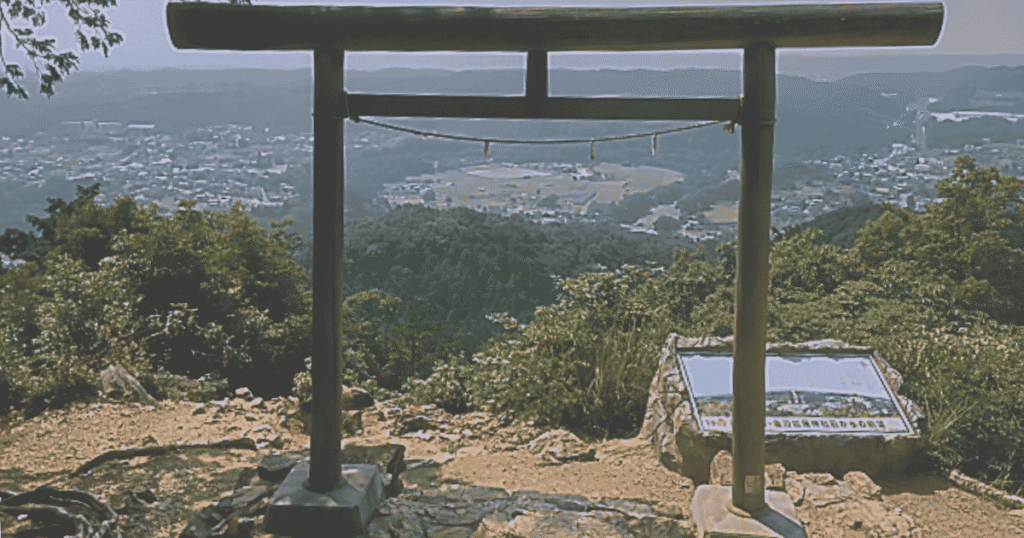
A bird’s-eye view from Mount Hiwada, showing the unique horseshoe shape of Kinchakuda nestled along the Koma River.
If you want to walk a bit more after seeing the red spider lilies, we highly recommend a short hike up Mt. Hiwadayama. The trailhead is just a 10-minute walk from Kinchakuda, and you can find vending machines and restrooms right at the entrance.
On the way up, the trail splits into two paths, but both lead to the top. The left path (Otokozaka) is steeper and has more rocky areas than the right path (Onnazaka). Whichever you choose, it takes about 1 hour and 30 minutes to reach the summit. From the scenic lookout near the top (in front of Kotohira Shrine), you can get a stunning panoramic view of the beautiful Saitama countryside. From here, you can clearly look down and see the unique “drawstring purse” shape of the Koma River looping around Kinchakuda!
Alternative Spots: What if You Miss the Peak?
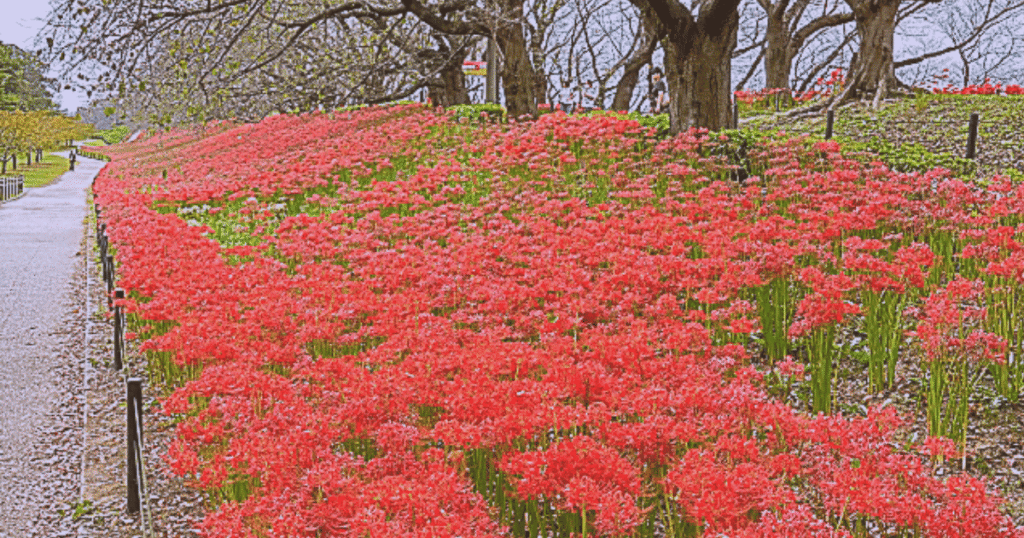
Gongendo Park in Satte, another famous spot in Saitama, where a crimson carpet of red spider lilies spreads beneath the cherry trees.
Saitama's Other Higanbana Display: Gongendo Park in Satte
Nature can be unpredictable. If your travel dates do not match the peak bloom at Kinchakuda, or if you check the live forecast and see that the flowers are already gone, do not worry!
Saitama Prefecture has another amazing place for red spider lilies: Gongendo Park (Gongendo Koen) in Satte City. This park is very famous for its spring cherry blossoms, but it also has a spectacular autumn view where about 3 million red spider lilies cover the massive slopes. It offers a completely different, wide-open view compared to the forest paths of Kinchakuda, making it a great alternative for your autumn trip.
Conclusion: Is Kinchakuda Worth a Visit?
There are very few places in the world where you can see nature paint the ground in such a deep, beautiful red. Kinchakuda Manjushage Park is not just a regular flower park; it is an amazing experience that shows you autumn has truly arrived in Japan.
By checking the official live forecast before you go, taking the Seibu train line, using Google Maps, and arriving early in the morning, you can easily avoid the crowds and enjoy this bucket-list place in peace. Pack your camera, respect the local rules, and get ready to walk along Japan’s most spectacular red carpet!