Breakfast in Japan can cost ¥240. It can also cost ¥2,400. The difference isn’t really about quality. It comes down to where you are, what you order, and whether you know about the local culture. This guide breaks down real prices across Tokyo, Nagoya, and other major cities, plus a few tricks that make breakfast easier from the morning you land.
Table of Contents
ToggleHow much does breakfast actually cost in Japan?
Japan has a reputation for being expensive. These days, with a weaker yen, most visitors find prices lower than they expect.
Breakfast is one of the best deals you’ll find all day. A McDonald’s combo starts at just ¥240. Let’s look at the bigger picture before we get into specifics.
The ¥240 benchmark: McDonald's sausage muffin combo
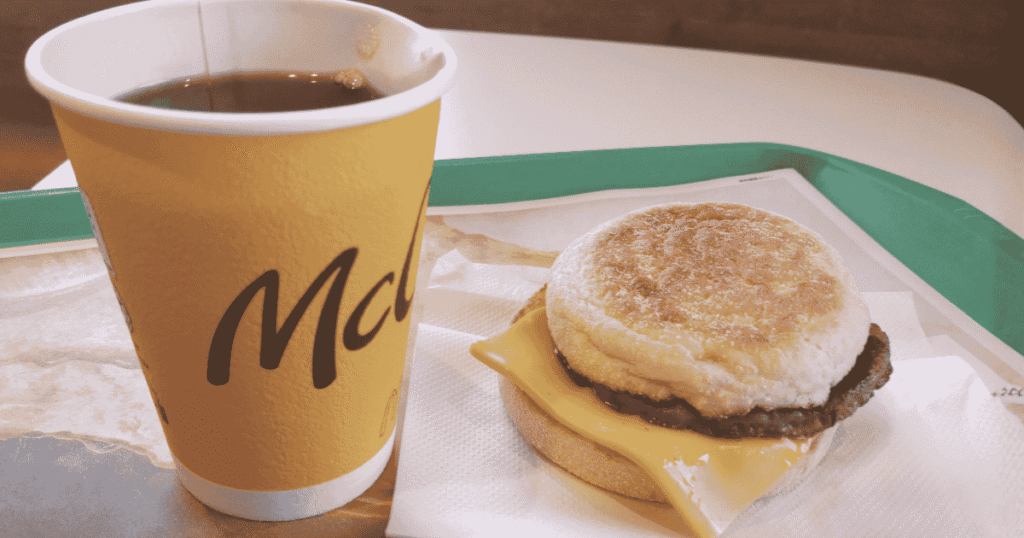
The easiest way to measure breakfast prices in Japan is McDonald’s sausage muffin combo: a sausage muffin plus a small drink. It’s sold every morning from 6:00 to 10:30am, starting at ¥240 (a few locations add a little more). Keep this number in mind as you read through the rest of this guide.
💡 Ordering tip: Just say “sausage muffin combo” at the counter, or tap it on the self-order screen. You can swap the coffee for tea or juice at no extra cost.
Your breakfast options in Japan
Outside of hotels and guesthouses, breakfast in Japan falls into five main categories.
- McDonald‘s: A dedicated morning menu runs from around 6am to 10:30am. The cheapest combo costs ¥240, which is hard to beat anywhere.
- Convenience stores: Open 24 hours with a huge selection. Drip coffee runs ¥140–170 for a small size. A filled bun or pastry costs ¥130–300, and sandwiches start around ¥240–350.
- Japanese chain restaurants: Yoshinoya, Sukiya, Matsuya, and Nakau stay open nearly around the clock, aside from short cleaning breaks. From about 5am, they serve rice and miso soup with eggs, grilled fish, or natto for ¥320–600.
- Self-serve cafe chains: Doutor, Pronto, Cafe Veloce, Excelsior, and Cafe de Crie are the big names near train stations. JR-affiliated cafes like Becks Coffee, Seattle’s Best Coffee, and Cafe AVANTE fall into this group too. Most serve a drink-and-food set until around 11am for ¥450–700.
- Kissaten (old-school coffee shops): These independent cafes vary a lot by region. While Nagoya is famous for its standard free morning service where basic toast and an egg come with your drink at no extra cost, competitive cities like Osaka, Kochi, and Wakayama typically offer low-cost, high-value morning sets where you pay a small extra fee for a massive plate.
The breakfast price ladder: useful in any Japanese city
This isn’t just about Tokyo and Nagoya. Japan has a price ladder for breakfast that holds up almost everywhere. Once you understand it, you can walk into any city and know exactly where the best deal is hiding.
The Japan Breakfast Price Ladder: From Budget to Treat
| Rank | Option | Typical price | Notes |
|---|---|---|---|
| Special | McDonald's breakfast combo | ¥240+ | The cheapest option anywhere in Japan |
| 1 | Convenience store | ¥300–500 | A pastry or sandwich plus coffee |
| 2 | Japanese chain set meals | ¥320–600 | Matsuya, Yoshinoya, Sukiya, Nakau |
| 3 | Self-serve cafe chains | ¥450–700 | Doutor, Pronto, JR-affiliated cafes |
| 4 | Kissaten morning sets | ¥300–900 | The category with the biggest range |
Notice how wide the kissaten range is, ¥300 to ¥900. That’s because kissaten behave completely differently depending on the city.
Some cities have surprisingly cheap kissaten
Nagoya, Osaka, Kochi, and Wakayama all have dense kissaten scenes where competition keeps prices low. In these regions, you will usually find customizable combo menus—similar to the set style at major cafe chains, but with far more generous, delicious local portions for a bargain price.
Wakayama Prefecture, for example, has one of the highest numbers of kissaten per person in the country. In places like this, the kissaten becomes the cheapest option on the list, which almost never happens elsewhere.
| City | Kissaten morning price | Trend | Notes |
|---|---|---|---|
| Nagoya | ¥450–550 (food free) | Cheap | One birthplace of morning service |
| Osaka | ¥400–500 | Cheap | Pay a tiny fraction more (+¥50–100) for upgraded sandwiches and eggs. |
| Kochi | ¥450–550 | Cheap | Mega volume. Expect a full feast with hot miso soup and spaghetti on one plate. |
| Wakayama | ¥400–550 | Fairly cheap | High density of local shops offering cheap, customizable add-on menus. |
| Tokyo | ¥600–900 | Pricier | More of a treat than an everyday option |
Osaka is just as competitive as Nagoya. Some shops there charge little more than the price of a single coffee for a full morning set. Both cities share a similar history. Merchants once added free snacks to coffee orders as a way of treating customers well, and the habit stuck.
In Tokyo, kissaten morning sets are more of a treat
In Tokyo and most other big cities, kissaten morning sets aren’t really an everyday budget option. They’re something you do for the experience.
Chains like Komeda Coffee and Hoshino Coffee still serve the food for free, but their coffee itself is pricier. That pushes the total cost above almost every other option on the list.
How to tell which type of city you're in
- If you’re in a smaller city known for independent kissaten, like Nagoya, Osaka, Kochi, or Wakayama, it’s worth seeking one out.
- If you’re in central Tokyo or another major city, treat a kissaten morning set as a special outing, and save your everyday breakfasts for convenience stores or chains.
- A quick search for “morning service” plus the city name tells you a lot. Lots of results around ¥500 usually means you’re in the first kind of city.
💡 Traveler tip: Wherever you are, compare a convenience store breakfast to the nearest independent kissaten. If the kissaten comes out cheaper, that city is worth exploring for its morning sets.
Nagoya's morning service: Japan's best breakfast deal
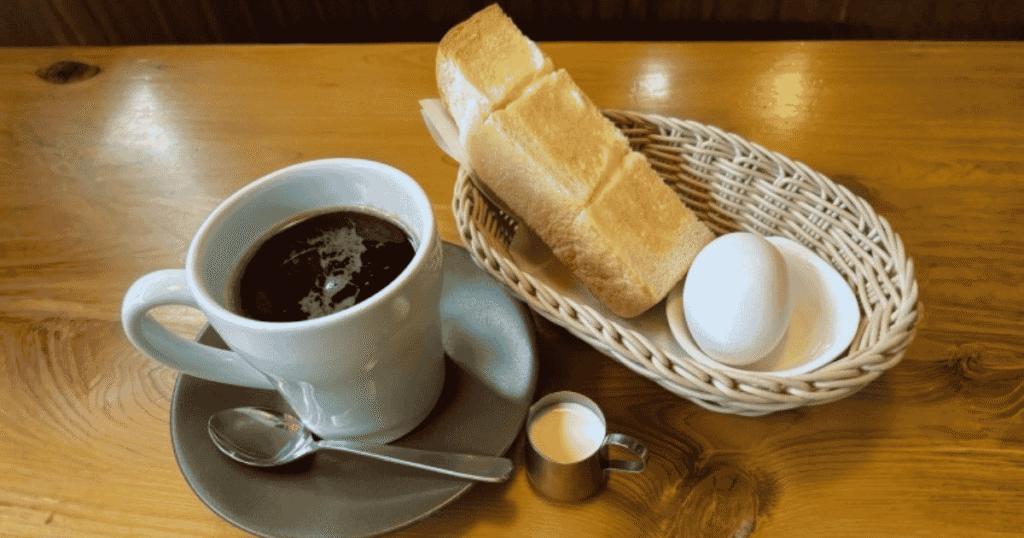
Ask someone from Nagoya what local food they’re most proud of, and morning service usually comes up right alongside miso katsu and hitsumabushi. It’s not just a menu item. It’s a daily habit woven into the city.
Order a coffee, and food shows up for free
The rule is simple. Walk into a Nagoya kissaten any time between opening and around 11am, order a drink, and breakfast arrives without you asking. No upsell, no extra charge. It just comes with the coffee.
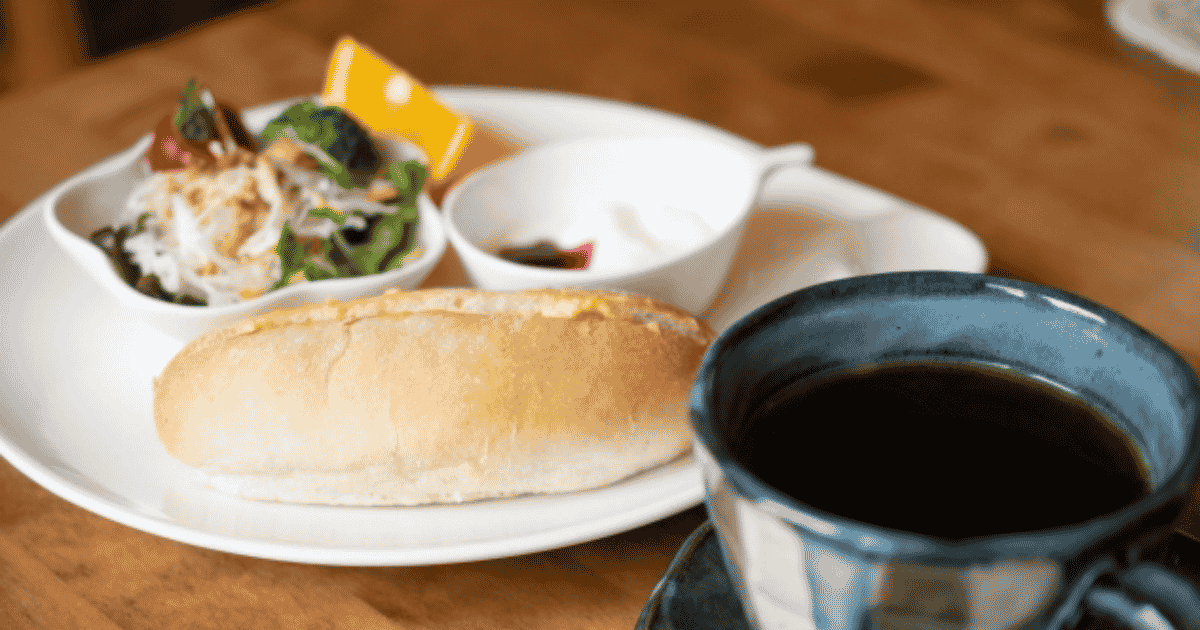
A standard set includes thick buttered toast (half or a whole slice) and a boiled egg, sometimes swapped for egg salad. Some places throw in a small salad or yogurt. Others add chawanmushi, onion soup, or a seasonal extra of their own.
💡 Background: Nobody agrees on exactly where morning service started. Ichinomiya, just north of Nagoya, is one popular candidate, along with Toyohashi and even Hiroshima. One common story traces it back to the 1950s, when textile merchants in Ichinomiya started adding small snacks to coffee orders during business meetings. The custom spread across the whole Tokai region. Osaka’s kissaten culture grew out of a similar merchant tradition.
Self-serve cafe chains deserve a second look too
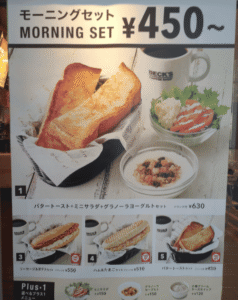
Self-serve chains don’t usually offer free morning service the way Nagoya’s kissaten do.
Order a coffee, and food doesn’t just appear. Order a “morning set” separately, though, and you’ll pay more than the coffee alone costs.
Here’s a quick way to tell which type of place you’re in. Check the price board or the register area for a “morning service” or “morning set” sign. If the cheapest set costs the same as a coffee, food is included. If the prices are different, you’re paying extra for food.
None of this means chains are a bad deal, though. Quite the opposite.
A Doutor morning set runs ¥450–700 and comes with both coffee and food. Compare that to paying ¥700 just for coffee at a Tokyo kissaten, and the chain often works out cheaper overall.
Tokyo’s kissaten morning sets can look free but cost more in the end. Chain cafes look like they charge extra but often save you money. It’s the same flip we saw on the price ladder, just showing up again here.
- Doutor, Excelsior Cafe, Cafe de Crie, Cafe Veloce, Pronto, Beck’s Coffee (JR East), and Seattle’s Best Coffee (JR Kyushu): Morning sets typically run ¥450–700, with several options to choose from. You’ll pay more than a coffee alone, but usually less than a Tokyo kissaten morning set.
- Pronto and Cafe AVANTE (JR Central): Coffee, toast, a mini salad, and a little extra, all for somewhere in the ¥500 range. It’s close to the kissaten style.
💡 Quick guide: Want something fast? Go convenience store. Want to sit down properly? Try a self-serve chain. Already in a kissaten city like Nagoya or Osaka? Go straight for the independent shop.
Ogura toast: a Nagoya breakfast you won't find in Tokyo
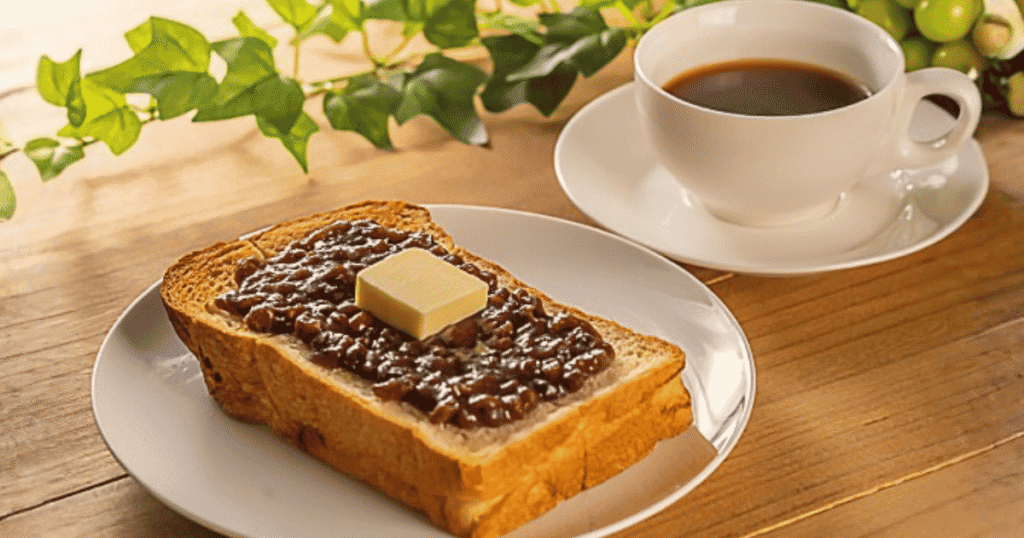
Ogura toast is thick bread, lightly toasted, topped with butter and a generous layer of sweet red bean paste.
Plenty of kissaten across Nagoya and the wider Tokai region offer it as a toast swap in their morning sets.
It sounds like an odd breakfast combination. Don’t let the description fool you—most travelers instantly fall in love with it. The heavenly combination of salty butter and sweet red bean paste creates a perfect sweet-and-savory balance you won’t find anywhere else.
Breakfast near Nagoya Station, perfect before a Shinkansen ride
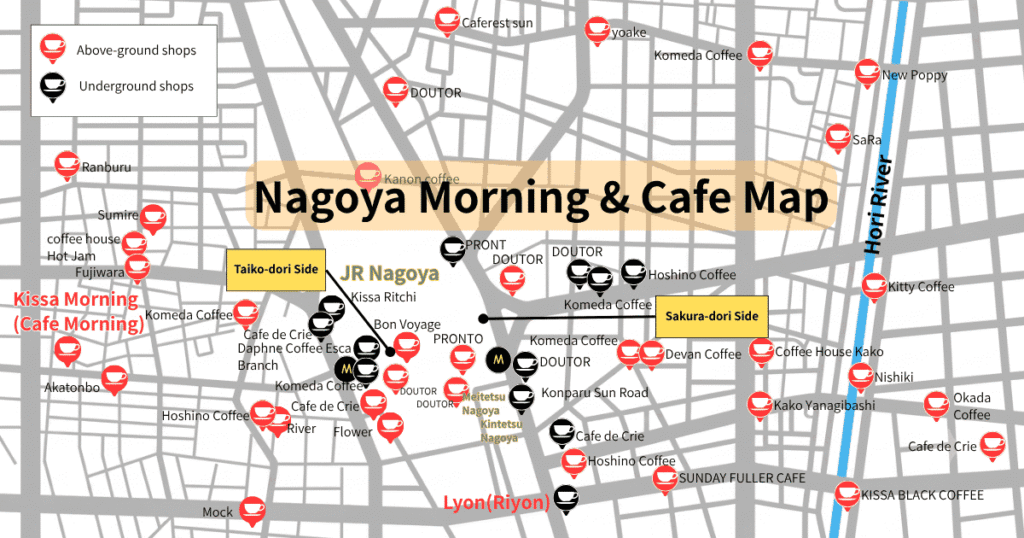
Kissaten cluster within a five-minute walk of Nagoya Station. Search Google Maps and you’ll find dozens of options.
If you’re passing through on the Shinkansen between Tokyo and Kyoto or Osaka, a 90-minute stop is plenty of time for a relaxed morning set before catching your next train.
Most morning service ends by 11am. Running late? Don’t worry. The two shops below serve morning sets well past noon.
1. Lyon (Riyon): All-Day Nagoya Morning Service Near the Station
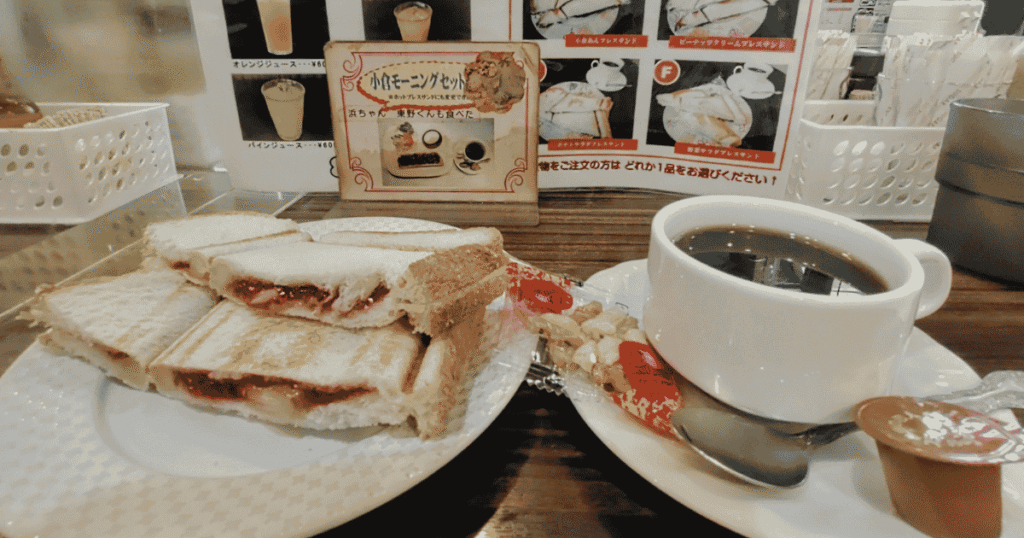
Order a drink (from ¥450) and the morning set is available all day here. Open 8:00am to 4:00pm.
From the Shinkansen gates at JR Nagoya Station, walk straight through the Central Concourse toward the Sakuradori exit on the opposite side. Walk right along the main street out front for about 10 minutes until you reach Sasashima Crossing, a large intersection. The shop sits in the basement of the Mitsui Main Building on one corner. (Google map)
Beyond the classic toast-and-egg set, you can swap the topping for fruit, sweet red bean paste, peanut cream, potato salad, or a vegetable salad.
A quick heads-up: Lyon allows indoor smoking, so if you’re sensitive to smoke, you might want to keep that in mind before visiting.
2. Kissa Morning: Retro Vibe & Ogura Toast Upgrade
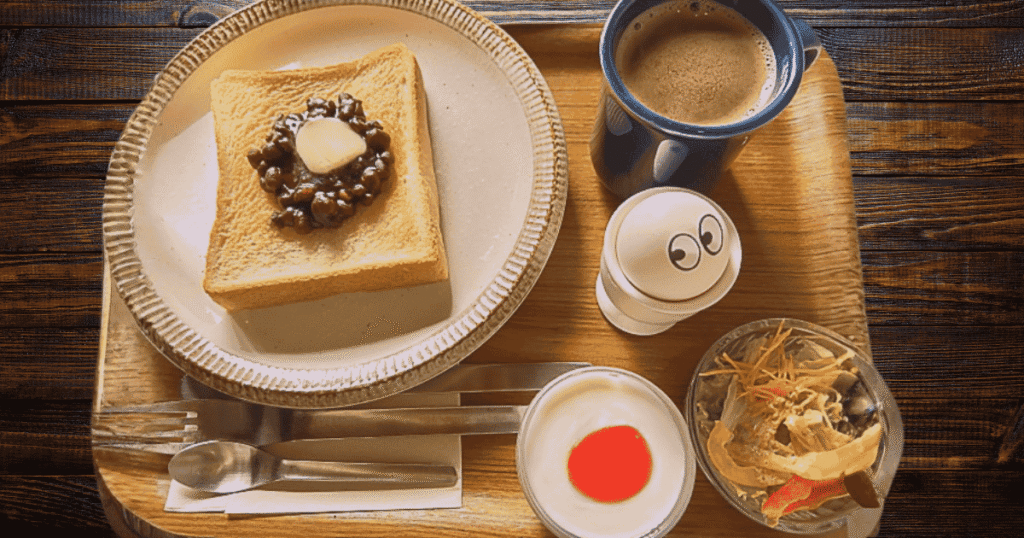
Order a drink (from ¥600) here and the morning set stays available all day. Open 8:00am to 3:30pm, last orders at 3:00pm. Closed Tuesdays.
Exit JR Nagoya Station through the Taikodori exit, right near the Shinkansen gates. Walk straight along Showa-dori for about nine minutes. You’ll find this retro shop inside a converted old house. (Google map)
The basic set comes with buttered toast, egg, salad, and yogurt. Pay an extra ¥300–400 to upgrade the toast to ogura toast or a sandwich.
Complete Nagoya Breakfast Guide: Best Cafes for Morning Sets and Morning
Service Want to explore even more options? Here is a comprehensive list of budget-friendly chains and local independent shops around Nagoya Station. Whether you want a quick breakfast, a great value morning set, or a traditional complimentary morning service, you will find the perfect spot below with Google Maps links included!
- Sumire: A cafe with a retro interior offering a breakfast menu for under ¥500. (Map)
- yoake: The breakfast menu costs ¥500 (exact). Coffee is not available; choose from juice or tea. (Map)
- Kissa Morning: The breakfast menu costs ¥500 (exact). Features a retro interior and authentic coffee roasting. (Map)
- Daphne Coffee Esca: An independent cafe serving toast and a boiled egg for breakfast. You can choose ogura (sweet red bean) paste or strawberry jam for the toast.(Map)
- Ranburu: A cafe offering a breakfast menu for under ¥500. (Map)
- Lyon(Riyon): A cafe offering a breakfast menu for under ¥500. (Map)
- Fujiwara: A cafe with a retro interior offering a breakfast menu for under ¥500 (Map)
- caferest SUN: A cafe with a calm atmosphere offering a breakfast menu for under ¥500. (Map)
- Mock: A cafe offering a breakfast menu for under ¥500. (Map)
- SUNDAY FULLER CAFE: A cafe with a stylish interior on the second floor of a building, offering a breakfast menu for under ¥500. (Map)
- Okada Coffee: A cafe offering a breakfast menu for under ¥500. (Map)
- Akatonbo: A cafe with a retro interior. You can spread ogura (sweet red bean) paste or strawberry jam on the toast yourself. (Map)
- Kissa Ritchi: Located adjacent to Nagoya Station. (Map)
- Bon Voyage: Located inside Nagoya Station. (Map)
- Kitty Coffee: A cafe offering a breakfast menu for under ¥500. (Map)
- coffee house Hot Jam: A cafe with a spacious interior offering a breakfast menu for under ¥500. (Map)
- Nishiki: A cafe located slightly away from Nagoya Station. (Map)
- New Poppy: A cafe located slightly away from Nagoya Station. (Map)
- Coffee House Kako: A cafe located slightly away from Nagoya Station. (Map)
- Kako Yanagibashi: A cafe located slightly away from Nagoya Station. (Map)
- KISSA BLACK COFFEE: A cafe located slightly away from Nagoya Station. (Map)
River: The breakfast menu costs under ¥500. You can choose pancakes or other options for an extra fee. (Map)
DEVAN COFFEE: A counter-only cafe with a focus on coffee beans. (Map)
Kannon Coffee Meieki: A cafe with a bright interior and a focus on coffee. (Map)
Konparu Sun Road: Located adjacent to Nagoya Station. (Map)
Flower: A cafe with a bright interior, located on the 1st floor of Nagoya Flower Hotel. (Map)
A budget breakfast guide to Tokyo
Tokyo doesn’t have Nagoya’s morning service culture. With so many people around, though, plenty of places open early anyway.
Early Breakfast: Spots Open Before 8am
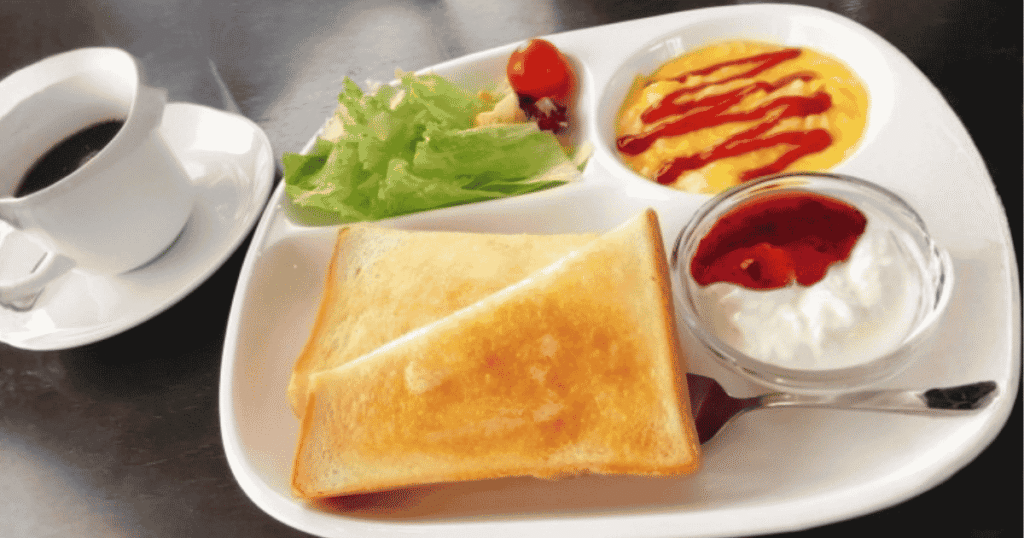
Most kissaten and set-meal restaurants open around 7 or 8am. A few options work even earlier, which helps if you land on an overnight flight or just wake up early.
- McDonald’s (most locations open 5:00–6:00am): The sausage muffin combo starts at ¥240, though Tokyo locations sometimes add a bit more.
- Convenience stores (7-Eleven, FamilyMart, Lawson, open 24 hours): A filled bun plus hot coffee runs ¥300–500. Rice prices have climbed lately, so bread options are often cheaper than rice balls these days.
- Yoshinoya, Matsuya, Nakau, and Sukiya: Breakfast sets start around ¥320. Most locations start serving breakfast by 5 or 6am, though a few apply a late-night surcharge before that, so it’s worth checking first.
Grabbing breakfast at Tokyo Station
Tokyo Station has food at every price point, and breakfast is no exception. Here’s what to look for.
- Gransta: This huge underground food hall opens at 7am. Bakeries, ekiben counters, and set-meal stands start around ¥500.
- Yaesu side food hall: Generally cheaper than the Marunouchi side. Standing soba and udon counters start at ¥400.
- Convenience stores inside the station: Several locations open early, making them a reliable backup.
- Ekiben counters: Classic train bento boxes start at ¥700. Not the cheapest pick, but a fun one if you want a taste of Japanese train culture.
Cheap Japanese breakfast: set meals under ¥600
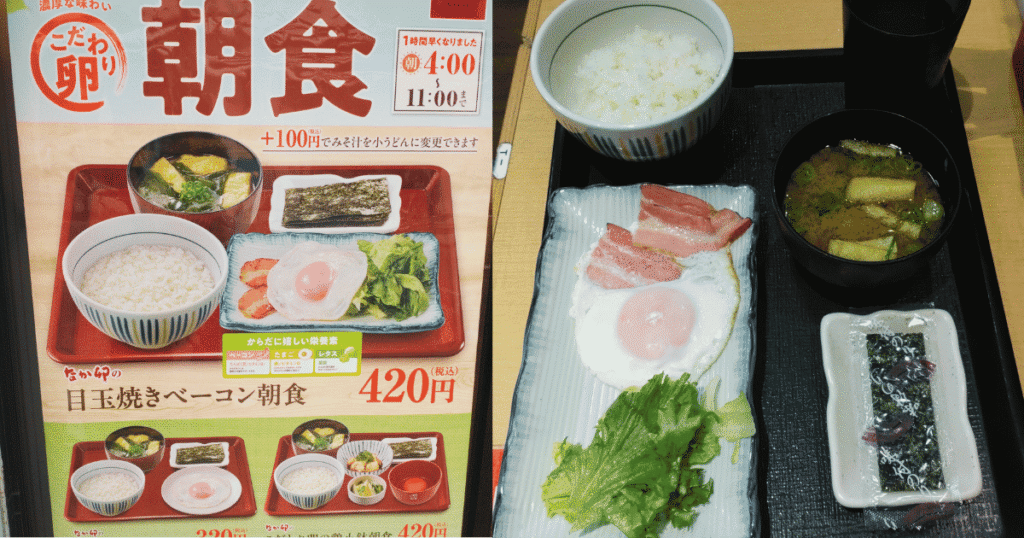
A teishoku set meal, rice, miso soup, and a main dish, fills you up for less than a typical Western-style pastry.
Prices shift depending on what you add: a raw egg, boiled egg, fried egg, grilled fish, natto, seaweed, bacon, or sausage. Every chain below has locations near major stations, so a quick map search will turn one up.
- Matsuya: Breakfast sets from around ¥350. One of the most reliable budget picks in Tokyo.
- Yoshinoya: Beef bowl breakfast sets from ¥430. Most locations open by 5am.
- Sukiya: Similar pricing to Yoshinoya, with a slightly wider breakfast menu. Starts at ¥330.
- Nakau: A big breakfast menu, with some simple combos starting as low as ¥320.
Nagoya chains that made it to Tokyo
Ogura toast might be hard to find in Tokyo, but Komeda Coffee, the Nagoya chain behind it, has plenty of locations here.
Coffee costs more in Tokyo to match local prices, but the free toast still comes with it. Hoshino Coffee, which actually got its start in the Kanto region, follows the same free morning set model.
Komeda Coffee
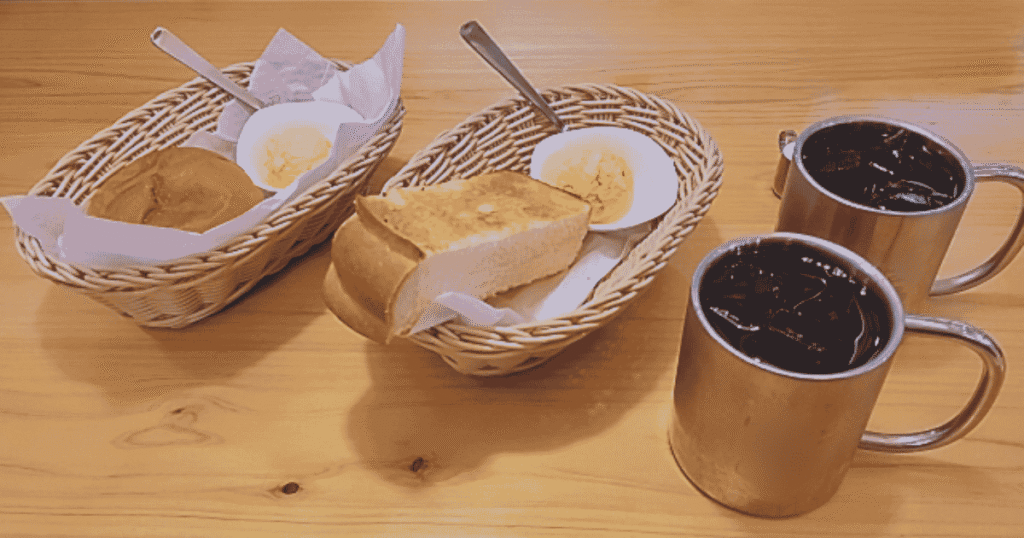
You’ll find plenty of locations across Tokyo. Near Tokyo Station, try the Kyobashi branch (Google map) or the one inside Yurakucho Bic Camera (Google map).
The Bic Camera location sits closer to Yurakucho Station, but you can also reach it from Tokyo Station’s Keiyo underground Marunouchi exit, walking through the underground passage near the Tokyo International Forum. Coffee starts at ¥700.
Hoshino Coffee
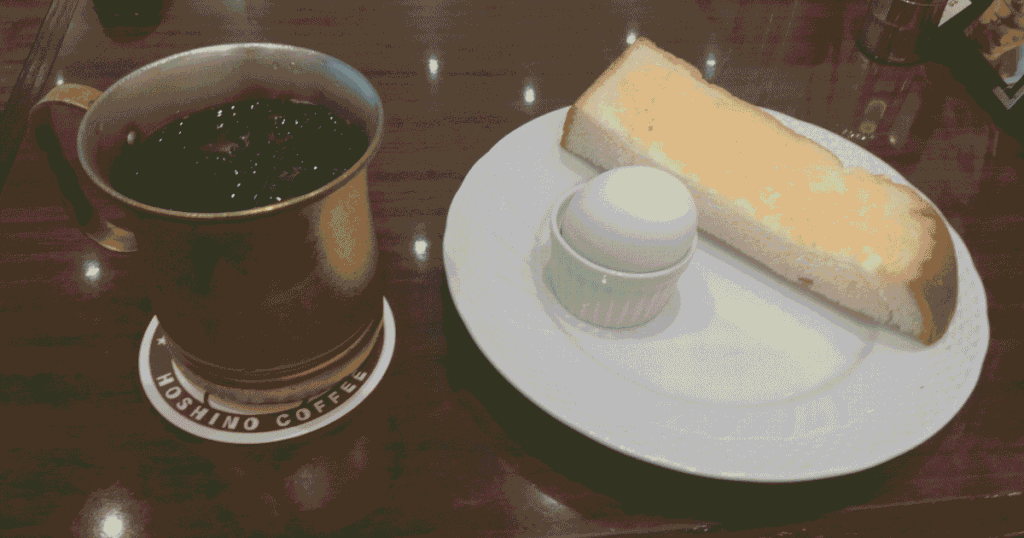
This chain started in the Kanto region and now has locations nationwide, including several around Tokyo in Asakusa, Shinjuku, Ginza, and Tsukiji.
Near Tokyo Station, head to the Yaechika branch on the Yaesu side, underground. Coffee starts at ¥700. (Google map)
Useful phrases for ordering a morning set
Staff at kissaten don’t always speak English, but that’s not a real problem. You only need a few words to order breakfast.
- “Morning set, onegaishimasu”: This means “one morning set, please.”
- “Coffee to toast”: Use this if there’s no set menu listed.
- “Kore wo kudasai”: “I’ll have this one,” while pointing at the menu.
- Holding up fingers to show your party size works at any restaurant in Japan.
Tokyo vs Nagoya breakfast: the full comparison
Here’s everything laid out in one table, ordered from cheapest to priciest: McDonald’s, convenience stores, chain set meals, self-serve cafes, and finally kissaten morning sets.
One thing stands out clearly. If you’re traveling on a budget, even a 90-minute stop in Nagoya gets you the best breakfast value of your whole trip.
| Option | Tokyo | Nagoya | Notes |
|---|---|---|---|
| McDonald's breakfast combo | From ¥240 | From ¥240 | A few stores charge slightly more |
| Convenience store breakfast | ¥300–500 | ¥300–500 | No real difference |
| Japanese chain set meals | ¥320–600 | ¥320–600 | Same nationwide |
| Self-serve cafe chains | ¥450–700 | ¥450–700 | Pay extra for food |
| Kissaten morning set | ¥600–900 (food + coffee) | ¥400–550 (coffee only, food free) | The biggest gap |
Is it worth detouring for a kissaten-heavy city?
If it's on your route already, absolutely
Nagoya sits right on the Shinkansen line between Tokyo and Kyoto or Osaka, which makes it the easiest stop to add.
If Kyoto, Osaka, or Hiroshima are already part of your trip, adding Nagoya costs you almost nothing extra. The ride from Tokyo takes about 85 minutes, and Nagoya to Kyoto takes just 35 minutes more.
A 90-minute stop gives you enough time for a relaxed morning set near the station before catching your next train with room to spare.
Heading straight to Osaka instead? While you won’t get “automatic free food” like in Nagoya, you will find an incredibly affordable set-menu culture. Most spots around Umeda and Namba let you turn your coffee into a hearty meal for just a pocket-change upgrade.
If your trip stretches toward Shikoku or the Kansai region, Kochi and Wakayama are worth considering too. Both cities offer morning sets priced close to Nagoya’s, and neither gets much attention from visitors.
If none of these cities fit naturally into your route, skip the detour. But if you’re passing anywhere nearby, stopping for a local breakfast is worth the small effort.
Adding a Nagoya breakfast stop on the way to Kyoto or Osaka
- Book the Tokyo–Nagoya Shinkansen leg separately, rather than a through-ticket to Kyoto. Trains run every 10–15 minutes.
- Search for Nagoya Station on Google Maps, then type “kissaten” to see what’s nearby.
- Exit through the Sakuradori side and walk toward the cluster of cafes within a few minutes.
- Aim to arrive around 8 or 9am for the best atmosphere and no wait.
- Most morning service ends by 11am, so don’t cut it too close.
- After breakfast, catch the next Shinkansen to Kyoto (35 minutes) or Osaka (50 minutes).
💡 Heading to Osaka instead: Independent kissaten cluster around Shin-Osaka and Umeda stations too. Just like in Nagoya, a short walk from the station turns up an affordable morning set.
Frequently asked questions
Quick answers to the questions people ask most about breakfast in Tokyo and Nagoya.
| Question | Answer |
|---|---|
| How much is breakfast in Japan? | Breakfast in Japan costs between ¥240 and ¥900. McDonald's and convenience stores offer the cheapest options (¥240–¥500), while a traditional cafe (kissaten) morning set ranges from ¥400–¥550 in Nagoya (where basic food is included with a drink) to ¥600–¥900 in Tokyo. |
| What is Nagoya's morning service? | It's a kissaten tradition across Nagoya and the wider Tokai region. Order one drink before about 11am, and toast, a boiled egg, and a small salad show up automatically. No extra charge. |
| Can I find cheap breakfast in Ginza? | Yes. Chain restaurants like Matsuya and Yoshinoya serve set meals from around ¥400. Convenience stores can run under ¥350. |
| What's a cheap breakfast option near Tokyo Tower? | Head toward Hamamatsucho or Shiba Park. You'll find chain restaurants and convenience stores under ¥600. Skip the cafes right next to the tower since they charge more. |
| Where should I eat breakfast at Tokyo Station? | Gransta opens at 7am with bakeries, ekiben, and set-meal counters from ¥400. The Yaesu side tends to be cheaper than the Marunouchi side. |
| What counts as a cheap Japanese breakfast? | A teishoku set meal: rice, miso soup, and something like grilled fish or an egg dish. Chains such as Matsuya, Yoshinoya, and Nakau charge ¥320–600. It's usually more filling than a Western-style hotel breakfast, too. |
| Are Doutor or Pronto morning sets worth it? | They cost more than just a coffee, but ¥450–700 gets you toast, an egg, and a small salad. That's often cheaper overall than a kissaten morning set in Tokyo, so don't write these chains off. |
| Can I try morning service near Nagoya Station? | Definitely. Kissaten are everywhere around the station. Even a 1–2 hour stop on a Shinkansen transfer gives you enough time. |
| What is ogura toast? | Thick toast with butter and sweet red bean paste on top. It's a Nagoya specialty you won't find much outside the Tokai region. |
| How do I find cheap morning sets in any Japanese city? | Nagoya is the king of classic, complimentary morning service, while Osaka, Kochi, and Wakayama specialize in low-cost, high-volume set menus that give you a massive local meal for barely more than the price of a single drink. |
Final Checklist: How to Plan Your Breakfast in Japan
Before you land, keep these three simple rules in mind to save money and eat well:
- In Tokyo: Save your everyday budget breakfasts for convenience stores or Japanese chains like Matsuya. Treat independent kissaten as a special experience.
- In Nagoya: Definitely try the local morning service. Just order a coffee before 11am, and your basic breakfast comes with it at no extra cost.
- Heading to Kyoto or Osaka: Consider a 90-minute stop at Nagoya Station. It is the easiest way to experience Japan’s best breakfast deal during your train ride.