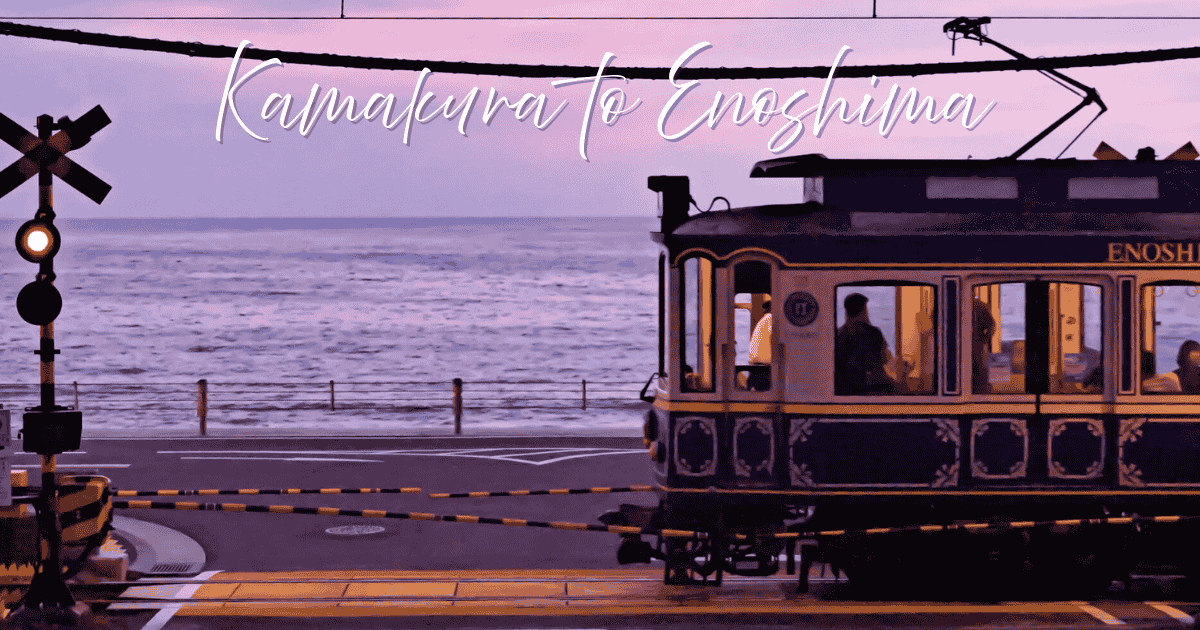
Explore the stunning Shonan Coast, where the history of Kamakura meets the seaside charm of Enoshima. But here is a secret: in this area, the journey is just as exciting as the destination. Experience the vintage Enoden train winding through backyards or the “flying” Monorail. This guide helps you master the local transit like a pro. We also include essential tips for the iconic “Slam Dunk” crossing.
Table of Contents
Toggle1. Riding the Enoden: The Scenic Coastal Experience
Taking the Enoden from Kamakura to Enoshima is a classic Shonan experience. The train winds through narrow streets and residential backyards. In some areas, the train runs right on the street alongside cars. This gives you a unique view of the city.
Best Views & Seating:
The best scenery is where the tracks run parallel to the sea. This happens near Shichirigahama and Kamakurakokomae Stations.
If going from Kamakura to Enoshima, sit on the left side (ocean side).
If going from Enoshima to Kamakura, sit on the right side (ocean side).
Detailed Time & Weather Tips:
- Weather: Absolutely choose a clear, sunny day. The Enoden is a coastal train. The beautiful contrast of the blue sky and ocean is lost on rainy days.
- Time of Day: The coast wears a different face depending on when you visit:
- Sunrise: Early morning (around 5 a.m. in summer) is the best time for empty carriages. However, the soft light may be too dim for high-speed photography. Your best chances are in April or from August to October.
- Mid-day: Perfect for sparkling blue water and bright contrast.
- Sunset: The sky is beautifully stained by the setting sun. However, please be aware: mid-day and sunset hours are very crowded.
Video Guide: A Driver’s Eye View of the Enoden by Tokyo Explorer. Watch this footage to get a feel for the iconic route from Fujisawa to Kamakura before you go!
2. How to Visit the "Slam Dunk" Anime Crossing: Photo Strategy and Etiquette
For many international visitors, the crossing at Kamakurakokomae Station (EN07) is a must-see. It is the ultimate site for a Kamakura Enoshima day trip.
The Slam Dunk Phenomenon: Why This Crossing is World Famous
This crossing is famous as the setting for the anime Slam Dunk. It appears in the opening sequence of the globally adored show. Fans around the world love this view of the sea and the train.
Critical Safety & Etiquette Warning
This spot is famous. However, it is on a busy local road. Please be a responsible traveler by following these rules:
Follow Professional Guidance: Due to extreme congestion, traffic guards (security staff) are often stationed here during the day. If security personnel are present, please follow their instructions immediately. They manage the crowd to ensure safety. Their guidance may even help you find a quiet moment to take your photo.
Manage Your Expectations: Because of the site’s immense popularity, taking a “people-free” photo is nearly impossible when the area is unsupervised. However, when traffic guards are on duty, your best chance is to stay patient and wait for their signal to ensure a clear and safe shot.
Avoid Photography on the Road: Troubles with local residents occur frequently due to tourists blocking traffic. Stopping in the street for photos is dangerous and causes traffic jams. Please refrain from taking photos on the road.
Respect the Community: This is a residential area. Do not enter private property or block the paths of people living there.
Crowd Strategy: The only reliable time to avoid crowds is during the very early morning hours. In summer, the sun starts to brighten the area around 5 a.m., offering a brief window.
Photo Strategy: Best Time, Angles, and Tips to Avoid Crowds
- Early Morning: The sun shines from the left side of the spot. Light intensity may be insufficient for a bright photo.
- Mid-day: The sun shines directly from the front (over the ocean), creating severe backlighting.
- Evening: Crowds persist until sunset. The light shifts to the right side, but prepare for congestion.
Getting There: Simple Access Guide to Kamakurakokomae Station
To get there, take the Enoden Line from either Kamakura Station or Enoshima Station and alight at Kamakura-kōkō-mae Station (EN07). The crossing is just steps from the station exit.
3. Seasonal Insights & The Enoden Stop Strategy
Planning your trip around local seasons and taking advantage of the Enoden Free Pass by stopping off can transform your journey.
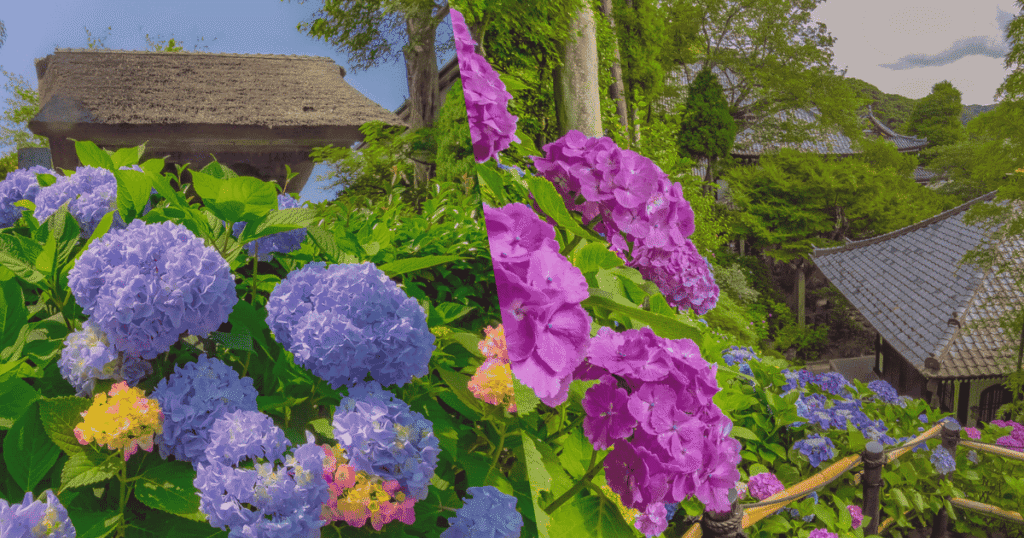
Seasonal Warnings: Rainy Season and Golden Week
- Rainy Season (June to Mid-July): This period often sees continuous rain. This can diminish the joy of the coastal views on the Enoden. However, it is the best time to see the Hydrangeas (Ajisai). Visit Hase Station and Goryo Shrine for a calm, green mood.
- Golden Week (Late April to Early May): This is Japan’s major holiday period, resulting in extreme congestion. Expect long queues for both the Enoden and the Monorail. Early morning travel is highly recommended if visiting during this time.
Making Stops: Recommended Enoden Day-Trip Spots
The Enoden is best enjoyed by hopping off to explore the small towns along its route.
- Hase Station (Hase): Gateway to the Great Buddha (Daibutsu-san) and Hase-dera Temple.
- Goryo Shrine (Goryo Jinja): During Hydrangea season (June), this spot offers a rare chance to photograph the colorful flowers alongside a passing Enoden train.
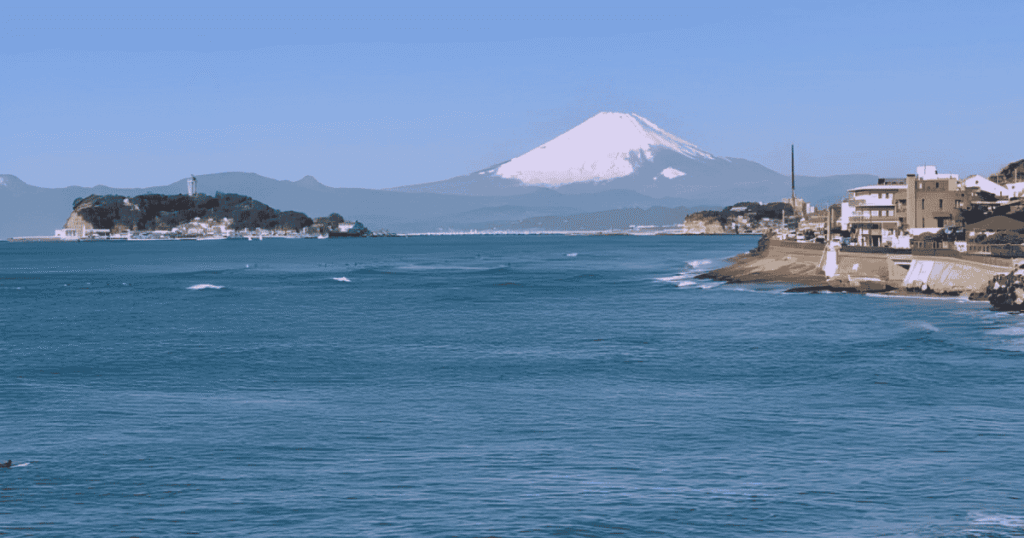
- Inamuragasaki Station (Inamuragasaki): Offers the iconic photo spot featuring Mt. Fuji, Enoshima Island, Shichirigahama beach, and the sea all in one frame. On a clear day, you can catch the sunset, or if visiting early morning during a full moon, a stunning reflection of the moon sinking towards Fuji.
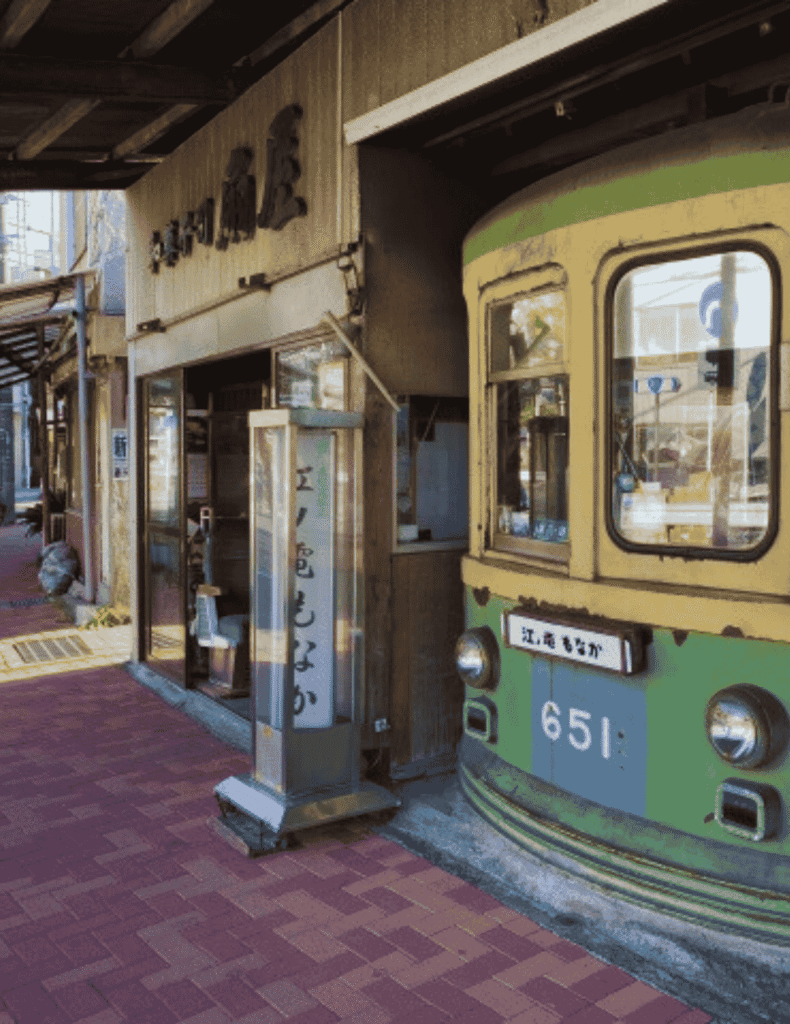
- Local Treat: Along the section where the Enoden runs on the street near Ryukoji Temple Crossing, look for Ogiya, a small shop selling the famous Enoden Monaka (sweet bean paste wafer). This unique shop is famous for having the front of a retired Enoden train car built directly into its storefront.
4. Experience the Airborne Thrill — The Shonan Monorail Deep Dive
While the Enoden is the direct route from Kamakura, the Shonan Monorail is a thrilling alternative. You can take it on your return journey to see the area from a different view. This is a suspended railway, meaning the cars hang below the track.
Monorail Highlights: Technology and Unique Terrain
Many monorails, like the one at Haneda Airport, use a straddle-beam system. However, the Shonan system is different. It is a suspended railway. The cars hang below the track. This technology helps it conquer the rolling hills of Shonan. It passes through steep slopes and tunnels. This offers a more exciting view than trains on flat ground.
Route Guide: Ofuna to Enoshima and Key Attractions Along the Line
The Monorail runs 8.9 km from Ofuna Station to Shonan-Enoshima Station.
- Thrill Zones: Immediately after departing Ofuna, the Monorail makes several sharp curves and steep inclines. The most thrilling section is near Shonan-Fukasawa Station, where the line ascends a steep gradient into a tunnel and then descends.
- Scenic Views: After Shonan-Machiya Station, look to the right for distant mountains and potentially Mt. Fuji on clear winter days. After Kataseyama Station, the beautiful blue ocean comes into view.
- Seating Recommendation: For the best possible experience, ride in the very front seat of the leading carriage. (Please refer to the “Practical Transit Costs and Passes” section in Section 5 for ticket details.)
5. Choosing Your Route & Strategic Logistics
To help you plan your entire day trip, here is a breakdown of how other major gateways connect to Enoshima, along with essential logistics for a smooth journey.
Optimal Approaches to Enoshima
The Kamakura to Enoshima distance is short, but your choice of transportation dictates your view and overall experience.
Here is a key detail to remember: While the Enoden directly connects Kamakura Station and Enoshima Station, the Shonan Monorail links Enoshima to Ofuna Station, not Kamakura Station. Please note that Kamakura and Ofuna are two separate stations on the JR Yokosuka Line. Depending on your starting point, you have four main options to reach Enoshima:
Enoshima’s 4 Primary Approach Routes
- Monorail Priority (via Ofuna): Travel from Tokyo to Enoshima by taking the JR Yokosuka or Tokaido Line to Ofuna Station, then switch to the Monorail. This is recommended for a unique, “flying” thrill. Official Website: Shonan Monorail. Co., Ltd.
- Enoden Priority via Kamakura: Travel on the JR Yokosuka Line to Kamakura Station, then switch to the Enoden Line. Enoden Priority via Fujisawa: Travel on the JR Tokaido Line to Fujisawa Station, then switch to the Enoden Line. Official Website: Enoshima Electric Railway Co. Ltd.
- Odakyu Free Pass Route: Travel from Shinjuku via Odakyu Electric Railway to Fujisawa Station, then utilize the Odakyu Enoshima Line. Official Website: Odakyu Electric Railway Co., Ltd.
Practical Transit Costs and Passes
- Enoshima-Kamakura Free Pass (Odakyu): Important Note: This pass does not cover the Shonan Monorail. It only covers the Odakyu line and the entire Enoden line.
- Monorail Fares: A one-way trip between Ofuna and Enoshima costs ¥320.
- Monorail One-Day Free Ticket: If you plan to ride round-trip or make multiple stops, the Monorail 1-Day Free Ticket (¥610) is recommended. This ticket also includes small perks like discounts at Enoshima Island Spa.
Mastering the Gateways: Kamakura and Ofuna Stations
- Ofuna Station Strategy: Do you have a JR Pass and heavy bags? Drop your luggage at Ofuna Station first. Take the Monorail to Enoshima for sightseeing. Then, take the Enoden to Kamakura. You can switch back to the JR line there and retrieve your bags at Ofuna.
- Enoshima Area Station Flow: The three stations near Enoshima are walkable but distinct. Cross the bridge to the island area. You will find the Odakyu station near the wide road. Walk 5 minutes through the shopping street to reach the Enoden Enoshima Station. The Monorail station is just across the main road from there.
- Kamakura Station Note: For detailed information regarding luggage storage and tourist access around the main Kamakura JR Station, please refer to our guide: [Train to Kamakura from Tokyo via JR Yokosuka Line: 2026 Guide].
6. FAQ: Planning Your Journey
Should I visit Kamakura or Enoshima first?
It depends on your priority: start at Kamakura for the Great Buddha, or Ofuna for the Monorail. If you want to see the Great Buddha before the crowds, start at Kamakura. If you want the thrill of the “flying” train first, start at Ofuna and take the Monorail.
Is there a Kamakura to Enoshima bus?
Yes, a Kamakura to Enoshima bus is operated by Keikyu and Enoden Bus. While it offers nice coastal views, the Kamakura to Enoshima train (Enoden) is generally faster and easier for tourists to navigate.
How do I get from Tokyo to Enoshima?
To go from Tokyo to Enoshima, take the JR Tokaido Line to Ofuna or Fujisawa. Alternatively, take the Odakyu Romancecar from Shinjuku for a direct trip.
7. Conclusion: Finalizing Your Transit Strategy
Mastering these routes turns your simple commute into a highlight of your day trip, making the journey as memorable as the destination. The key to a successful journey is selecting the right mode (Enoden for coastal views, Monorail for thrill) and managing your luggage.
Essential Travel Strategy Recap:
- Scenic vs. Thrill: Choose the Enoden for iconic coastal views and easy access to small towns. Choose the Shonan Monorail for a unique, suspended railway experience and quick access from Ofuna Station.
- The Iconic Crossing: The Kamakura-kōkō-mae crossing is beautiful but heavily visited. Manage your expectations regarding crowds, and consider very early morning for the best chance at an unobstructed photo. Please travel responsibly by avoiding photography on the road to prevent trouble with local residents.
- Luggage Logistics (Crucial): Lockers are limited near the coast. Store large luggage at JR Ofuna Station before beginning your day. This is the safest way to ensure a smooth, bag-free exploration of both Kamakura and Enoshima.
Utilize these strategic tips to turn the short journey into a highlight of your visit to the Shonan Coast.