Planning a journey between Japan’s cultural heart, Kyoto, and its scenic hot spring haven, Hakone, requires strategic use of the Shinkansen (bullet train). The Hakone to Kyoto distance is approximately 400 km (250 miles). While there is no direct Shinkansen station in Hakone, this guide shows you the fastest way via Odawara, including specific “Expert Hacks” to save time and get the best views.
Table of Contents
ToggleQuick Summary: Can you take the Shinkansen from Hakone to Kyoto?
Yes, you can travel between Hakone and Kyoto via the Shinkansen, but with one important catch: the bullet train does not go directly to Hakone.
To travel from Hakone to Kyoto by bullet train, you must first take a local train or bus to Odawara Station, which is the exclusive gateway for all Shinkansen services in the Hakone area. The journey typically takes between 2 to 3 hours depending on the train type you choose.
1. Can you take the Shinkansen from Hakone? (The Odawara Station Rule)
One of the most common questions for first-time travelers is: “Does the bullet train go to Hakone?” No, the bullet train does not go directly to Hakone. If you are looking for a bullet train from Hakone, you will not find a Shinkansen platform at Hakone-Yumoto Station. You must travel to Odawara Station, which serves as the exclusive gateway for all bullet trains from Kyoto to Hakone.
2. Route & Time: Your Shinkansen Options to Odawara
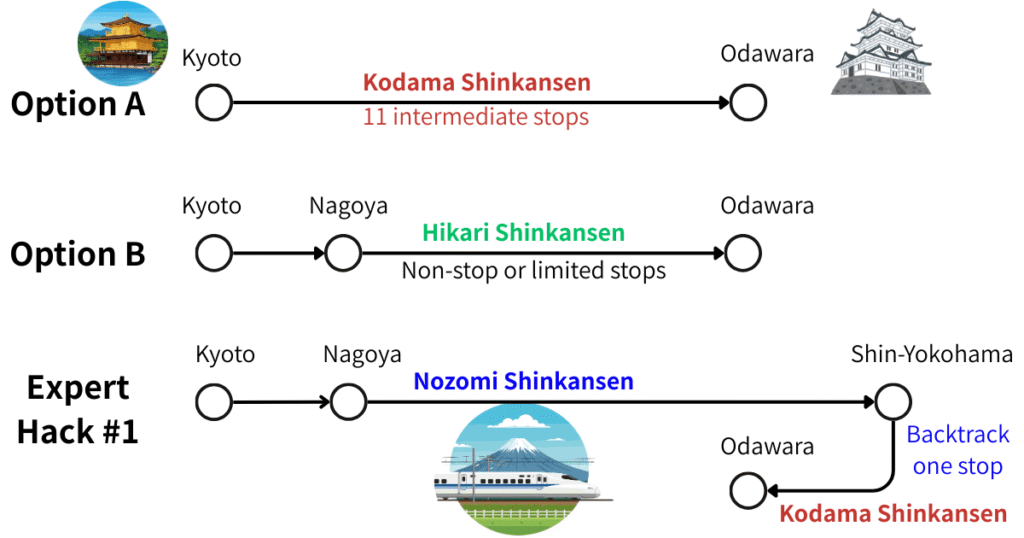
The Shinkansen portion of your journey runs between Kyoto Station and Odawara Station. From Odawara, you will switch to a local line to reach the actual Hakone area (e.g., Hakone-Yumoto, Lake Ashi).
Why Odawara is Your Gateway to Hakone
Of the Shinkansen services bound for the Tokyo area, only Kodama trains and a limited number of Hikari trains stop at Odawara. This is the designated interchange station for all travelers heading to Hakone. The final leg of your journey involves switching to the local Odakyu Line or Hakone Tozan Line trains/buses here.
Option A (Slow & Steady): The 3-Hour Kodama Shinkansen
Kodama trains are the slowest Shinkansen, as they stop at every station between Kyoto and Tokyo.
| Key Feature | Detail |
|---|---|
| Travel Time (Kyoto - Odawara) | Approximately 3 hours |
| Frequency | Available roughly every 30 minutes |
| Why Choose This? | Most flexible schedule; easy to board without prior planning. |
| Pass Coverage | Fully covered by the Japan Rail Pass. |
Seating Tip: Outside of business hours and holidays, Kodama trains tend to be less crowded than faster services. If you are a small group, you have a good chance of finding seats together in the non-reserved section, as frequent stops allow passengers to easily secure available seats.
Option B (Faster Option): The 2-Hour Hikari (Limited Stop) Plan
The Hikari is the second-fastest Shinkansen type, but most services bypass Odawara. Only a few specific Hikari trains stop at Odawara (roughly one train every two hours).
| Key Feature | Detail |
|---|---|
| Travel Time (Kyoto - Odawara) | Approximately 2 hours (Saves 1 hour vs. Kodama) |
| Frequency | Approximately one train every 2 hours |
| Why Choose This? | The fastest direct train to stop at Odawara. |
| Reservation Tip | Due to low frequency, reservations are strongly recommended to secure your travel time. |
| Pass Coverage | Fully covered by the Japan Rail Pass, including the reserved seat fee. |
Expert Hack #1: The “Backtrack” Route (Nozomi + Kodama Transfer)
If you missed the Hikari, don’t wait 2 hours. Take the fastest bullet train to Kyoto (the Nozomi) from Kyoto to Shin-Yokohama, then backtrack one stop to Odawara via a Kodama train. This ‘Expert Hack’ is often the fastest way from Hakone to Kyoto when schedules don’t align. Surprisingly, the price difference for this extra speed is only about 3,000 JPY if you don’t have a JR Pass.
| Key Feature | Detail |
|---|---|
| Travel Time (Excluding Transfer Wait) | Approximately 2 hours (Same as Hikari) |
| Transfer Point | Transfer Point: Shin-Yokohama Station (one stop past Odawara, heading toward Tokyo) |
| Why Choose This? | Gives you high-frequency access to fast travel when Hikari schedules don't align. |
| Time Saved | Can save up to 30 minutes compared to riding the Kodama all the way. |
| Cost Note | While there is a small surcharge for the Nozomi segment, the time saved and increased flexibility make it a highly recommended option for those without a JR Pass. |
3. Tickets & Reservations: Price, Pass, and Seat Strategy
Bullet Train Price & Tickets (Kyoto to Hakone)
The bullet train hakone to kyoto price varies depending on whether you choose a reserved or non-reserved seat.
| Train Type | Approximate One-Way Price (Non-Reserved) | JR Pass Coverage |
|---|---|---|
| Kodama / Hikari | 11,700 JPY | Fully Covered |
| Nozomi | 14,630 JPY (Full fare, non-JR Pass) | Surcharge Required |
(Note: Prices are estimates and subject to change based on seasonality and seat type.)
Where to buy Hakone to Kyoto bullet train tickets:
Watch Kensho Quest’s YouTube video for a complete step-by-step guide on how to buy Shinkansen tickets in Japan.
- Smart EX App: The easiest way to book online and use a QR code.
- Ticket Machines: Available at Kyoto and Odawara stations (English available).
- Ticket Office (Midori-no-Madoguchi): Best for using the JR Pass to get reserved seats.
JR Pass Holders: Which Trains Can You Use?
- Kodama and Hikari (Options A & B): YES. Both are fully covered by the standard Japan Rail Pass, including reserved seats.
- Nozomi (Expert Hack #1): NO, not entirely. The standard JR Pass does not cover the Nozomi Shinkansen. If you wish to use the Nozomi for the faster leg, you must purchase a separate “Nozomi/Mizuho Ticket” before boarding. If you will be utilizing the full journey: The connecting Kodama segment (Shin-Yokohama to Odawara) IS covered by the JR Pass, meaning you only pay the supplement for the Nozomi section.
The Necessity of Reserved Seats for Groups and Peak Times
While non-reserved seats are available, we strongly recommend reserving your seats if:
- You are using the less frequent Hikari (Option B) train to guarantee your departure time.
- You are traveling in a group and need to sit together (especially on weekends or holidays).
4. Bullet Train Schedule & Timetable (Odawara to Kyoto)
Knowing the bullet train from Kyoto to Hakone time is crucial for planning your day.
- First Train: The first Shinkansen from Odawara to Kyoto departs around 6:00 AM.
- Last Train: The last convenient Hikari for Kyoto departs Odawara around 8:00 PM.
- Frequency: Kodama trains run every 30 minutes, while Hikari runs every 2 hours. Check the Odawara to Kyoto Shinkansen timetable on the Navitime app for real-time updates.
5. Step-by-Step Guide: Traveling From Kyoto to Hakone
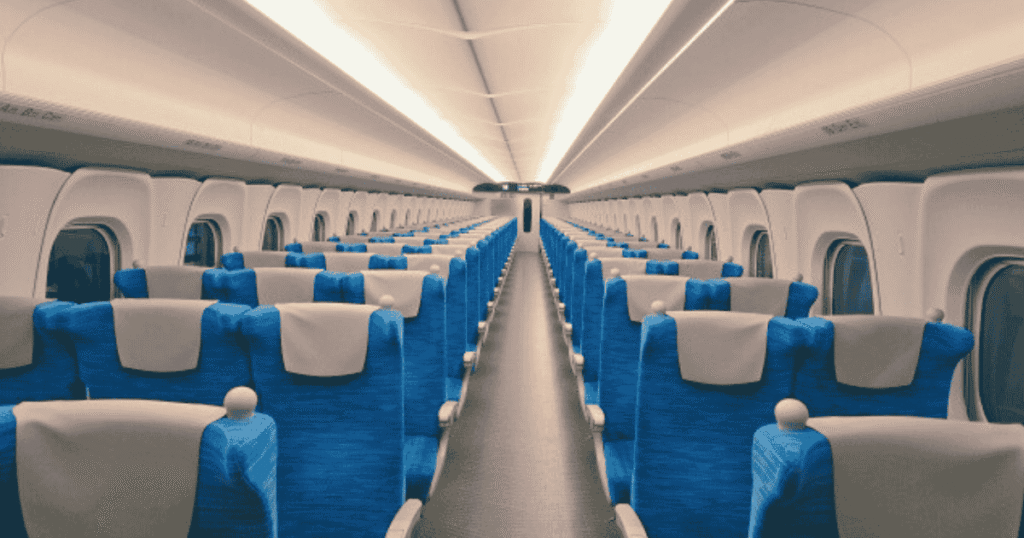
Getting on the Train: Finding Your Platform at Kyoto Station
- Platform Check: Shinkansen trains depart from the JR Shinkansen side of Kyoto Station. Check the electronic boards for trains bound for Tokyo or Shin-Yokohama.
- Expert Hack #2: The “Seat E” Strategy for Mt. Fuji Views
To ensure the best Mt. Fuji photos, always request Seat E (the 2-seat side). When traveling from Kyoto to Odawara, the mountain will appear on your left. When heading from Hakone back to Kyoto, it will be on your right.
The Seamless Transfer: Odawara Station to Hakone-Yumoto
- Use the Transfer Gate: Once you arrive at Odawara Station, exit the Shinkansen gates and follow the signs to the Transfer Gates for other railways (Odakyu Line). Do not exit the JR gates to the outside.
- Switch to Local Line: Look for the local Odakyu Line platform.
- Final Leg: Take the local train to Hakone-Yumoto Station (the most popular hub).
6. Step-by-Step Guide: Traveling From Hakone to Kyoto
Starting Your Trip: Hakone-Yumoto to Odawara
First, take the local Odakyu or Hakone Tozan train back to Odawara Station. Build in at least 30-45 minutes of buffer time for this local segment.
The Journey Back: Catching Your Bullet Train Hakone to Kyoto
Enter Shinkansen Gates: At Odawara, enter the Shinkansen gates and look for trains bound for Kyoto or Shin-Osaka. (Note: If you choose Expert Hack #1, you will take the Kodama to Shin-Yokohama first before transferring to a faster Nozomi.)
7. Other Travel FAQs (Alternatives and Baggage)
Why You Should Skip the Kyoto to Hakone bus
While bus travel is generally cheaper, the direct highway bus route is incredibly long and physically taxing. The Shinkansen route is significantly faster and far more comfortable.
Baggage Rules (Manners and Mandatory Reservations)
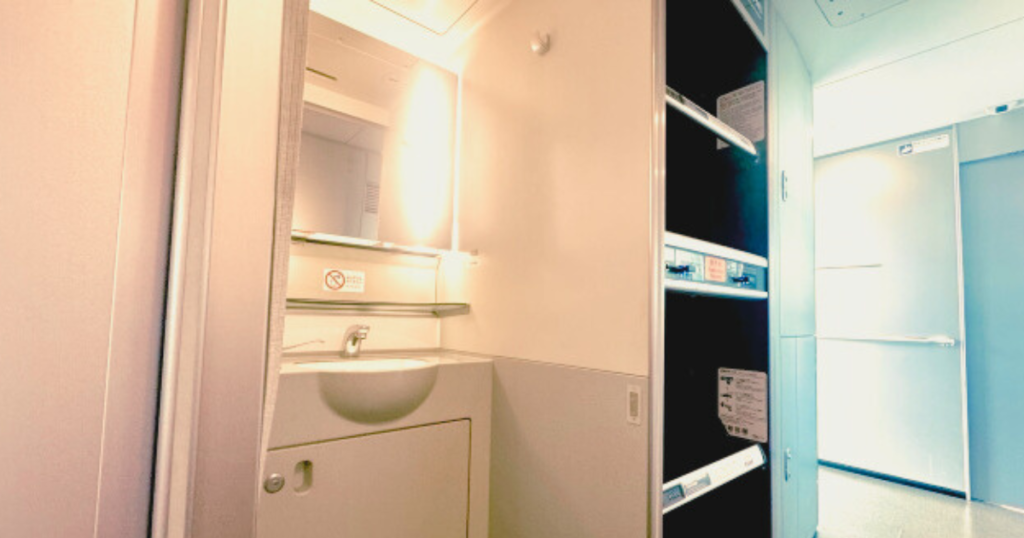
While you must reserve a designated Oversized Baggage Seat for very large luggage (total dimensions >160 cm), everyday baggage must also be handled correctly to avoid traveler conflicts:
- Do Not Place Luggage in the Aisle: This obstructs movement and poses a safety risk.
- The “Empty Seat” Rule: Never place your luggage on an empty seat next to you, even if the train seems empty. In Japan, this is considered extremely rude and often leads to confrontations with conductors. Always use the overhead racks or keep small bags at your feet.
- Starting July 1, 2025, the “Oversized Baggage Area” located on certain decks is being introduced on a trial basis as a baggage storage space that does not require a reservation. Please note that passengers with oversized baggage (total dimensions exceeding 160 cm) are still required to reserve a “Seat with an Oversized Baggage Area.” For more details, please check the official JR website.
Pro Tips for the Ultimate Hakone Trip
- The Hakone Freepass: Upon arriving at Odawara, head to the Odakyu sightseeing service center to buy a Hakone Freepass
It covers all buses, cable cars, and the pirate ship in Hakone. Consult our guide on the full loop: [Is the Hakone Freepass Worth It? 2026 Price & 1-Day Guide]
Expert Hack #3: The Ultimate “Ekiben” Experience
- At Kyoto Station, look for the “Ekiben-Ya Matsuri” shop. Buying a local Kyoto-style bento box to enjoy during your Shinkansen ride is an essential “pro-traveler” highlight of the Japanese rail experience.