Can you see Mount Fuji from Hakone? The answer is a resounding YES—but only if the weather cooperates.
While Hakone is one of the best places in Japan to view the iconic peak, Mt. Fuji is famously “shy” and often hidden by clouds. To ensure you don’t miss out, you need to know exactly where to go and when to look.
In this guide, we’ll cover the best viewing spots like Lake Ashi and the Hakone Ropeway, provide a real-time visibility checklist, and answer the crucial question: Is it better to see Fuji from Hakone or Kawaguchiko?
Table of Contents
Toggle1. Where to check Mount Fuji visibility?
To save time and avoid disappointment, we highly recommend checking the real-time visibility before you head out. Rely on these official live feeds, which show the current conditions around Hakone and Mount Fuji:
Official Live Camera Feeds
Hakone Taikanzan (Turnpike View): Watch the feed from the scenic Taikanzan area, which often provides one of the clearest long-distance views.
Lake Ashi Web Camera: Check the immediate conditions over Lake Ashi, one of the primary viewing areas in Hakone.
- Source: hakone tourist association
Mt. Kintoki Summit Cam: See the direct view from the Kintaro Chaya teahouse at the summit of Mt. Kintoki, a nearby hiking spot.
- Source: hakone tourist association
General Weather Check
Fuji Forecast: Always check the forecast for the Fujiyoshida area (on the side of Mt. Fuji). If the skies are clear there, your chances are excellent in Hakone. We recommend using a reliable international service like AccuWeather for the most comprehensive forecast.
2. The 7 Best Viewing Spots & How to Reach Them
While Fuji is a huge mountain, its shyness (often hiding behind clouds) means you need to be strategic. Here are the top locations to witness Mt. Fuji from Hakone.
1. Lake Ashi: Iconic Views with the Torii Gate
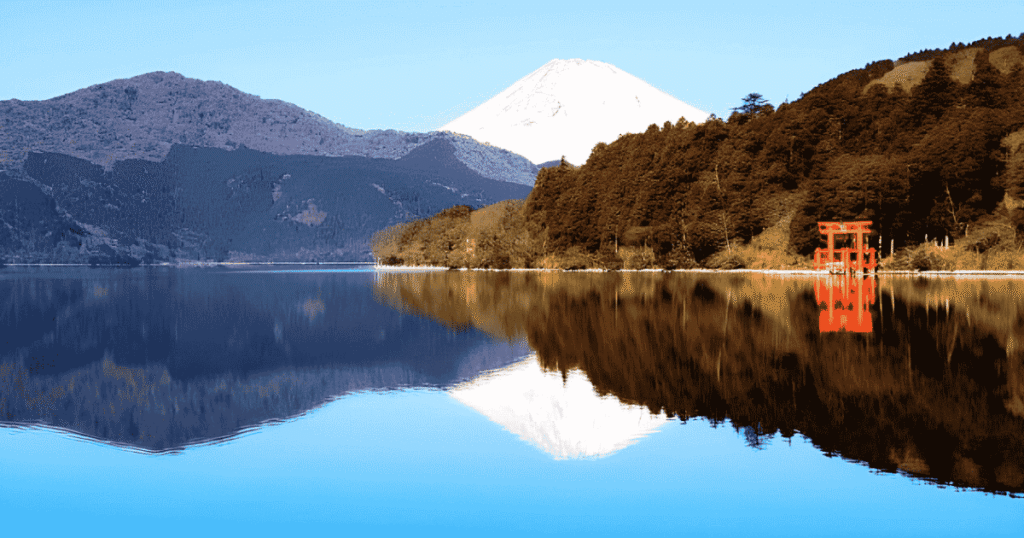
This is the classic postcard view of Hakone. While the view from the Pirate Ship is iconic, you can find even better vantage points from the elevated grounds of Onshi-Hakone Park and the Narukawa Art Museum. Both are located on hillsides near Moto-Hakone, offering a stunning, bird’s-eye perspective of Mt. Fuji towering over the lake.
- The View: A serene landscape of Mt. Fuji rising behind the lake. For the famous “Fuji + Torii Gate” shot, stay near the Moto-Hakone area. If you are at the opposite side (Togendai), you will see the mountain but without the gate in the frame.
- How to get there: Take the Hakone Tozan Bus (Line R or H) from Hakone-Yumoto Station and get off at “Moto-Hakone-ko” (for the pier and Onshi Park) or “Moto-Hakone” (for the Narukawa Art Museum).
2. Hakone Ropeway: Volcanic Vents and Aerial Views
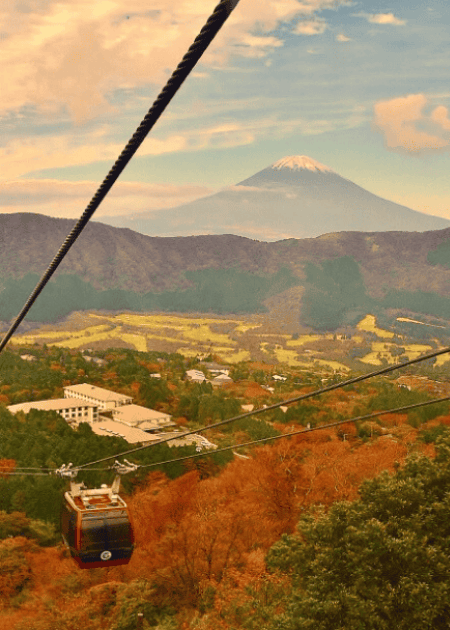
Experience the stunning autumn colors around the Hakone Ropeway, as featured on the Cinemalux JAPAN YouTube channel.
The Hakone Ropeway serves as a moving observatory. As you travel the full line between Sounzan Station and Togendai Station, the scenery shifts from active volcanic valleys to mountain views over the lake.
- From Sounzan Station to Owakudani Station: As the gondola approaches Owakudani Station, you can look directly down at the active sulfur vents and rising steam of the “Great Boiling Valley.” During this approach, Mt. Fuji comes into view on your right side, providing a unique contrast with the volcanic landscape below.
- From Owakudani Station to Togendai Station: Mt. Fuji remains visible as you leave Owakudani Station. As you descend, you can see the expansive Lake Ashi ahead. During the autumn season (typically late October to mid-November), the trees directly beneath the ropeway and along the surrounding slopes turn vibrant shades of red and yellow.
- Practical Tip: The cabins feature large windows on all sides, making it easy to see the scenery. If you are traveling from Sounzan, keep an eye to your right as you near Owakudani for the first view of Fuji, and look straight down during the autumn months to enjoy the foliage.
- How to get there: From Hakone-Yumoto Station, take the Izuhakone Bus (bound for Kojiri) to the “Owakudani” stop. Alternatively, take the Hakone Ropeway from Sounzan Station and get off at Owakudani Station. The volcanic vents are a 10-minute walk from either.
3. Otome Toge (Maiden's Pass): Fuji with a Side of Coffee
For a more relaxed experience, Otome Toge offers a wide, clear perspective of Fuji’s base, where you can appreciate the mountain over a coffee at the stylish FUJIMI CAFE.
- How to get there: From Hakone-Yumoto Station, take the Hakone Tozan Bus (bound for Togendai) to “Sengoku-Annaijo-mae.” Transfer to the bus bound for Gotemba Station or Gotemba Premium Outlets and get off at “Otome Toge.” The cafe is just a 1-minute walk away.
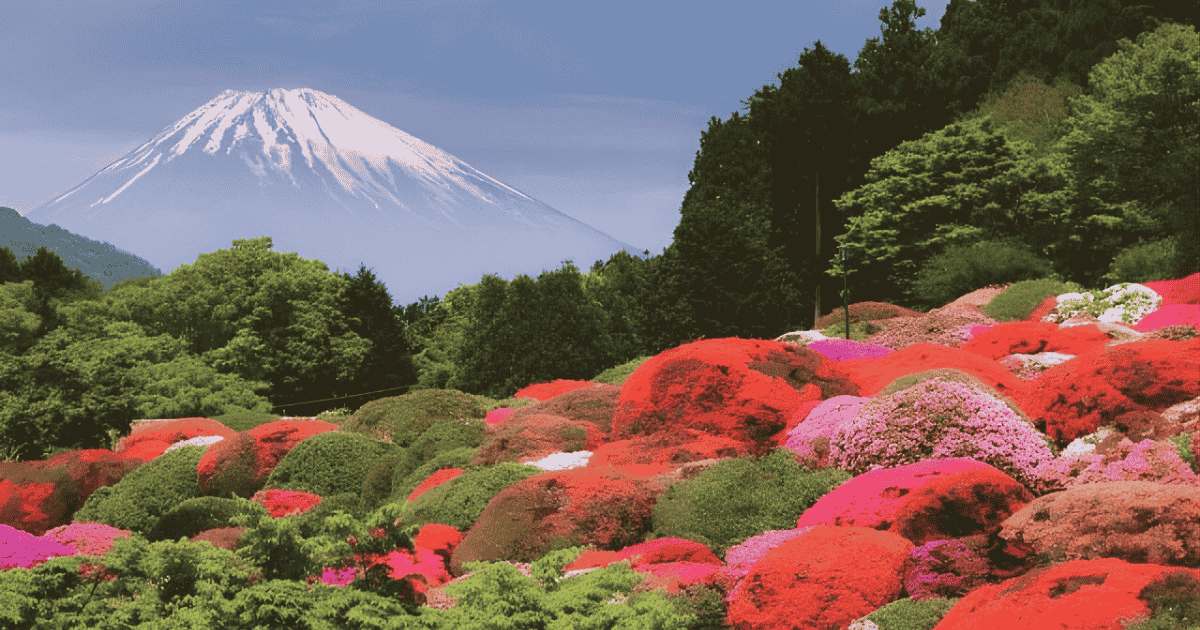
4. Odakyu Hotel de Yama: Azaleas and Fuji
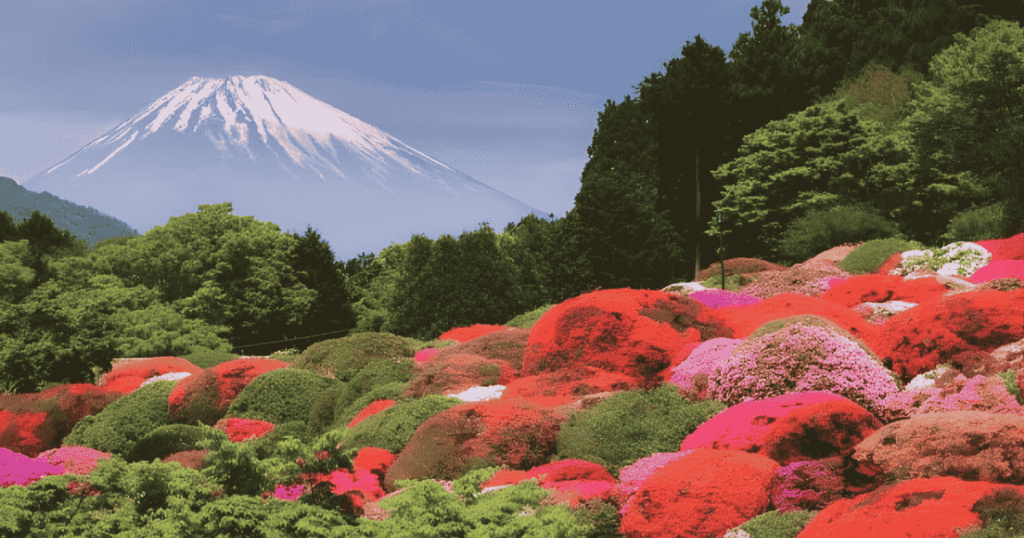
This historic hotel is famous for its magnificent private garden. It offers a unique seasonal foreground that you won’t find anywhere else in Hakone.
- The View: From late April to mid-May, roughly 3,000 azaleas bloom in the garden. You can capture the vibrant pink and red flowers with the snow-capped Mt. Fuji as a backdrop. The garden is open to non-guests for a small fee during the blooming season.
- How to get there: It is a scenic 25-minute walk along the lakeshore from the Moto-Hakone-ko bus stop/pier.
5. Hakone Komagatake Ropeway: New Panoramic Terrace
Taking the ropeway to the summit of Mt. Komagatake brings you to one of the highest vantage points in Hakone. The observation deck was newly renovated in April 2025.
- The View: The modern terrace offers a 360-degree panorama. You can see Mt. Fuji, the entire Lake Ashi, and even the Pacific Ocean. The air is clearest in autumn and winter, allowing for spectacular long-distance visibility.
- How to get there: Take the Izuhakone Bus (bound for Hakone-en) from Hakone-Yumoto Station to the “Hakone-en” stop. Transfer to the Komagatake Ropeway and get off at the “Summit Station.” The peak is an easy 8-minute walk from the station.
6. Taikanzan: The Panoramic Driving View
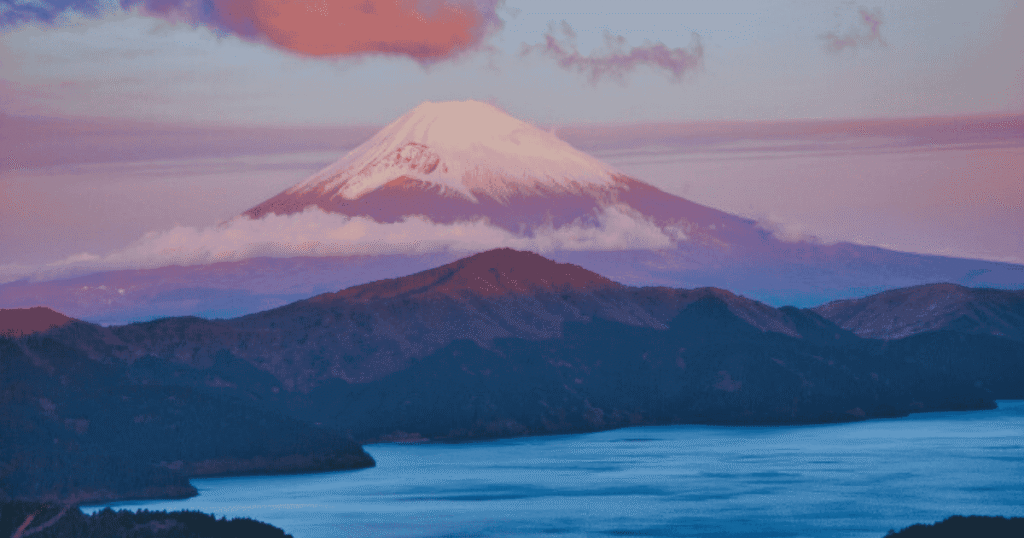
Located along the Hakone Turnpike, this is a favorite spot for photographers and drivers. It offers a vast, expansive perspective of the entire Hakone caldera.
- The View: A massive, panoramic vantage point of Fuji, Lake Ashi, and the surrounding mountain ranges. Since it is higher than the lake level, it often provides a clearer view above the lower mist.
- How to get there: From Hakone-machi-ko, transfer to the bus bound for Yugawara Station (Hakone Tozan Bus or Izuhakone Bus). It is approximately an 8-minute ride; get off at the “Taikanzan” stop.
7. Mt. Kintoki: For the Adventurous Hiker
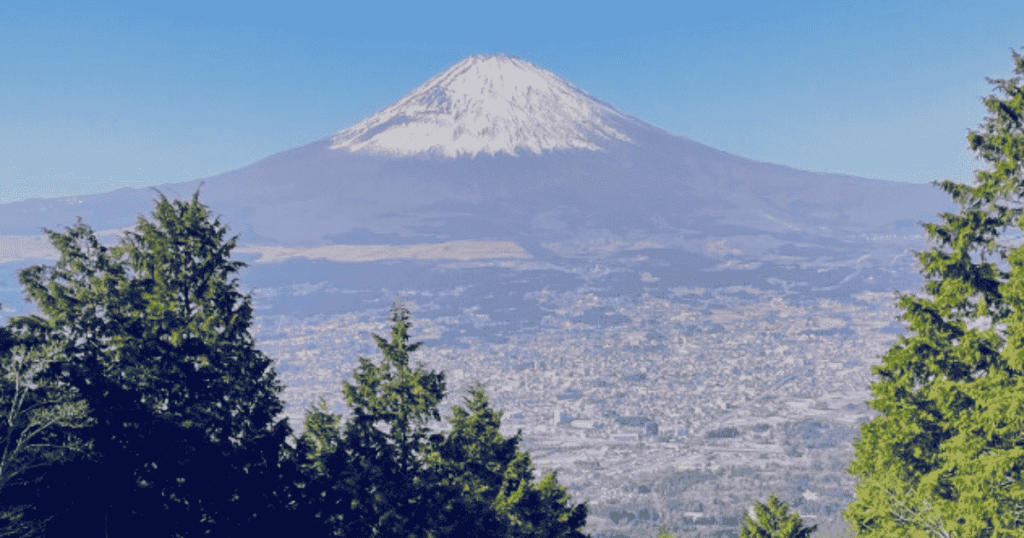
For those willing to hike, Mt. Kintoki (one of the most popular peaks in Hakone) rewards you with the most immediate and closest view of Mt. Fuji in the region.
- The View: An up-close, powerful view of the mountain from the summit. This is arguably the most rewarding perspective for travelers who want to feel the scale of Fuji-san away from the tourist crowds.
- How to get there: From Hakone-Yumoto Station, take the Hakone Tozan Bus (bound for Togendai) to “Sengoku-Annaijo-mae.” Transfer to a bus bound for Gotemba Station/Premium Outlets and get off at “Kintoki-jinja-iriguchi.”
- Note: This is a hiking route. The summit is approximately a 1 hour and 25-minute climb from the trailhead. Please ensure you have proper footwear.
2. Viewing Strategy: How to Maximize Your Chances of Seeing Fuji
Luck is a factor, but preparation is key. Use these tips to increase the likelihood of catching a clear view of Mount Fuji’s majestic form.
The Best Time of Year to See Fuji (Seasonal Breakdown)
Mount Fuji is most visible during the winter months (November to February). Why? Air humidity is lower, and the cold air is less prone to forming clouds or haze. Summer (June-August) is the time to avoid due to high humidity and the monsoon season.
| Season | Visibility Trend | Notes |
|---|---|---|
| Winter (Nov–Feb) | Very High | Clear, dry air; summit covered in snow. |
| Spring (Mar–May) | Medium | Good in early spring, declines as humidity rises. |
| Summer (Jun–Aug) | Low (Worst) | High humidity, monsoon rains, often hidden by clouds. |
| Autumn (Sep–Oct) | Medium-High | Excellent as the weather cools in late October/November. |
The Best Time of Day: Sunrise, Morning, or Afternoon?
The mountain is almost always clearest early in the morning, often right after sunrise. As the day warms up, atmospheric moisture increases, making clouds more likely to form around the summit. Aim to be at your viewing spot by 9:00 AM at the latest.
3. Day Trip Logistics: Hakone vs. The Fuji Five Lakes
Many travelers compare Hakone to the Fuji Five Lakes area (Kawaguchiko). Here’s a quick comparison to help you decide your priority.
Is Hakone Better to See Mount Fuji, or Should I Go to Kawaguchiko?
| Feature | Hakone | Fuji Five Lakes (Kawaguchiko) |
|---|---|---|
| Best For | Onsen (Hot Springs), Art Museums, Pirate Ships, History, Easy Loop Tour | Direct, Guaranteed Views, Iconic Reflection Photos, Climbing |
| View Quality | Great from a distance (often across a lake) | Up-close and dramatic (views from the base) |
| Why Choose? | You want a varied cultural and relaxing trip with a good chance to see Fuji. | Your sole priority is getting the absolute best, closest photo of Fuji. |
| Visibility | Moderate (due to distance and coastal clouds) | High (much closer to the mountain) |
Connecting Hakone and Mount Fuji (Bus Routes)
There is no direct train between Hakone and the Fuji Five Lakes region. To travel between the two areas, utilizing buses via Gotemba Station is the most practical and efficient method.
If traveling from Lake Kawaguchi to Hakone:
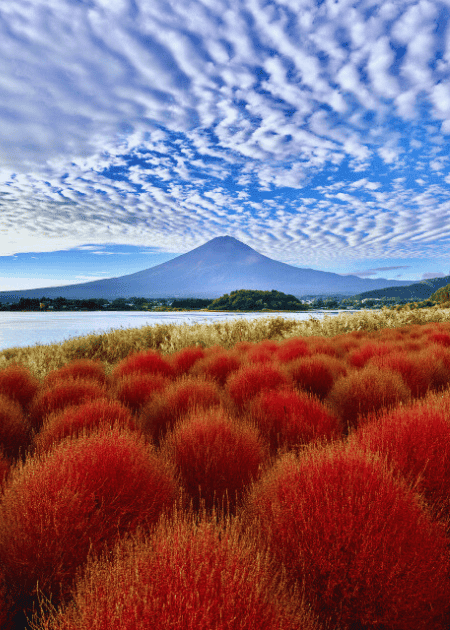
If you’re staying in Lake Kawaguchi, you can reach Hakone by taking a series of buses, often passing by renowned attractions like the crystal-clear waters of Oshino Hakkai and scenic Lake Yamanaka, one of the Fuji Five Lakes.
- Start by taking a Fujikyu bus from Kawaguchiko Station to Gotemba Station (approx. 1 hour and 45 minutes).
- Then, transfer to an Odakyu Highway Bus heading to the Hakone area at Gotemba Station (about 30 minutes).
This journey offers opportunities to explore various attractions along the way and will bring you to Hakone in no time.
4. Hakone Fuji Viewing FAQs
Quick answers to your remaining Mount Fuji questions.
Is Hakone good to see Mount Fuji?
Yes! Hakone is one of the premier locations in Japan to view Mount Fuji. While the mountain is about 30 to 50 kilometers away, the scenic combinations with Lake Ashi, the red torii gates, and the volcanic landscape of Owakudani offer some of the most unique and iconic views in the country.
Can you see Mt. Fuji from the Hakone Loop?
Yes! The famous “Hakone Free Pass” loop includes the Ropeway and the Lake Ashi cruise, both of which offer premium views of Mt. Fuji on clear days. The best segments are between Sounzan Station and Togendai Station, and from the sightseeing cruise on Lake Ashi.
Can you see Mount Fuji from the Hakone Open Air Museum?
Generally, no. The museum is located deep within the valley, surrounded by hills. The views from the Open Air Museum are focused on the local landscape and sculptures, not the distant mountain.
Where can I watch the sunrise with Mt. Fuji in Hakone?
Mt. Kintoki and Lake Ashi (Moto-Hakone area) are the top spots. Watching the sunrise from the shore of Lake Ashi provides a breathtaking “Red Fuji” effect during winter mornings.
Which town has the best view of Mount Fuji?
It depends on your priority: Kawaguchiko offers the closest, most direct, and most consistent views from the base of the mountain. Hakone is best for iconic scenery, featuring Mt. Fuji framed by Lake Ashi and historic torii gates.
How far is Hakone from Mount Fuji?
Hakone is located roughly 30 to 50 kilometers (18 to 31 miles) from the summit of Mount Fuji, depending on your exact location in the Hakone area. This distance provides the scenic, framed views you see in most photos.
5. Final Verdict: Go Prepared and Be Rewarded
Mount Fuji is a magnificent sight, and seeing it from the historic beauty of Hakone is truly special. Remember the golden rules: go in winter, go early in the morning, and check the live cameras!
By following this guide, you will dramatically increase your chances of capturing that perfect, unforgettable view of Fuji-san from Hakone.