Having traveled to Hakone multiple times, I have learned that the Hakone Ropeway is as unpredictable as it is beautiful. A sudden shift in wind or volcanic gases can halt the “Golden Loop” in minutes, often leaving tourists stranded without a clear plan.
Based on my experience navigating these sudden closures, I have analyzed the most effective ways to stay informed in 2026. This guide goes beyond just providing links; I’ll share practical insights on how to decode official Japanese status updates and, more importantly, how to navigate the transition to backup transport. Based on my observations, the biggest challenge isn’t just finding a bus, but locating the specific stops and transfer points which can be surprisingly tricky when the ropeway stops. I’ll provide the practical details you need to find your way on the ground without stress.
Quick Guide to Official Status Symbols:
When you open the official site, look for these symbols:
- 〇 (Maru): Operating Normally
- × (Batsu): Suspended / Closed
- △ (Sankaku): Partial disruption or wind warnings
Table of Contents
Toggle1. How to Check Hakone Ropeway Status (Live Updates)
When traveling in Hakone, finding accurate, real-time status is critical. For a live status map and the most reliable visual updates, we strongly advise relying on official Japanese sources using a translation tool.
Quick Check: Official Real-Time Status Link
The most important step is checking the official Hakone Navi website, which is updated instantly by the operator.
- Official Real-Time Status Link: https://www.hakonenavi.jp/hakone-ropeway/
- Warning: Japanese Language Required. This page is essential for real-time status. Use your browser’s built-in translation feature (like Google Translate or DeepL) immediately upon loading the page. The key status indicators will be immediately visible upon translation.
- Combined Status Check: You can also check the status of the ropeway and all connecting public transport (trains, boats) on the general transport page: https://www.hakonenavi.jp/transportation/
Fastest Source: Hakone Navi’s Official Twitter/X (@hakone_navi)
For sudden closures due to weather (strong winds) or unexpected events, the official X (formerly Twitter) account is often the fastest source of information.
- Official Twitter/X Account: @hakone_navi
- Pro Tip: This account posts in Japanese. Use the platform’s “Translate Post” feature to get immediate information about any sudden service disruptions.
2. What to Do if Hakone Ropeway is Closed? (Alternative Bus Routes)
Don’t worry—if the ropeway is suspended due to high winds or volcanic activity, you can still complete the Hakone Loop using the extensive bus network.
If the ropeway is not running, your options depend heavily on whether the closure was planned or sudden.
Scheduled Closures: The Official Substitute Bus Service
If the closure is for planned maintenance or construction, the operating company (Odakyu Group) usually provides a Substitute Bus Service (代行バス / Daikō Bus).
- How to Confirm: Details on the route and timetable will be posted in advance on the official Hakone Ropeway status website (use translation).
- For Pass Holders: If you hold a Hakone Freepass or other applicable tickets, the substitute bus service is typically covered as part of your pass. Always confirm this on the official announcement.
Sudden Closures: What to Do If There is No Substitute Bus
If the closure is sudden (e.g., high winds, unexpected volcanic restrictions), there may be no official Substitute Bus Service. In this case, you must rely on local, operating transport.
- Self-Guided Alternatives: Use the Hakone Tozan Bus
- The most viable alternative is the Hakone Tozan Bus network. Your Hakone Freepass covers these bus routes.
- Main Alternative Route: The bus route between Togendai Station (at Lake Ashi) and Kowakidani Station (where you can transfer to the Hakone Tozan Cable Car for Sounzan) is the key connection, often taking 30 to 40 minutes.
- Essential Tool: Use a route search app like Google Maps to find the next available bus, as multiple lines may run through the area.
Key Bus Stops for Transfers
Switching from a ropeway station to a bus stop can be confusing. Here are the locations of the key stops:
| Station/Stop | Location | Note |
|---|---|---|
| Sounzan Station Entrance | Approx. 100m (2 min walk) from the station, located on the road. | Be careful of the bus direction signposts. |
| Owakudani Bus Stop | Located near the Hakone GeoMuseum. | |
| Ubako Bus Stop | Approx. 350m (5 min walk) from Ubako Station, located on the road. | Be careful of the bus direction signposts. |
| Togendai Bus Stop | Located right next to Togendai Station. | |
| Kowakidani Station Bus Stop | Located on National Route 1 (outside the station). | Key transfer point for connecting back to the cable car line. |
3. Hakone Ropeway Guide: Price, Map, and Where to Get On
The ropeway has four main stations. You can start your journey from either end:
- Sounzan Station: The starting point if you are coming from Gora via the Cable Car.
- Togendai Station: The starting point if you are coming from Lake Ashi via the Sightseeing Cruise.
Hakone Ropeway Route & Travel Time: Sounzan ↔ (10 min) ↔ Owakudani ↔ (10 min) ↔ Ubako ↔ (10 min) ↔ Togendai
Tickets and Fares (Single-Ride & Round-Trip)
If you are not using a pass, these are the general ticket prices:
- Route Segment: Sounzan to Togendai (Full Route)
- One-Way Fare: ¥2,000 (¥700 Child)
- Round-Trip Fare: ¥3,000 (¥1,000 Child)
Validity: One-way tickets are valid for one day. Round-trip tickets are valid for two days.
Note on Fares: Fares are subject to change. The definitive source is the Japanese Official Fares Page—please use your browser’s translation feature to confirm the latest rates.
Which Hakone Freepass is Best for You?
The Hakone Freepass is the most popular choice, but other options exist:
- Hakone Freepass: Covers 8 modes of transport in Hakone (including the Ropeway) for 2 or 3 days, plus the round trip from Odawara/Shinjuku. (Recommended)
- Hako Ticket Plus: Digital Hakone Freepass + an activity pass covering 20 facilities (museums, onsen, etc.).
- Tozan Railway/Ropeway ‘OWAKUDANI 2–Day Pass’: Covers the Hakone Tozan Train, Cable Car, and Ropeway, plus the round trip from Odawara.
- Hakone Ashinoko Hana-ori Pass (Mainly available in Japanese, but purchasable at local stations). This pass is focused on the Ropeway, Pirate Ship (Cruise), and Tozan Buses. While there is no dedicated English page, it offers discounts at several local facilities.
4. Hakone Ropeway & Travel FAQ
Take in the stunning autumn colors of Hakone through this short video by Bahay YouTube.
Is Hakone Ropeway Worth Doing?
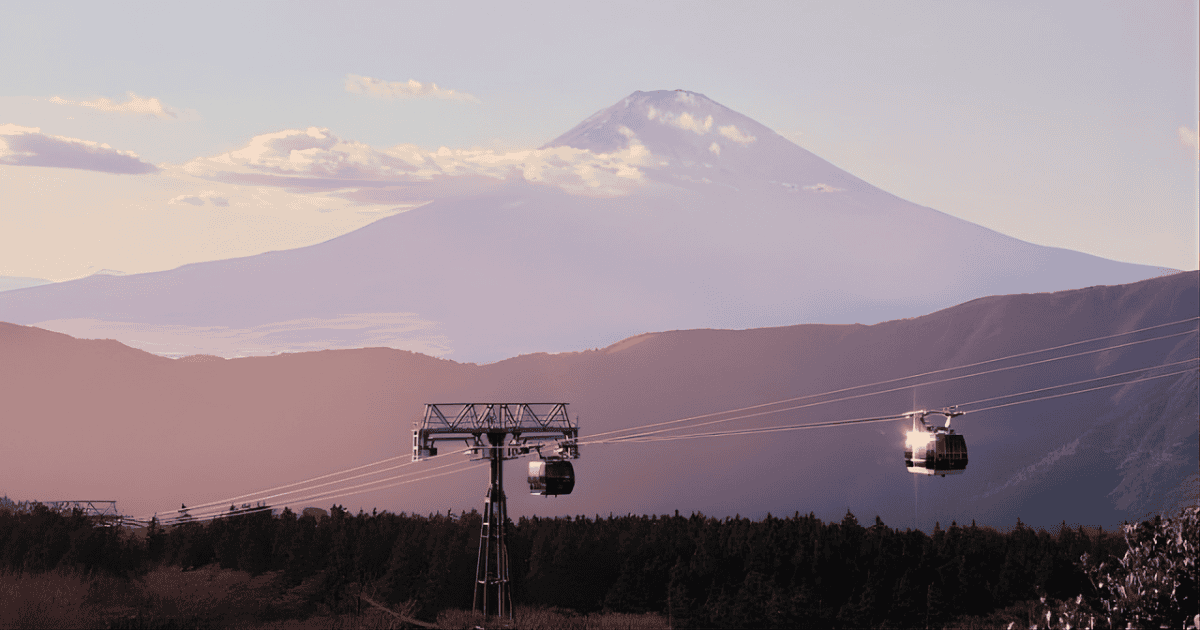
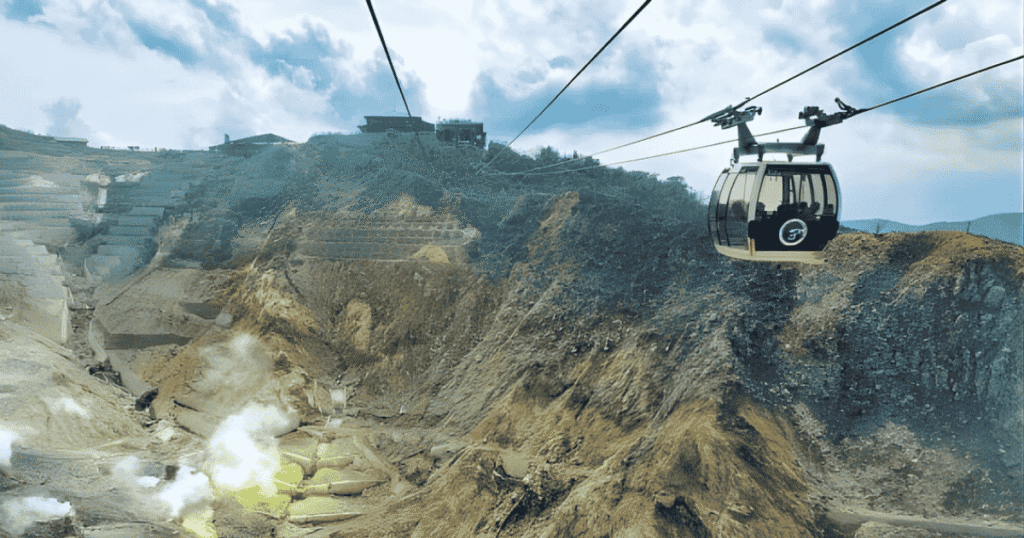
Yes. It is widely considered one of the best activities in Hakone. It offers unrivaled, up-close views of the volcanic activity in Owakudani (including sulfur vents) and, on clear days, stunning views of Mount Fuji. If your time is limited, the ropeway is a must-do.
To find the perfect vantage point for Mt. Fuji, refer to our [Top 7 Viewpoints article].
Is the Hakone Ropeway or Cable car scary?
The Hakone Ropeway is a gondola that hangs high above the volcanic valley. While it is very stable and safe, it can be a bit “scary” for those with a severe fear of heights, especially on windy days. The Cable Car, on the other hand, runs on tracks on the ground and is not scary at all.
How Much Time Does the Ropeway Take?
The full ride from Sounzan to Togendai takes approximately 30 minutes. The ropeway stops at four stations: Sounzan, Owakudani, Ubako, and Togendai. Allow an additional 30–60 minutes for exploring the volcanic vents at Owakudani.
What time does the Hakone Ropeway close?
The ropeway’s operating hours are standardized but vary slightly depending on the station and the winter season:
February – November: 9:00 AM – 4:45 PM
Note: Only Owakudani Station remains open until 5:00 PM during this period.
December – January: 9:00 AM – 4:15 PM (All stations)
Note: Hours may be shortened due to maintenance. Always check the official status page for today’s exact closing time.
Should I Call to Check the Status? (Not Recommended)
From what I’ve observed during past disruptions, calling the station for status updates is rarely effective. During a sudden closure, phone lines are typically overwhelmed, and support is often limited to Japanese. I have found it much faster and more reliable to monitor the official @hakone_navi X (Twitter) feed. It provides the quickest alerts for wind delays that may not be immediately obvious when you are standing in a different part of the valley.
In a closure scenario, the fastest and most reliable approach is to wait for an announcement at the nearest station or check the official website via your browser’s translation tool.
5. What's Next? Finalizing Your Hakone Loop Itinerary
Now that you know how to check the ropeway status and what to do if it’s closed, you’re all set to finalize your Hakone trip.
- If you haven’t bought a pass: Purchase the Hakone Freepass. It covers the ropeway, boats, trains, and buses, simplifying all transport and providing a reliable backup if the ropeway is closed and you need to use the Hakone Tozan Bus network instead.
- If you are worried about crowds: Start the loop early (before 9:00 AM) from either Hakone-Yumoto or Gora to stay ahead of the tour groups.
- Need a Full Plan? For those planning to explore the Hakone Golden Loop, we recommend reading our [Hakone Freepass & 1-Day Itinerary Guide (2026)] for a seamless trip.