Enoshima Island is famous for its beautiful coastline, historic shrines, and mysterious caves. Also, it is one of the most reliable and easy-to-reach spots near Tokyo to see Mt. Fuji. However, success in spotting and photographing the mountain requires knowing the specific conditions and angles.
This comprehensive guide provides essential, objective details on the best vantage points on and around the island. We’ve also included practical timing tips and essential access info to help you make the most of your trip and guarantee the best chance of spotting Mt. Fuji.
Table of Contents
Toggle1. When to Go: Maximizing Your Chances of Seeing Mt. Fuji
Viewing Mt. Fuji from Enoshima depends heavily on the air quality. This is because Mt. Fuji is approximately 70 kilometers (43 miles) away from the island.
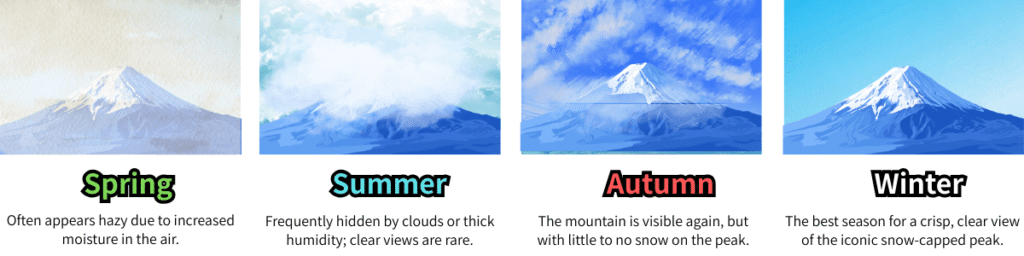
Best Season: Why the November–March Period is Ideal
The long period from November through March is considered the optimal season for viewing. The cold, dry air during these months significantly reduces atmospheric haze and humidity. As a result, it offers the highest visibility. Crucially, the mountain retains its iconic white snow cap throughout this time. Therefore, the distant view becomes more spectacular and visually distinct.
Summer Challenge (June to September): In contrast, summer presents a challenge. High humidity and cloud cover frequently obscure the distant view during the day. Consequently, clear sightings are rare.
The Sunset Opportunity: Finding the Silhouette
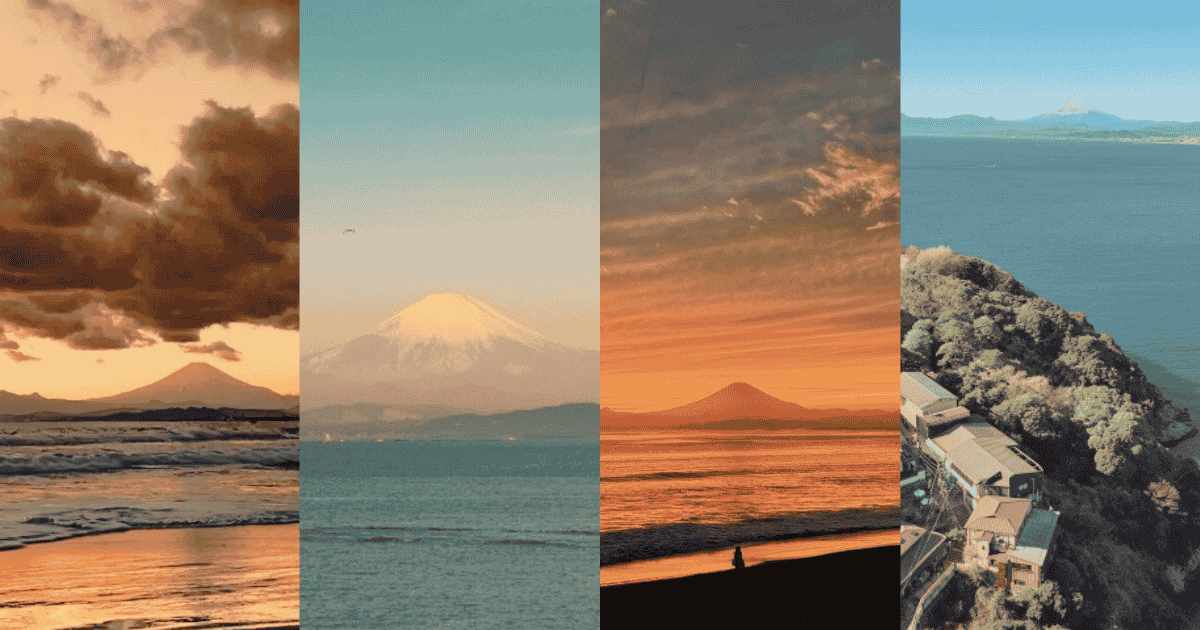
If your visit falls during the hazy season, such as late spring or summer, you still have a strong chance of a memorable view. This is especially true around sunset. When the sun sets toward the west, its low angle can often cut through the haze. You can then capture a striking black silhouette of Fuji against the vibrant colors of the twilight sky over the ocean. This makes the view enjoyable regardless of the season, provided the weather cooperates in the evening.
Don’t Aim for “Cloudless”: The Charm of Fuji with Atmospheric Clouds
While clear skies are excellent for visibility, many photographers appreciate the mountain when it is framed by natural elements. For example, wispy streak clouds (Sujigumo) often seen in autumn can add depth and atmosphere to the photograph. As a result, a few clouds can often make for a more unique and artistic shot than a plain blue sky.
2. Top 5 Photo Spots: Capturing Iconic Fuji Compositions
Where is the best enoshima view of fuji?
The answer depends on your style, but the Enoshima Sea Candle (top observation deck) and the rocky Chigogafuchi Abyss offer what many consider the best enoshima view of fuji due to their unobstructed panoramic perspectives.
1. Katase Kaigan Beach: Beach, Ocean, and Fuji in One Frame
Located on the mainland opposite the island, this shoreline offers a wide, open perspective.
- The View: This composition captures the beach and the ocean, with Mt. Fuji rising majestically on the horizon.
- Visitor Tip: The area is extremely crowded during the summer swimming season (July–August). Therefore, it is not recommended for photography during the day. However, many locals suggest the most breathtaking perspective is actually from this beach during a summer sunset. When the sun goes down, crowds gather on the sand to watch the dark silhouette of Fuji across the water. It is a moving experience to share this view with so many people.
2. Bentenbashi Bridge: The Unobstructed Floating Fuji View
The long pedestrian bridge connecting the mainland to Enoshima Island offers a clean, straightforward view as you approach the island.
The View: The bridge provides an unobstructed view of the mountain floating on the sea. This is often the first clear glimpse you get of Fuji, offering a great initial photo opportunity.
3. Enoshima Sea Candle (Top): The Panoramic Cityscape & Sea Backdrop
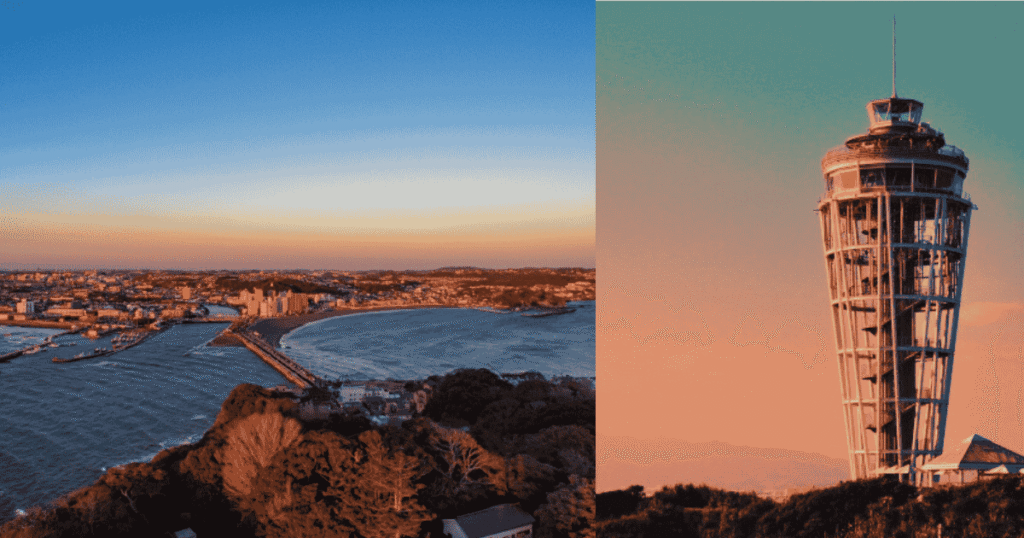
As the highest point on the island, the observation deck offers a 360-degree panorama. For more details and tickets, visit the Official Enoshima Sea Candle Website.
The View: From here, you capture a vast expanse of the surrounding ocean and the cityscape of Fujisawa. Many travelers consider this to be the best Fujisawa Fuji view available. It is ideal for a grand, wide-angle shot that places the mountain in the context of the entire region. Along with the Chigogafuchi Abyss, this tower is a top contender for the best enoshima view of fuji.
4. Kamegaoka Plaza: Framing Fuji with the Sea Candle
This plaza is located near the summit of the island, close to the Sea Candle entrance.
The View: This unique vantage point allows you to frame Mt. Fuji with the island’s most recognizable structure, the Sea Candle, in the foreground. This provides a distinctive, easily identifiable Enoshima view of fuji that will surely be a memorable part of your trip. Visiting here is one of the top Enoshima Mt. Fuji things to do.
5. Chigogafuchi Abyss: Rocky Shoreline and Safety Notes
This viewing spot is on the western edge of the island, consisting of a rocky shore.
- The View: It provides a unique, raw composition, featuring the sea, the rocky coastline, and Mt. Fuji across the water.
- Visitor Tip: This area is popular, and capturing a clear photo without people requires some effort. To minimize crowds in your shot, try to position yourself on the rocks as close to the Mt. Fuji side (the west) as is safely possible. Also, the walk here is a popular part of an Enoshima Mt. Fuji hike.
- Safety Warning: Since this is a rocky area, be very cautious of the sea conditions. When the waves are high, the spot can be dangerous. Always adhere to local safety warnings.
3. Dine with a View: Restaurants and Cafes with Fuji Vistas
If you want to relax, there are many places to eat with a view.
Fuji View Restaurants and Cafes
Near the path to Chigogafuchi, there are several restaurants with windows facing the mountain. Here are three great options:
| Establishment | Type | Key Feature |
|---|---|---|
| Fujimitei (富士見亭) | Japanese Restaurant (Seafood) | Offers traditional Japanese seafood dishes while overlooking the sea and Fuji. |
| Miharashitei (見晴亭) | Japanese Restaurant (Seafood) | Similar to Fujimitei, specializing in local cuisine with an ocean view. |
| Enoshima Pancake | Cafe / Dessert | Offers coffee and pancakes, providing a relaxed, café-style environment for viewing. |
Securing a window seat at any of these locations allows you to enjoy the magnificent scenery without worrying about the crowds or the cold.
4. Practical Planning: Access, Routes, and Safety
A successful viewing trip starts with efficient travel planning.
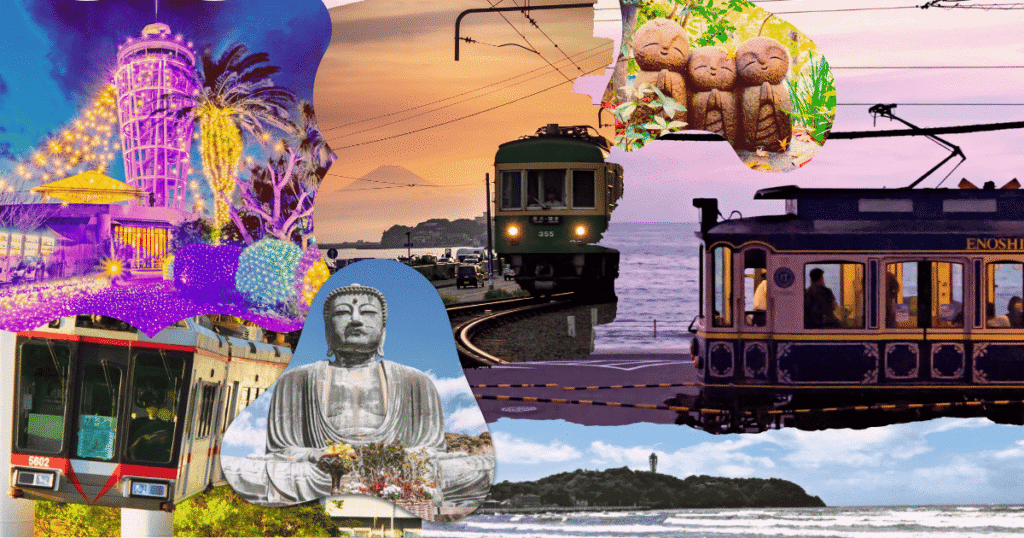
Getting to Enoshima Island: Choosing Your Train Line
Enoshima is served by three different train lines, each offering different connections.
| Line Name | Key Connection | Recommended For... |
|---|---|---|
| Odakyu Line | Shinjuku (Tokyo) | Travelers coming directly from Tokyo (Shinjuku), offering a direct route to Katase-Enoshima Station. |
| Enoden Line | Kamakura | Travelers combining the trip with Kamakura sightseeing, as it connects Kamakura and Enoshima along a scenic coastal route. |
| Shonan Monorail | JR Ofuna Station | Travelers using the JR Tokaido Line or JR Keihin-Tohoku Line who transfer at Ofuna Station. |
If you are traveling from Tokyo and trying to decide which line is best for your budget and schedule, check out our detailed comparison: Train to Kamakura from Tokyo: JR vs Odakyu (Routes, Cost, Pass) and Kamakura to Enoshima: Monorail, Enoden & Train Crossing.
To save money on your trip, we also recommend using a discount pass. Learn everything you need to know here: Enoshima Kamakura Free Pass: Price, Itinerary & Is It Worth It?.
Island Ascent: Escar and Walking Advice
The main path up the island is a significant climb.
- “Escar” Outdoor Escalators: The paid Enoshima Escar system can take you quickly and easily from the base to the summit.
- Walking the Stairs: We recommend walking the stairs to enjoy the scenery as long as you are physically able. The ascent involves
5. Seasonal Experiences: Events and Alternative Views
Enoshima Light-Up Events: Pairing Illumination with Sunset
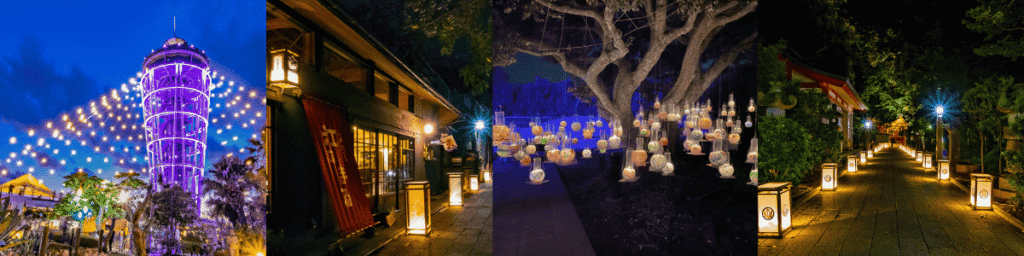
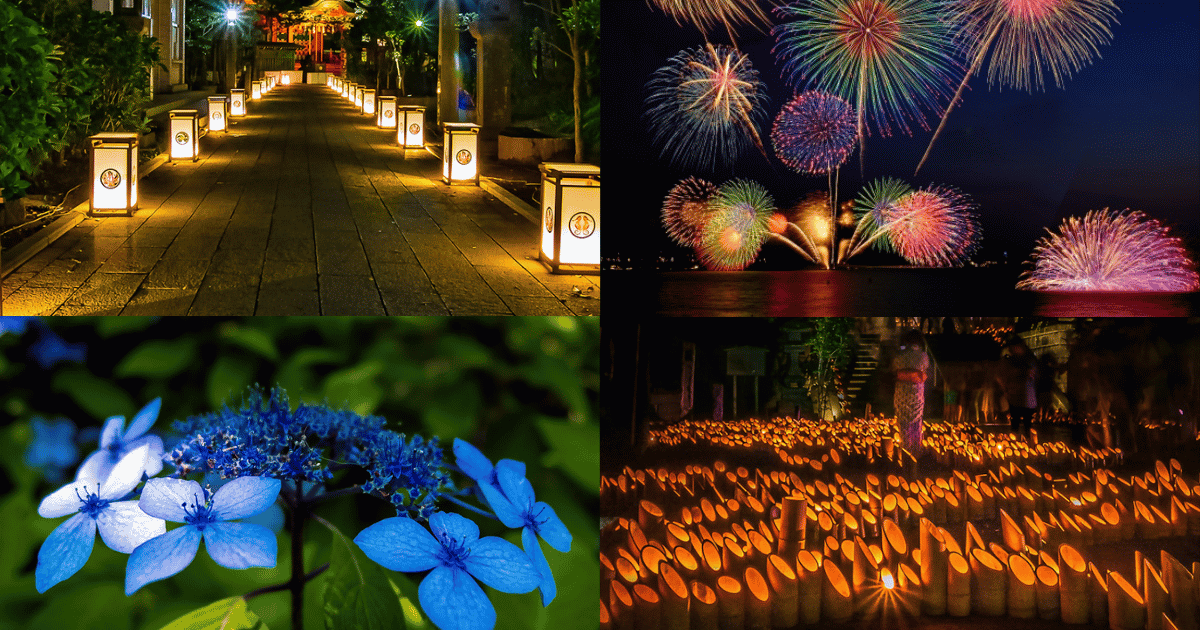
Enoshima hosts major light-up events, most notably the winter illumination known as “Shonan no Hoseki” (Jewels of Shonan). There are also seasonal light-ups every summer during the swimming season.
- Winter Illumination: The winter event typically runs from late November to February. It is renowned for its spectacular light tunnels and decorated Sea Candle. This is the prime time for capturing the sunset silhouette of Fuji combined with the dense illumination.
- Summer Lanterns: During the summer event, traditional Japanese lanterns (Tōrō) are often placed along the main path. For international visitors, this provides a unique cultural sight.
- Sunset Timing: If you time your visit to Kamegaoka Plaza just before sunset, you can capture the stunning silhouette of Fuji. Then, you can immediately enjoy the island’s illuminations as they turn on—a beautiful combination of natural and man-made light.
Beyond the Island: Viewing Fuji Framed by Enoshima Itself
To photograph Mt. Fuji with Enoshima Island in the foreground, you must step off the island and view it from the mainland coast.
- Shichirigahama & Inamuragasaki: These points along the Shonan Coastline offer the famous composition of the sea, Enoshima, and Fuji in a single frame.
(For detailed information on the best viewpoints from the adjacent coastline, please consult our related article: Can You See Mt. Fuji From Kamakura? The Ultimate Guide to the Best Viewpoints.)
6. Real-Time Visibility Check: Practical Planning
The Critical Role of Live Cams and Visibility Checks
Never travel without checking visibility! This is the single most important step.
- Live Cams: For the most reliable, real-time check of visibility, refer to the Enoshima Live camera (Enoshima Iwaya Live Camera or Enoshima – Japan Live cam). These real-time feeds are the best way to determine current visibility. Also, checking a Kamakura Mt. Fuji live cam can provide a good idea of local conditions.
- Weather Checks: When using sites like weather.com, focus on Fujisawa City. Keep an eye on the humidity levels and the visibility range.
- Critical Viewing Conditions:Since Mt. Fuji is 70km away, you should aim for a Visibility (Shitei) of 70km or more for a perfectly clear view. Additionally, try to visit when the humidity is below 70% (ideally 60% or lower) to ensure the air is crisp enough to see the distant peak.
What If Mount Fuji Doesn’t Show Up?
If the weather forecast is poor or the mountain is hidden, your day trip doesn’t have to be wasted.
- Alternative Activities: You can still enjoy the beauty of Sagami Bay, the Enoshima Shrine complex, the Iwaya Caves, and local specialties like shirasu-don.
- Kamakura Option: If visibility is poor, we highly recommend taking the Enoden train and visiting Kamakura instead. Exploring the Great Buddha (Daibutsu) and Tsurugaoka Hachimangu Shrine offers a rich cultural experience. To make the most of your time, follow our step-by-step guide: The Perfect Kamakura and Enoshima in One Day Itinerary (Freepass Guide).
7. Conclusion: Maximizing Your Viewing Success
While the Mt. Fuji view from Enoshima Island is not guaranteed, effective preparation significantly increases the probability of a successful sighting.
Essential Action Points:
- Timing is Everything: The window from November to March provides the best atmospheric clarity. If visiting in the summer, prioritize the sunset hour for a clearer silhouette view.
- Check Before You Go: Never travel without consulting the Enoshima Live camera and checking the visibility distance (Shitei) and humidity levels for the Fujisawa area.
- Know Your Angles: The island and the adjacent coast offer distinct compositions. Choose your spot based on the shot you want: Bentenbashi Bridge for a clear foreground, the Sea Candle for a 360-degree panorama, or the beach for a dramatic sunset silhouette.
- The Best Alternative: If the mountain is obscured, shift your focus. The Enoden Line provides an easy transfer to Kamakura, allowing you to enjoy a rich cultural experience at the Daibutsu and temples, ensuring a fulfilling day trip regardless of visibility.
With this strategic guide, you are fully equipped to pursue the iconic view of Mt. Fuji from the Shonan Coast.