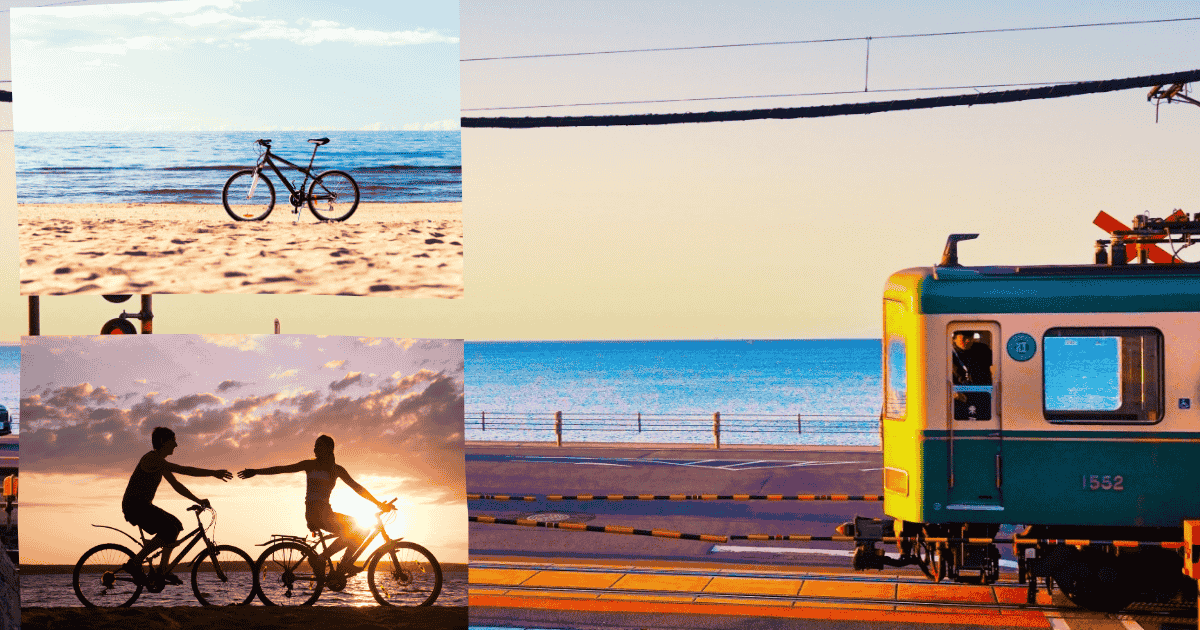
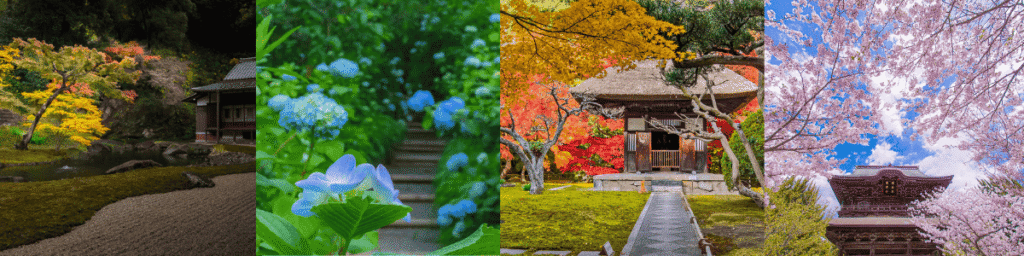
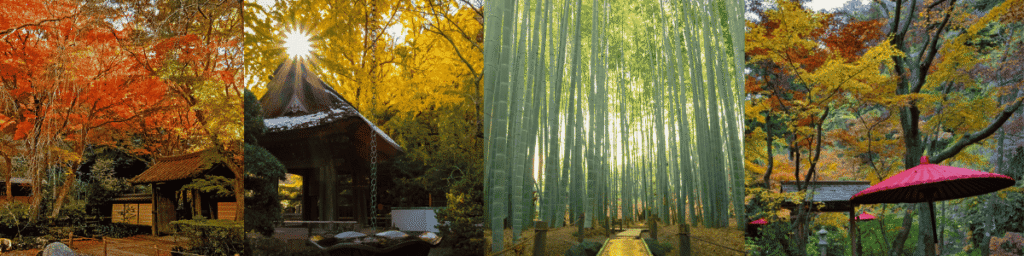
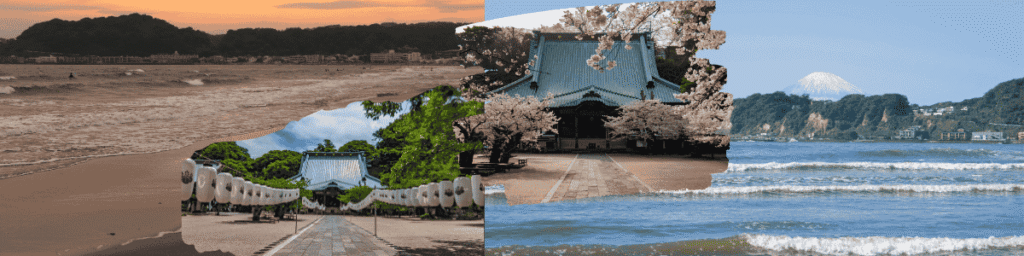
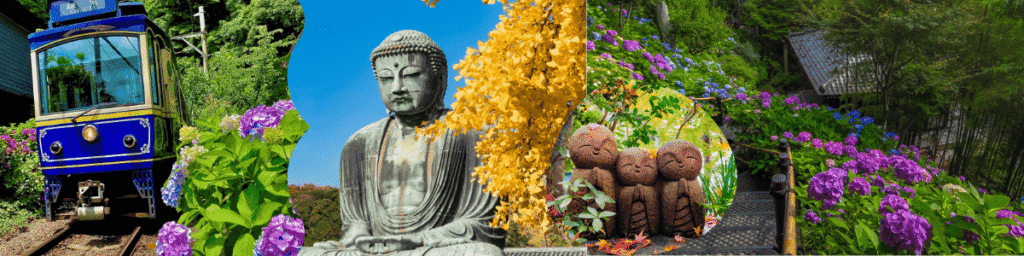
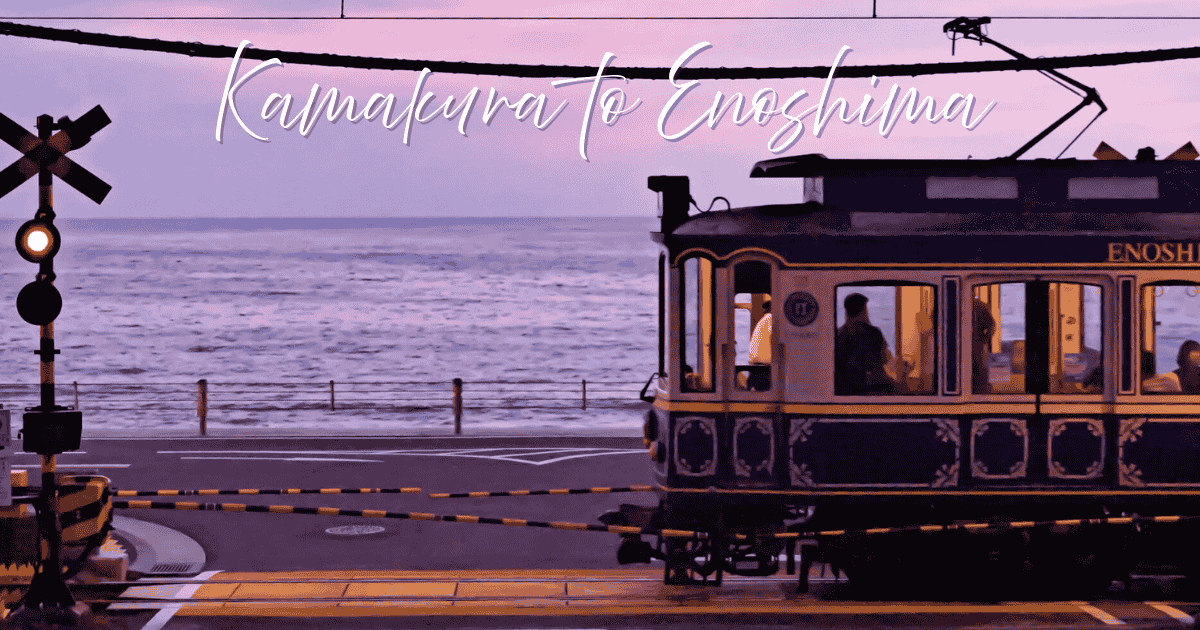
Kamakura is a famous city because of its beautiful temples, deep history, and peaceful ocean views. The best way to experience Kamakura is on two wheels. By skipping crowded buses and navigating the city at your own pace, a bicycle offers a level of freedom you won’t find on public transport.
However, Kamakura has many steep hills and busy traffic. Therefore, a successful trip needs smart planning. We highly recommend using an E-Bike (electric-assist bicycle). This guide provides a detailed two-day cycling route to help you navigate Kamakura’s hills with ease.
1. Rentals and Safety: Essential Information and E-Bike Necessity
Rental Options: Shops, Prices, and One-Way Services
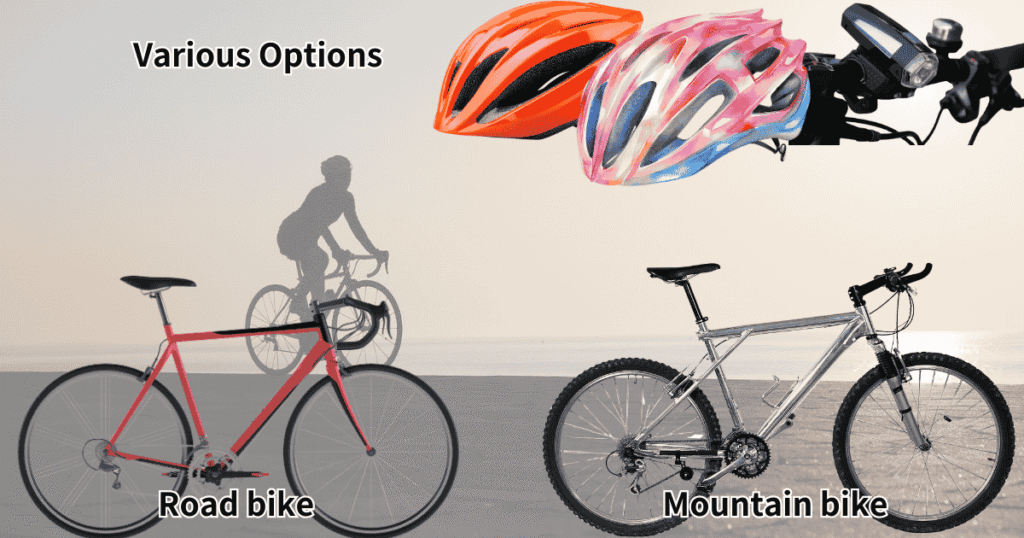
Choosing the right shop is your very first step. Below is a comparison of the main options near Kamakura Station. You will find that the Kamakura bike rental price ranges from ¥1,200 for a basic bike to ¥6,500 for a high-performance E-Bike.
Note: The shops listed below and Hello Cycling do not rent electric scooters/mopeds. They specialize in E-bikes, road bikes, and standard cycles.
J.B.T. (JR Bus Tech)
Key Feature: 1 min from Kamakura Station East Exit.
Price Estimate (1 Day):
Standard: ¥1,200〜
E-Bike: ¥2,200〜
Main Advantage: Great access. You can return the bike at Enoshima Station.
Crucial Notes on Using Hello Cycling (Share Cycles)
Hello Cycling Kamakura offers great flexibility for tourists. However, international travelers must understand the different types of vehicles available:
1. Vehicle Type Distinction (Essential for Foreigners):
Standard Electric-Assist Bicycles (E-Bikes, City Cycles): These are regular bicycles with a motor to help you pedal. Anyone can use them without a special license or test. For the shops and services listed in this guide, E-Bikes are the standard option. Since other vehicle types often require a Japanese ID and a rules test, we strongly recommend using these pedal-assist E-Bikes for a smooth trip.
2. Station Fullness at Return:
You can only return your bike to a station that has an empty “return spot.” You should check the app to see if there is at least one spot available.
If the station is full, the app will show an error. Then, you must find another open station.
We suggest using the “Return Reservation” feature. This secures a spot for 30 minutes, which is very helpful during busy evenings.
Why You Need an E-Bike in Kamakura
E-Bikes are vital if you want a comfortable and stress-free trip. Since Kamakura has many slopes, we strongly suggest them for these difficult areas:
The road toward Kita-Kamakura Station (Road 21).
Kanazawa Kaido on the eastern side.
The steep area around Zeniarai Benten on the west side.
Important Safety Rules and Penalties
Japanese traffic laws for cyclists are very strict. If you break the rules, you might have to pay a fine.
Basic Rule: You must always ride on the left side of the road. This is the same direction as the cars.
Major Offenses:
Ignoring “Stop” signs (Look for “止まれ” / Tomare on the ground).
Running red lights or cycling after drinking alcohol (DUI).
Using a smartphone or riding one-handed.
Wearing headphones or earphones in both ears while cycling.
2. Day 1: Exploring Ancient History and Difficult Hills
Day 1 Morning: Serene Temples and Hilly Terrain (Kita-Kamakura Area)
For this part of the journey, an E-Bike is absolutely essential. The road from Kamakura Station to Kita-Kamakura is quite steep and narrow. If you do not feel safe cycling here, taking the JR Yokosuka Line for this short segment is also a smart idea.
Honkaku-ji Tip: The weeping cherry blossoms (Shidare Zakura) are beautiful here. They bloom just before the regular cherry blossom season.
Parking Note: Many spots like Tsurugaoka Hachimangū and Komachi-dori do not have bicycle parking. Please use the “Komachi Cycle Park” or Hello Cycling ports. Also, please walk your bike when exploring the Komachi-dori shopping street.
Day 1 Afternoon: Challenging Route (Kanazawa Kaido Area)
An E-Bike is mandatory for this route. The area has a long uphill climb from the station, and the roads are narrow with many cars. Please be extremely careful.
3. Day 2: Ocean Breeze and Scenic Views (Coastline to Enoshima)
Day 2 Early Morning: The Best Start (Kōmyōji Temple & Yuigahama)
A standard bike is fine for this area because the roads are mostly flat. The seaside air in the morning is very refreshing. Since Kōmyōji Temple opens early, it is a great place to visit before the crowds arrive.
Spots: Yuigahama Beach, Kōmyōji Temple (famous for April cherry blossoms).
Day 2 Late Morning: Flat Roads and Western Challenges
Section A: Flat Roads (Prefectural Road 311 Area)
Myōhō-ji Temple (Moss Temple): There is no parking here. We suggest stopping quickly on your way back to see the beautiful green moss.
Anyō-in Temple: There is no parking here either. It is famous for Azaleas in May.
Section B: Western Challenges (Kamakura Station West Side)
An E-Bike is essential because the hill to Zeniarai Benten is very steep.
Crucial Safety Alert: You must not cycle between Kaikōji Temple and Kuzuharaoka Shrine. This path is a hiking trail with mud and big stairs. It is impossible to ride a bike there, and even carrying one is too hard. Please visit these two areas separately.
Parking Tip: You can find bicycle parking at Kōtoku-in and Hase-dera.
Day 2 Afternoon to Evening: Coastal Thrills and Finale (Shichirigahama to Enoshima)
For the Enoshima bike rental experience, an E-Bike is better because of the hills at Inamuragasaki.
Shichirigahama Coast: There are many scenic cafes where you can park and take a break.
Enoshima Island: You can park your bike and walk onto the island. We recommend staying until sunset to see the beautiful lights.
4. Themed Cycling: The Kamakura-Enoshima Seven Gods of Fortune Pilgrimage
Cycling is truly the best way to visit the “Seven Gods of Fortune” because the temples are spread out. You can collect stamps called “Goshuin” on a special paper. This makes a wonderful souvenir for your home.
5. Conclusion: Tips for a Perfect Kamakura Cycling Trip
This guide covers everything you need for a seamless two-day adventure. To make the most of your trip, remember these essential tips:
Summary of Key Tips:
Use an E-Bike: To ride through Kita-Kamakura and Kanazawa Kaido easily, an E-Bike is the best choice. When you check the Kamakura bike rental price, please focus on the E-Bike options.
Check Parking: Many temples have free parking, but you must use paid lots or share cycle ports near the station.
Follow Safety Rules: Always ride on the left and never use your phone while cycling.
Plan Your Route: Our two-day Kamakura cycling route covers everything from historic temples to the Enoshima coast.
Enjoy your freedom and have a wonderful time in the Shonan area!
6. FAQ: Frequently Asked Questions
How much is the Kamakura bike rental price?
Prices start from about ¥1,200 for a city bike and go up to ¥6,500 for a high-end E-Bike.
Is a Kamakura scooter or moped rental available?
Currently, major rental shops and bike-sharing services in Kamakura specialize in pedal-assist E-Bikes and standard bicycles. Motorized scooters or mopeds are generally not available through these services.
Can I do an Enoshima bike rental?
Yes, many services allow you to rent in Kamakura and return the bike near Enoshima Station.
What is the best Kamakura cycling route?
The route from the Great Buddha in Hase to the Enoshima coast is the most popular for its views.
How do I use Hello Cycling Kamakura?
Download the app, register your credit card, and use the map to find available bikes at various “ports.”