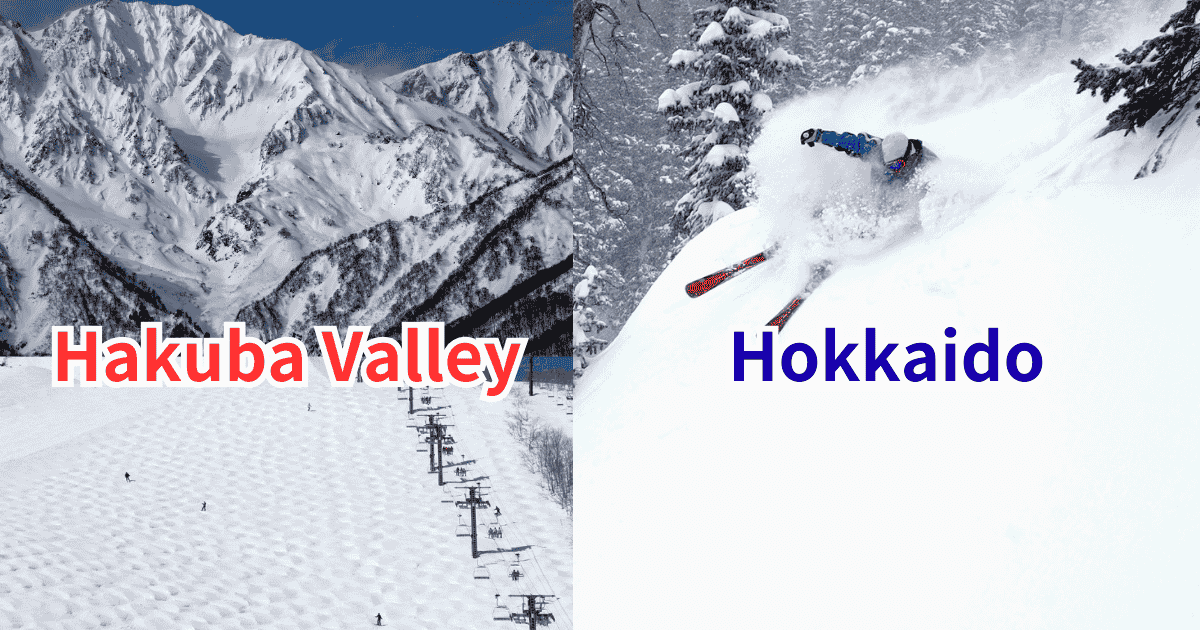
Are you choosing between Northern Nagano (Hakuba Valley, Nozawa Onsen, Shiga Kogen, etc.) and Hokkaido (Niseko, Rusutsu, Furano, Tomamu, etc.) for your ski trip? Basically, this choice is a simple trade-off. You must weigh “Powder Frequency” against “Culture and Easy Travel.” To help you, this guide compares the weather, costs, and travel steps for each area. Ultimately, this list will help you pick the best spot for your goals.
Table of Contents
Toggle1. Hokkaido vs Nagano (Hakuba): Quick Comparison for Skiers
Choose Hokkaido (The Island) If Your Priority Is…
Choose Hokkaido if you want the best powder frequency.
- First, you will find soft, light snow with minimal interruption.
- Next, the resorts are self-contained and ideal for families.
- Additionally, you can experience large-scale resort complexes.
- Finally, Hokkaido is very reliable for trips starting in mid-December. Because the snow base builds early, you can enjoy great conditions before other areas.
Check out the Rusutsu Resort YouTube channel for videos of skiing through snow-covered trees in perfect powder conditions.
Choose Honshu (Northern Nagano) If Your Priority Is...
- Logistical Ease & Flexibility: You prioritize shorter, more predictable travel times from Tokyo via high-speed rail.
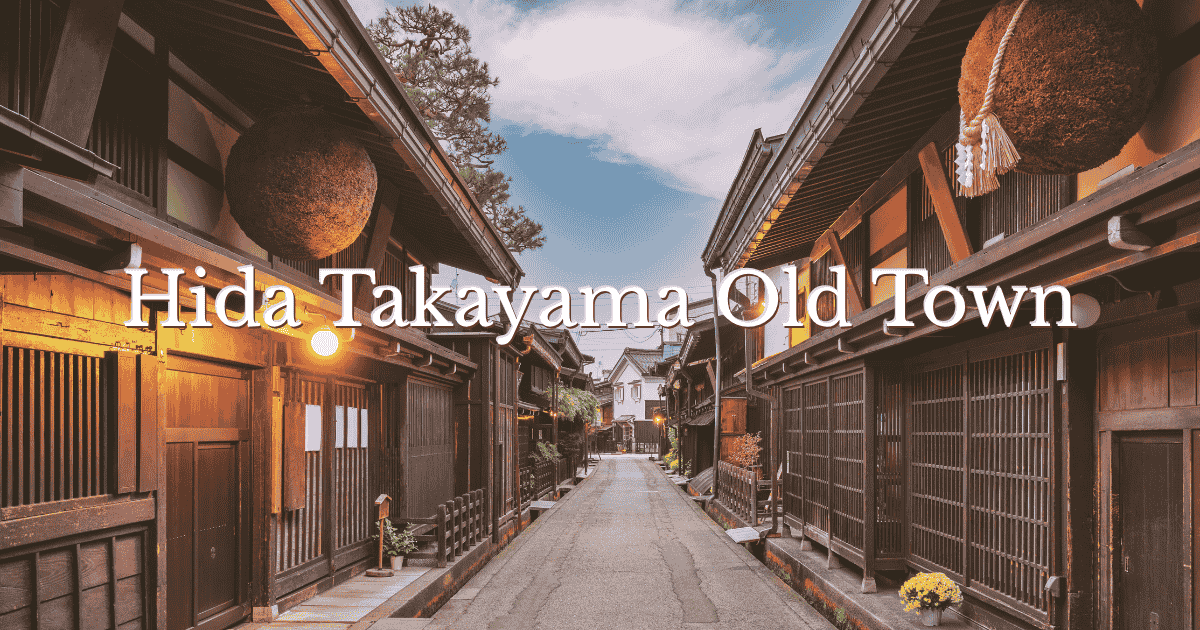
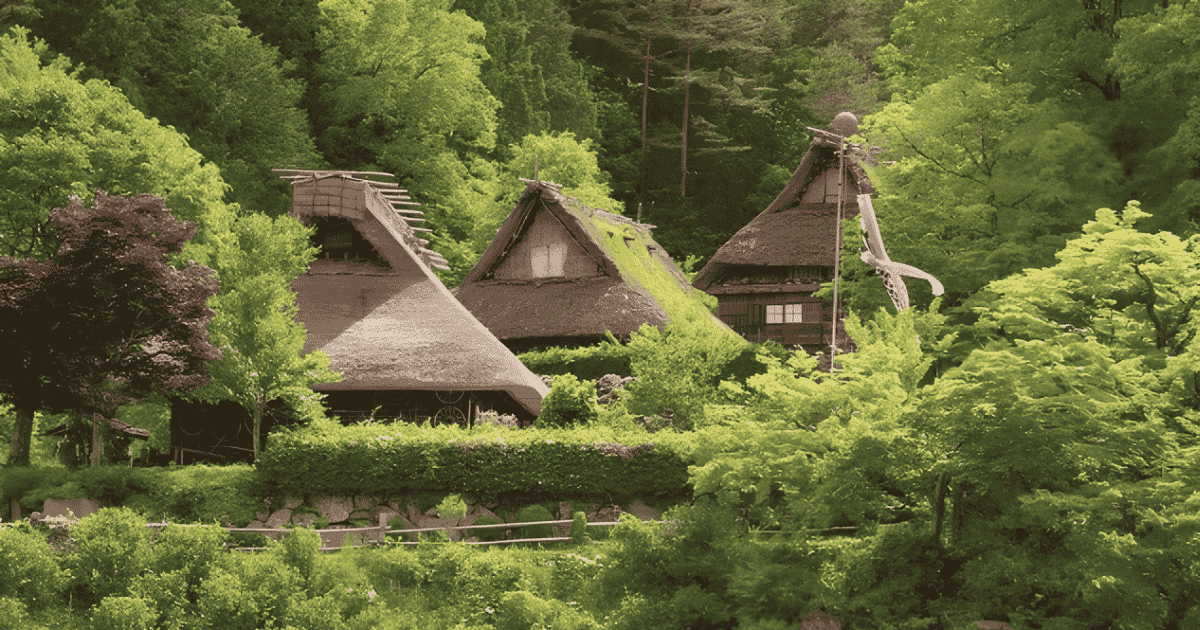
- Cultural Immersion: You want easy, local access to historic sites, temples, and traditional village life.
- Terrain Diversity & Individual Character: You want to be able to switch between numerous resorts, each offering a unique pitch and vibe. Each of the 10 resorts has a unique personality; see our [detailed profiles of all 10 Hakuba resorts] to see which one fits your skill level.
- Overall Value: You seek greater control over your accommodation budget and access to locally priced dining options.
2. Tokyo to Hakuba or Hokkaido? Travel Time, Cost & Ease of Access
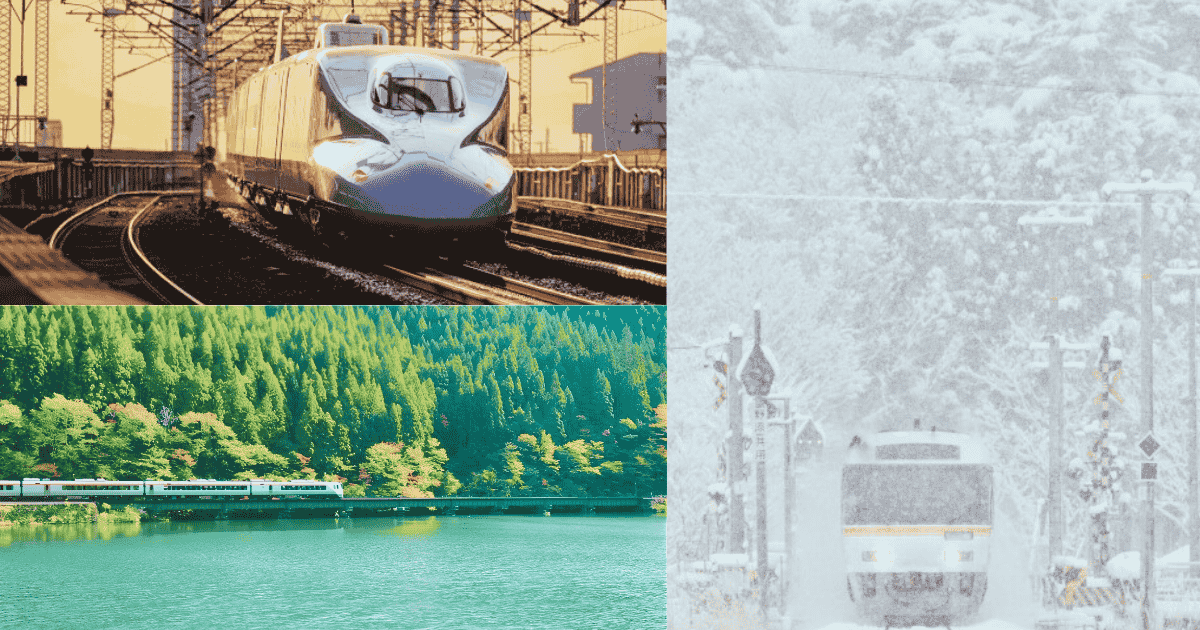
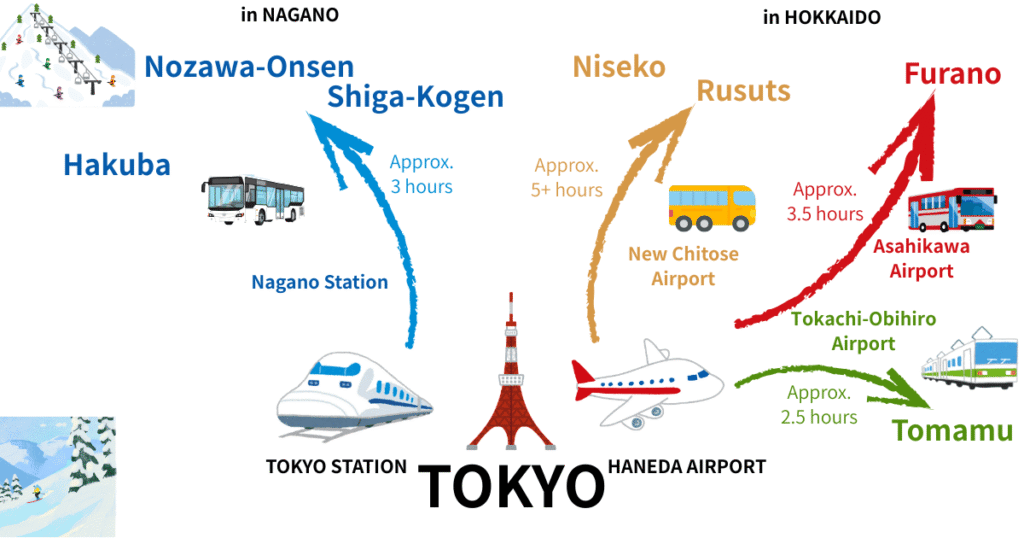
Your travel mode is the main factor for costs. Because Hokkaido requires a flight, it adds more stress. In contrast, Nagano is easy to reach by train. Consequently, you save time on your trip. Furthermore, the Shinkansen is very reliable. Therefore, Nagano is better for a smooth schedule. Also, it minimizes travel risks from bad weather. If you’ve narrowed your Hokkaido choice down to its most famous resort, don’t miss our head-to-head [Hakuba vs. Niseko] comparison.
How to Get to Hakuba Valley (The Mainland Route)
Accessing Hakuba is highly flexible. Whether you arrive via Tokyo’s airports or travel from Western Japan, you can choose between Shinkansen, express buses, or private transfers. For a deep dive into specific routes, prices, and booking links, please see our dedicated guides:
From Tokyo & Airports: [Definitive Guide on How to Get to Hakuba (2026)]
From Osaka & Kyoto: [Best Ways to Travel from Kyoto/Osaka to Hakuba (2026)]
How to Get to Hokkaido Resorts (The Flight & Shuttle Route)
For Hokkaido, your journey begins with a domestic flight to either New Chitose (CTS) or Asahikawa (AKJ), followed by a resort-specific shuttle or train.
Step 1: Flying to Hokkaido (Estimated 2026 Fares)
To New Chitose Airport (CTS): Best for Niseko, Rusutsu, and Tomamu.
From Tokyo (Haneda): ~90 mins | from ¥8,300
From Osaka (Kansai): ~120 mins | from ¥6,700
To Asahikawa Airport (AKJ): Best for Furano.
From Tokyo (Haneda): ~110 mins | from ¥8,000
Step 2: Airport to the Resorts (2026 Transport Data)
| Destination | Route Type | Travel Time | Cost | Key Booking Info |
|---|---|---|---|---|
| Niseko | Highway Bus (from CTS:Chuo Bus) | ~3h | ¥6,000 | Reservation required |
| JR Train (via Sapporo:JR Hokkaido ) | ~2h 45m | ¥3,540 | Few daily departures to Niseko Stn | |
| Rusutsu | Shuttle Bus (from CTS) | ~2h | ¥5,500 | Book by 24:00, 7 days in advance |
| Free Shuttle Bus (from Sapporo) | ~2h | FREE | Book by 15:00 the day before (8:00 AM departure) | |
| Tomamu | JR Train (via Minami-Chitose:JR Hokkaido ) | ~1h 30m | ¥4,230 | Reserved-seat Limited Express only |
| Express Bus (from CTS) | ~2h | ¥6,000 | Reservation required | |
| Furano | Express Bus (from AKJ:HOKKAIDO ACCESS NETWORK ) | ~1h 10m | ¥4,000 | Reservation required |
| Local Bus (from AKJ:Furano bus ) | ~2h | ¥940 | Furano Bus (Lavender Bus) | |
| Express Bus (from CTS:HOKKAIDO ACCESS NETWORK ) | ~2h 15m | ¥6,000 | Reservation required |
Key Logistical Insight: While Hakuba is easily accessible via the reliable Shinkansen, Hokkaido requires much more coordination. Advance reservations are critical—resort shuttles in Hokkaido frequently sell out weeks in advance during the peak 2026 season.
3. The Best Powder: Hakuba vs Hokkaido Snow Quality & Season Guide
Geographic location defines the snow on each island. Specifically, the quality and consistency are determined by a combination of proximity to the Sea of Japan, latitude, and elevation.
While Hokkaido benefits from its high northern latitude—resulting in naturally colder temperatures and lighter snow—Hakuba makes up for its more southern location through significant elevation. Although Hakuba’s snow may technically be slightly denser due to the lower latitude, its high-altitude peaks ensure the quality remains world-class, trailing only slightly behind Hokkaido’s legendary dry powder.
Hokkaido’s Variety in Snow Quality
Hokkaido is a huge island. Because of this, your snow experience changes by area.
- Western Resorts (Niseko, Rusutsu): These resorts get deep powder. This is because they are near the sea. However, they have fewer sunny days.
- Northern/Inland Resorts (Furano, etc.): The air here is colder and drier. As a result, the snow is even lighter than in the west. Moreover, the quality stays consistent all day.
- Eastern/Inland Resorts (Tomamu, etc.): These inland areas get more sun. Therefore, they are perfect for “bluebird” days. In addition, you can enjoy clear views while you ski.
Snow Quality: Hokkaido’s Dry "Japow" vs. Nagano’s Steep & Stable Slopes
- Hokkaido Area: The snow is lighter and softer. Specifically, the high latitude and steady winds create dry powder. Consequently, it is famous for “Japow.”
- Northern Nagano Area: The snow is denser and more stable. In contrast, high elevation ensures excellent quality. Therefore, expert skiers often favor these steep slopes.
- Climate Insight: Dry & Deep (Hokkaido:) vs. Steep & Stable (Nagano)
Best Time to Visit: Early Season in Hokkaido vs. Spring Skiing in Nagano
- Hokkaido Area: The season starts in mid-December. However, many major resorts close their lifts between late March and early-April. Specifically, Hokkaido has a shorter spring season than Nagano.
- Northern Nagano Area: Later Full Open (best from January), but offers reliable late-season spring skiing well into April and May, particularly on high-altitude courses.
- Climate Insight: Nagano often wins for late-season spring skiing.
Weather & Visibility: Powder Frequency vs. "Bluebird" Sunny Days
- Hokkaido Area: While Hokkaido is synonymous with frequent, heavy snowfall, visibility varies significantly by region. Western resorts like Niseko and Rusutsu see constant storm cycles, often resulting in many cloudy or “whiteout” days. In contrast, eastern and inland resorts, such as Tomamu, benefit from much higher bluebird rates. This allows skiers to enjoy Hokkaido’s famous powder under clear, sunny skies more frequently than in the western coastal areas.
- Northern Nagano Area: The snow is reliable and deep. Additionally, this region offers more sunny days. Consequently, it is better for “bluebird” skiing.
- Climate Insight: Hokkaido offers top powder frequency; Nagano (and Central Hokkaido) excels in bluebird days.
4. Scale & Variety: The Overarching Ski Experience
This section looks at the size and style of each region. Basically, the resort layouts are very different.
Hokkaido’s Unified Scale:
Hokkaido resorts are famous for their organized and unified scale. Specifically, Niseko United offers a wide and connected area for easy cruising. Because the boundaries are linked, you can explore many slopes without taking a bus. Moreover, the terrain is consistent and easy to navigate all day.
Honshu’s Diverse Character:
In contrast, the Hakuba Valley offers a collection of independent resorts. Instead of one giant area, you can visit a new mountain every day. For example, you can try the steep, challenging slopes of Happo-One.
Then, you can visit Tsugaike for its massive, wide-open terrain. Consequently, the variety in Hakuba is perfect for skiers who want to enjoy many different types of unique courses.
5. Hakuba vs Hokkaido Budget: Accommodation Prices & Nightlife Vibe
Your budget and “after-ski” time are very important. Currently, Hokkaido is a high-end spot. As a result, you will find many luxury rooms and expensive food there.
In contrast, the Hakuba Valley used to be cheaper. However, prices are now rising rapidly. Specifically, many people call it “the second Niseko.” Consequently, costs are much higher than in other regions. Therefore, you should prepare a larger budget. Still, you can find local inns for a real experience.
Budget and Accommodation Breakdown
Accommodation Options: Luxury Resorts vs. Local Ryokans
- Hokkaido Area: Mostly, you find large resorts. Currently, prices are trending toward premium levels.
- Northern Nagano Area: Offers many choices. Specifically, you can find both luxury hotels and cheap inns.
After-Ski Vibe: International Nightlife vs. Traditional Izakayas
- Hokkaido Area: Vibrant and western-style. However, it can be very crowded. Therefore, you should book your tables early.
- Northern Nagano Area: Cozy and local. Specifically, there are many traditional Izakayas. Consequently, you can enjoy a quiet, local atmosphere.
Total Trip Cost: Which Destination Offers Better Value for Money?
- Hokkaido Area: High cost but high quality. Consequently, it is best for those who want luxury.
- Northern Nagano Area: Better for various budgets. Therefore, it is a well-rounded choice.
6. Culture & Contingency: Non-Ski Day Options
You may need a break or face bad weather. In these cases, your location defines your options.
- For Hokkaido, non-ski days require long travel. Specifically, you must travel far to reach Sapporo for shopping.
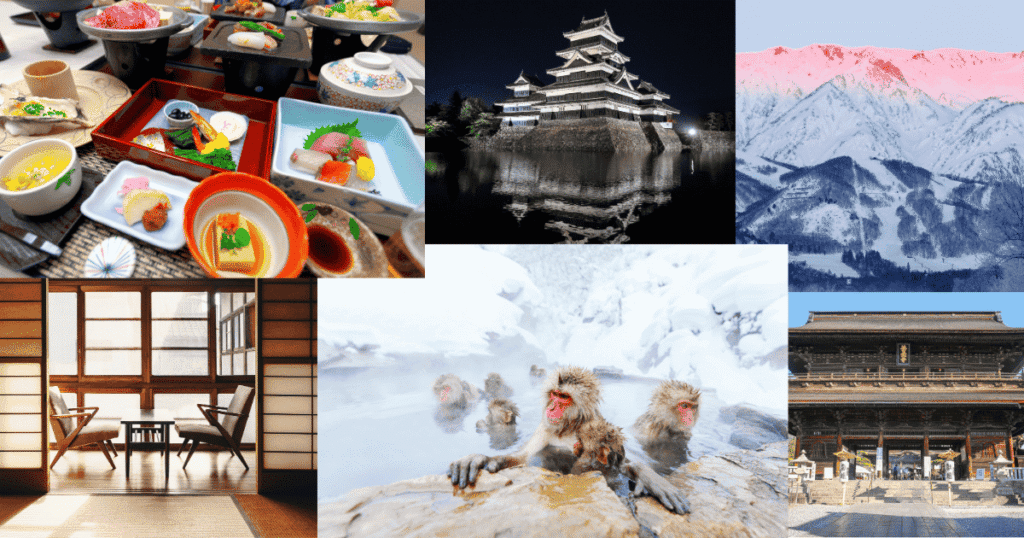
- In contrast, the Hakuba region offers history near the ski villages. For example, you can visit Matsumoto Castle easily. Also, the Snow Monkey Park is a unique experience. Moreover, you can enjoy local onsen culture. Consequently, Nagano offers better variety for rest days.
- Historic Sites: National Treasure Matsumoto Castle.
- Unique Experiences: The famous Jigokudani Snow Monkey Park.
- Traditional Culture: Zenkoji Temple and vibrant onsen culture in nearby villages.
Accommodation Options: Luxury Resorts vs. Local Ryokans
- Hokkaido Area: Mostly, you find large resorts. Currently, prices are trending toward premium and international levels. In contrast, Nagano offers more variety. Therefore, you can control your budget better.
- Northern Nagano Area: Highly diversified (hostels, traditional ryokans, guesthouses) allowing for much greater budget control.
- Vibe & Value Insight: Nagano offers broader lodging variety for all budgets.
After-Ski Vibe: International Nightlife vs. Traditional Izakayas
- Hokkaido Area: While international hubs like Niseko boast a vibrant, active nightlife scene, many other resorts tend towards hotel-based or quieter evening entertainment.
- Northern Nagano Area: Offers a true blend of vibrant villages (Hakuba, Nozawa) with numerous international pubs and izakayas, contrasted by quieter, hotel-based resorts like Shiga Kogen (due to National Park restrictions).
- Vibe & Value Insight: Both are vibrant, but Nagano feels more like a “lived-in” community.
Total Trip Cost: Which Destination Offers Better Value for Money?
- Hokkaido Area: Premium Price: The convenience and powder assurance command a premium in all aspects of the trip.
- Northern Nagano Area: Better Value: Superior control over accommodation and local dining costs offers better overall value for money.
- Vibe & Value Insight: Hokkaido for “Guaranteed Snow” vs. Nagano for “Value & Variety.”
Check out this video by HAKUBAVALLEY for a glimpse into the incredible backcountry experience in Hakuba Valley.
7. Conclusion: Hakuba or Hokkaido—Which is Better for You?
The ultimate decision between Hokkaido and Northern Nagano should be based on what you want your trip’s defining characteristic to be.
Choose Hokkaido if you are a “powder purist.” Because the island sees constant storm cycles, you are almost guaranteed deep, light snow. Additionally, it is the best pick if you want large, unified resorts and reliable conditions as early as mid-December.
Choose Northern Nagano if you want a well-rounded adventure. Not only is the skiing world-class, but the logistics are also much simpler and more affordable. Furthermore, it is the perfect destination for those who want to mix their ski days with authentic Japanese culture and historic sightseeing.
Ultimately, both regions offer world-class terrain and the legendary “Japow” experience. Whether you choose Hokkaido or the Northern Nagano, your trip will be amazing. In conclusion, both destinations guarantee an unforgettable 2026 ski vacation. Therefore, you can book either one with confidence.
8. FAQ: Niseko vs. Hakuba & Travel Logistics
Is there a Hakuba to Niseko train?
There is no direct “ski train” between these areas. Instead, you must take the Shinkansen back to Tokyo. Then, you fly to Sapporo. Finally, you take a bus or train to Niseko. Therefore, this journey takes a full day.
How do I get from Tokyo to Hakuba? (Tokyo to Hakuba)
The most efficient route is the Hokuriku Shinkansen from Tokyo to Nagano Station (90 mins), followed by a direct express bus to the Hakuba Valley (approx. 60-70 mins).
Hakuba or Hokkaido: Which is better? (Hakuba or Hokkaido which is better)
It depends on your goals.
- Choose Hokkaido for the most consistent deep powder and modern resort convenience.
- Choose Hakuba (Northern Nagano) for steep terrain, authentic village culture, and easier access from Tokyo. For specific resort head-to-heads, see our dedicated guides on [Hakuba vs. Niseko] and [Hakuba vs. Rusutsu] .
Not sure if Hakuba is the right choice?
Explore our other 2026 comparison guides to find your perfect Japan ski destination:
[Hakuba vs. Niseko: Powder, Access, & Value Showdown]
- [Hakuba vs. Rusutsu: Which is Better for Crowds?]
[Hakuba vs. Shiga Kogen: Nagano’s Two Giants Compared]
[Hakuba vs. Nozawa Onsen: Steep Terrain vs. Traditional Culture]