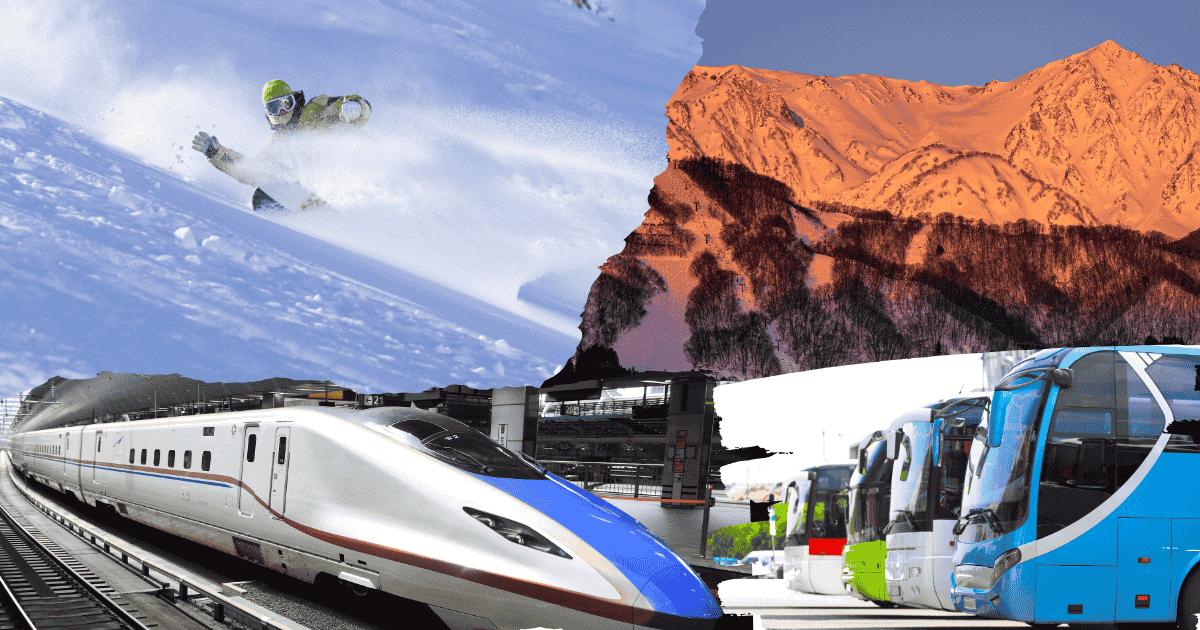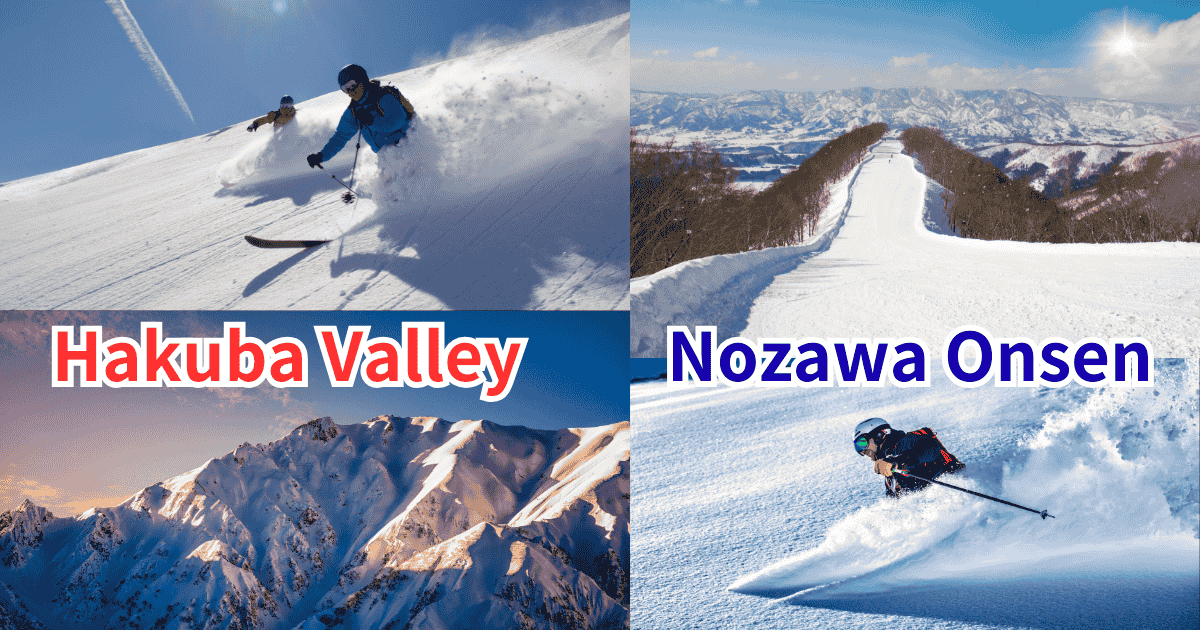
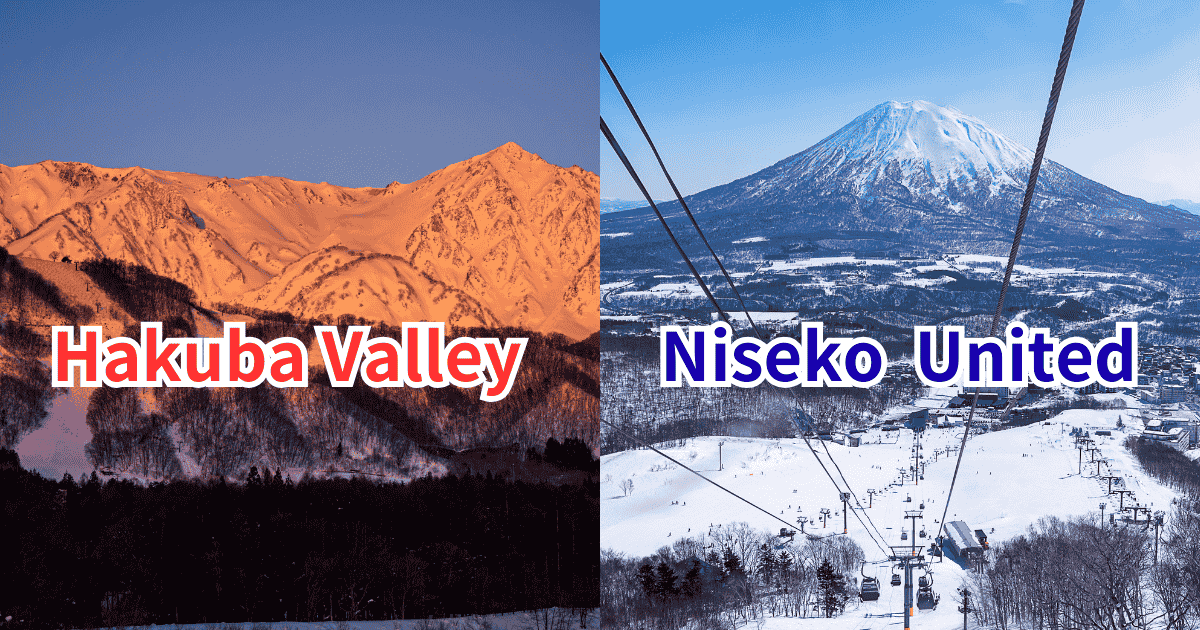
You are chasing the legendary Japanese powder, also known as “Japow.” But which destination truly offers the best value and snow experience for your 2026 trip? This guide provides a rigorous comparison between Hakuba and Niseko, focusing on 2026 cost data, powder quality, and accessibility. Specifically, we focus on terrain, logistics, cost, and atmosphere for the 2026 season. Moreover, we present the essential facts and data for both regions. Therefore, you can easily determine which resort best aligns with your personal travel goals.
Table of Contents
Toggle1. Quick Comparison: Hakuba vs. Niseko at a Glance
Use this summary to quickly see which destination better suits your travel priorities.
Choose Niseko If Your Priority Is...
- Consistent, Deep Powder: You prioritize the highest probability of stable, reliable, deep powder conditions, day after day.
- Seamless International Experience: You seek a highly refined, multicultural resort where English is the lingua franca. Heavily favored by Australian travelers for long stays.
- Premium Accommodation & Nightlife: You want luxury, fully serviced condos and an active international nightlife centered around bars and upscale dining.
Choose Hakuba If Your Priority Is...
- Variety and Challenging Terrain: You seek a vast array of courses, including aggressive slopes with significant vertical drop.
- Easy Access & Cultural Flexibility: You prioritize minimal travel time from Tokyo and easy access to cultural sites like Matsumoto Castle and the Snow Monkey Park.
- Relative Value & Authentic Experience: You aim to lower overall costs compared to Niseko and want the opportunity to seek out local, traditional Japanese culture (Izakaya/Ryokan).
Check out the HakubaHappo-one YouTube channel to see what it’s like at the ski resort!
2. 2026 Cost Comparison: Which is Better for Your Wallet?
Price Comparison: Lift Tickets and Value
Hakuba Valley Common Tickets offer a lower price point compared to Niseko United Common Tickets (all prices are JPY).
| Resort Pass | Niseko United | Hakuba Valley |
|---|---|---|
| 1-Day Ticket | ¥12,000 | ¥10,400 |
| 3-Day Ticket | ¥35,000 | ¥30,200 |
| 5-Day Ticket | ¥58,000 | ¥50,000 |
- Niseko: Due to global investment, accommodation and overall stay costs are significantly higher, reflecting a premium luxury product.
- Hakuba: Offers relative value compared to Niseko, particularly in lift tickets and some local dining options. If you prioritize traditional Japanese culture and public hot springs even more than nightlife, compare Hakuba with the historic [Nozawa Onsen].
Choosing the Right Food: How to Manage Your Budget
While it is often said that Niseko is becoming more expensive, pricing in both Niseko and Hakuba can vary greatly depending on where you eat. It is important not to take every social media post at face value.
Inside the ski resorts, prices are naturally higher than in town. You might find a standard Katsu Curry (Cutlet Curry) for ¥1,300 to ¥2,500, or even a specialty Ramen for ¥3,000 at both destinations. However, once you step away from the slopes, prices tend to stabilize.
Hakuba’s unique advantage is that the resorts are closely integrated with the local village and residential areas. This makes it easier to find authentic local restaurants at much more reasonable prices. In contrast, both Niseko and Hakuba feature temporary food trucks during winter, which often charge premium “tourist prices.” Understanding these local dynamics will help you enjoy Japan’s amazing food culture without overspending.
3. The Logistics: Arrival Stress, Flexibility, and Weather Contingency
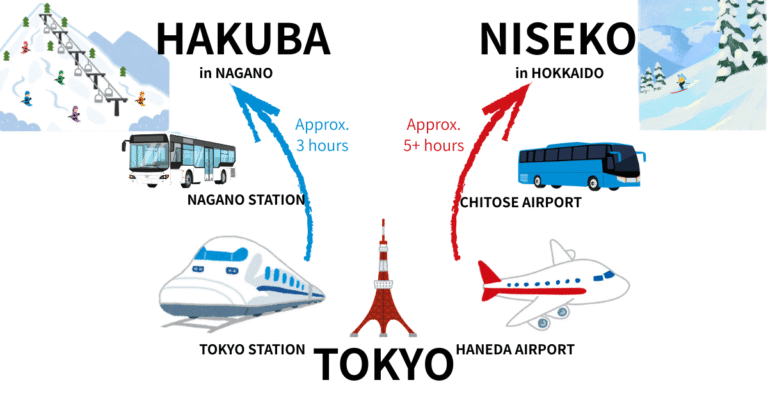
Accessing the slopes is a major deciding factor. While Hakuba offers the reliability of high-speed rail, Niseko requires a multi-step journey involving flights and pre-booked shuttles.
Travel Time and Route Comparison
Hakuba (The Seamless Route): ~3 hours total.
Route: Tokyo → (Hokuriku Shinkansen) → Nagano Station → (Express Bus) → Hakuba Valley.
Guides: See our specialized [Tokyo to Hakuba Route Guide] or [Osaka/Kyoto to Hakuba Route Guide] for 2026 schedules.
Niseko (The Commitment Route): ~5.5+ hours total.
Route: Tokyo → (Flight to CTS) → New Chitose Airport → (Highway Bus/JR Train) → Niseko.
Key Note: Highway buses from the airport cost ¥6,000 and require advance reservations.
Official Transport Resources
- Hokuriku Shinkansen (Source: JR East)
- Express Bus from Nagano to Hakuba ( Source: Alpico Group)
- New Chitose Airport (Haneda to Chitose Flights) ( Source: New Chitose Airport official website)
- Express Bus from New Chitose Airport to Niseko (2025-26 Schedule) (Source: Niseko Kashinoya)
Master the Logistics: For a full breakdown of 2026 airfares, train prices, and a comparison of all Hokkaido resort transport (including Rusutsu and Furano), check our master guide: [Hakuba vs. Hokkaido: Is Hakuba or Hokkaido Better for Skiing? (Access & Cost Comparison)]
Crowds and Lift Lines: Managing the Peak Season Rush
- Crowds: Niseko is notoriously busy, often resulting in significant lift lines, particularly during peak season. Hakuba is also popular but offers more options to disperse crowds across its many separate resorts.
Wind Resilience: How to Handle Windy Days
Both Niseko and Hakuba are prone to high winds that can shut down lifts and gondolas. In Hakuba, the famous Happo-One resort is particularly susceptible because its courses are set along “ridges,” as the name “Happo-One” (One means ridge) suggests.
The key difference lies in your options when the wind howls. In Niseko, since the four main resorts are interconnected primarily at the mountain’s peak, a shutdown of the upper lifts often limits you to the lower slopes of the resort where you are based.
In contrast, Hakuba Valley consists of 10 independent resorts spread across a wide area with different geographical orientations. If a ridge-based resort like Happo-One is affected by wind, you have the flexibility to move to a neighboring resort that might be more sheltered or better suited for the day’s conditions. This “ability to choose a different mountain” makes Hakuba a versatile option for managing weather risks during your trip.
4. Deep Dive: Terrain, Snow Quality, and Scale
Skiing quality is the non-negotiable factor. Here is how the two compare on the mountain.
Powder Showdown: Niseko's Abundance vs. Hakuba's Reliable Grip
Comparison of Snow Quality: Niseko’s Powder vs. Hakuba’s Stability
Ideal for High-Speed Skiing: Many advanced riders favor Hakuba’s snow for better edge grip and stability at high speeds.
- Niseko: Extremely light, deep powder (often referred to as Champagne Powder). Consistent heavy snowfall.
- Hakuba: Very good, high-altitude snow. While occasionally heavier, its moderate density offers necessary firmness.
Weather Patterns: Bluebird Days and Visibility in Hakuba vs. Niseko
A significant factor if you value stunning views and sunshine over relentless powder dumps.
- Niseko: Lower frequency of bluebird days due to persistent snowfall.
- Hakuba: Higher frequency of clear days.
Terrain Structure and Hard Data Comparison
Skiable Terrain: Total Courses and Run Distances Compared
Hakuba offers more than double the number of unique courses, providing superior variety for week-long trips.
- Niseko (Formed as Single Resort): ~65 (Combined from 4 previous resorts)
- Hakuba Valley (Total 10 Resorts): ~140 (Total 10 resorts)
Hakuba provides significantly more on-piste distance to cover.
- Niseko (Formed as Single Resort): ~40–45 km
- Hakuba Valley (Total 10 Resorts): ~128 km
Vertical Drop & Long Runs: Steep Descents vs. Continuous Cruising
Hakuba holds an advantage for sustained long cruising and technical steep runs.
- Niseko (Formed as Single Resort): ~940m
- Hakuba Valley (Total 10 Resorts): ~1,071m (Happo-One)
Resort Layout & Connectivity: Interconnected Peaks vs. Multi-Resort Valley
Affects weather contingency and daily travel flexibility.
- Niseko (Formed as Single Resort): Single, interconnected resort at the peak (common pass).
- Hakuba Valley (Total 10 Resorts): 10 geographically separate resorts (common pass available).
Check out the Niseko Tokyu Grand HIRAFU YouTube channel for some amazing videos of skiing in Niseko’s fluffy powder snow.
Course Level Breakdown Summary (Total for 10 Resorts)
| Destination | Novice | Intermediate | Advanced |
|---|---|---|---|
| Niseko | ~6 | ~6 | ~10 | Hakuba Valley Total | ~35 | ~50 | ~50 |
Here is our conclusion on the terrain. First, Niseko is famous for its accessible powder zones. Also, it provides a solid count of advanced courses across its vast, interconnected area. However, Hakuba also offers diverse skiing options through its independent resorts. Specifically, Hakuba provides a superior selection of technically challenging terrain. For example, you can find World Cup standard courses at Happo-One.
- Source: Hakuba Valley Official Website
- Source: Niseko United Official Website
Resort Structure and Weather Resilience
- Niseko (Connected Structure): The resort is functionally one vast area, linked at the peak by lifts that share a common pass.
⚠️ Weather Risk: If high winds shut down the peak connecting lifts, skiers may be stranded on the opposite side of the resort from their accommodation, a critical logistical consideration. - Hakuba Valley (Independent Structure): The ten major resorts are independent entities, accessible via bus with a common pass.
✅ Flexibility Advantage: If one resort (e.g., high-altitude Happo-One) is closed due to high winds, you can easily pivot to another Hakuba Valley resort (e.g., Goryu or Tsugaike) via a short bus ride without changing your base or losing a day of skiing.
5. The Vibe: International Resort vs. Authentic Japanese Town
Apres-Ski: Bars, Izakayas, and Onsens
Niseko is established for partying, featuring a high density of international bars and upscale dining. Hakuba offers a more diverse mix; areas like Echoland cater to the party demographic with international spots, while the villages still retain traditional Japanese izakayas and numerous public onsens for a more local cultural experience.
Cultural Flexibility: Options for Non-Ski Days

Hakuba’s location provides a major attraction for non-ski days:
- Hakuba is surrounded by several nearby gems. For instance, Matsumoto Castle, the Jigokudani Snow Monkey Park, and Zenkoji Temple are all popular spots. Furthermore, these locations are easily accessible for day trips from the resort. Therefore, staying in Hakuba offers a profound immersion in Japanese history. In addition, you can experience authentic culture alongside your ski trip.
English Support and Ease of Navigation
Whether you choose Niseko or Hakuba, you will rarely face language barriers. Both regions have adapted significantly to international tourism, and English support is standard in most resorts, hotels, and major restaurants.
In Niseko, the high volume of international visitors means you will encounter many foreign staff members, making communication exceptionally seamless. Hakuba has also seen a surge in international staffing to match its growing global popularity. In both areas, however, keep in mind that some elderly Japanese staff members may not be fluent in English, so a little patience and a few basic Japanese phrases can go a long way. Overall, English-speaking travelers can navigate either destination with confidence and ease.
Family-Friendly or Solo Adventure?
Niseko is a powerhouse for families, offering world-class ski schools and kids’ clubs. On the other hand, Hakuba is often the top choice for solo travelers and advanced groups who want to explore different mountains every day and experience a more varied, adventurous terrain.
6. Final Summary: Author's Preferred Experience
This summary is based purely on the author’s preference when comparing these two destinations for a week-long trip.
Based on the objective factors above, I personally lean towards Hakuba.
This preference stems from:
- Terrain Preference: The superior volume, vertical drop, and technical variety found across Hakuba’s multiple resorts.
- Access and Value: Shorter overall travel time from Tokyo and the ability to better manage the budget relative to Niseko.
- Resilience and Culture: The strength of the multi-resort system to handle poor weather days, combined with the easy access to major cultural sites.
Both Hakuba and Niseko offer exceptional winter experiences. However, your best choice for the 2026 season will depend on your specific priorities. For example, you might prefer Niseko for its consistent powder and international convenience. On the other hand, you might choose Hakuba for its varied terrain and cultural access. Additionally, Hakuba offers strong relative value for your budget. Ultimately, the decision depends on what you value most for your trip.
7. Frequently Asked Questions (FAQ)
To help you better understand the nuances of skiing in Japan, here are answers to some of the most common questions regarding Hakuba or Niseko.
Where can I see a Hakuba or Niseko map?
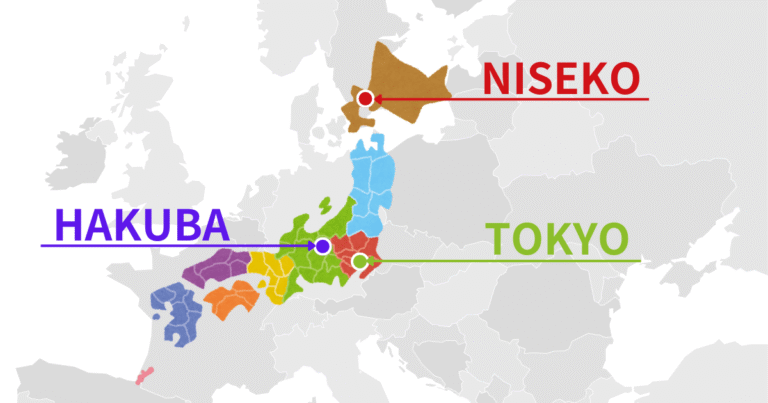
For a broad geographical overview, a quick search for a Hakuba or Niseko map will show you that these two regions are hundreds of miles apart. Hakuba is located in the Japanese Alps on the main island (Honshu), whereas Niseko is on the northern island of Hokkaido. Understanding this distance is crucial for planning your logistics and understanding the different climates you will encounter.
Is Hakuba worth visiting if I don't ski or snowboard?
Honestly, if skiing isn’t your primary goal, staying in Hakuba during winter may not be the most efficient choice. While beautiful, the area is highly specialized for snow sports. For a richer cultural experience, we recommend basing yourself closer to the specific sights you want to see. For instance, Nozawa Onsen is superior for traditional hot springs, while Matsumoto Castle, Zenkoji Temple, and Togakushi Shrine offer more for history buffs. If you want to see the famous Snow Monkey Park, it is better to stay in the nearby Yamanouchi or Nagano City area.
For those focusing on the Snow Monkey Park, Shiga Kogen is even closer. Check our [Hakuba vs. Shiga Kogen] guide for the best cultural logistics.
Where do most Australians ski in Japan?
Niseko was the first area to be “discovered” by the Australian market. Indeed, it remains a very popular choice today. However, the focus has shifted significantly in recent years. Specifically, many Australians are now flocking to the Northern Nagano region. In this region, Hakuba is a major draw for these travelers. Also, Nozawa Onsen and other resorts in the Japanese Alps have become top destinations. This is because these resorts still retain an authentic, traditional village feel. In contrast, Niseko is perceived to be losing its traditional Japanese atmosphere. Furthermore, these Nagano resorts offer much easier access from Tokyo.
What is the nicest ski resort in Japan?
There is no single “best” resort in Japan. Instead, the right choice truly depends on your personal preferences. Currently, Japan is home to roughly 500 ski areas. Specifically, these range from tiny local hills to massive integrated resorts. Furthermore, most large-scale and high-quality resorts are concentrated along the Sea of Japan coast. In fact, these areas span from Northern Nagano and Niigata all the way up to Hokkaido. Therefore, we recommend looking beyond just a famous name. Instead, you should find a resort located near the specific cultural or sightseeing spots you plan to visit.
How to get from Hakuba to Niseko (and is it recommended?)
Travelers often look for a direct train from Hakuba to Niseko. However, please note that no such direct service exists. Instead, the journey requires several complicated steps. First, you must take a bus from Hakuba to Nagano Station. Next, you take the Shinkansen from Nagano to Tokyo. Then, you must travel from Tokyo to the airport and fly to New Chitose Airport. Finally, you take another bus from the airport to Niseko. Consequently, this journey typically consumes an entire travel day. Therefore, we suggest picking one region to maximize your time on the slopes.
Not sure if Hakuba is the right choice?
Explore our other 2026 comparison guides to find your perfect Japan ski destination:
- [Hakuba vs. Hokkaido: Regional Guide to Snow and Costs]
- [Hakuba vs. Rusutsu: Which is Better for Crowds?]
[Hakuba vs. Shiga Kogen: Nagano’s Two Giants Compared]
[Hakuba vs. Nozawa Onsen: Steep Terrain vs. Traditional Culture]