Takayama is often called “Little Kyoto,” but it has its own unique soul. The Hida Takayama Old Town (Old Street) is the heart of this city, where history still breathes. After living in Takayama for five years, I fell in love with its hidden charms. Today, I want to share the secrets I discovered—the real Takayama that you won’t find in standard guidebooks.
Table of Contents
Toggle01. [Sake] 7 Historic Breweries: The Ultimate Sake Hopping Experience
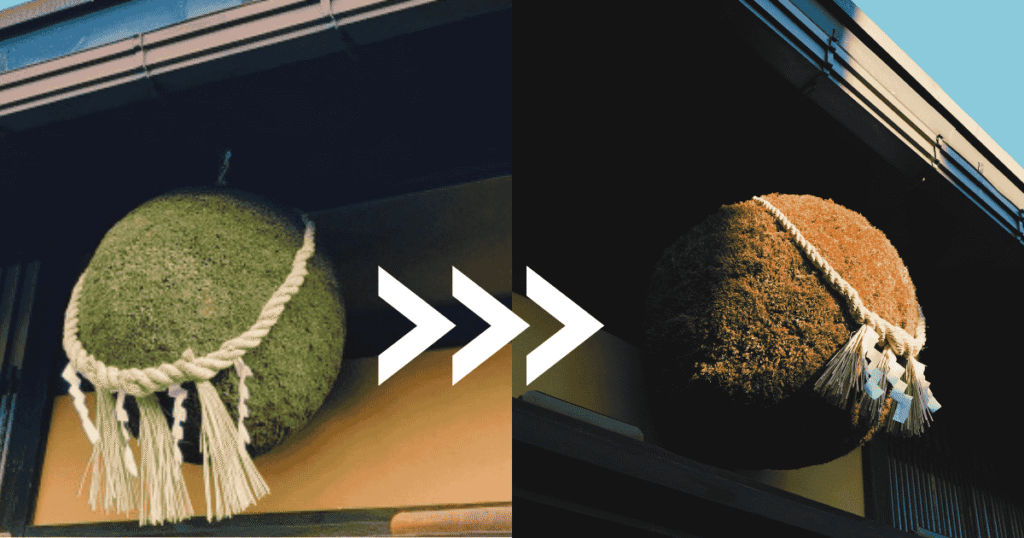
Takayama is a paradise for sake lovers. In the “Old Town” (from Shimo-ichinomachi to Kami-sannomachi), seven sake breweries are gathered in a very small area.
A “Sake Crawl” Experience
In many Western cultures, people enjoy a “Pub Crawl.” In Takayama, you can enjoy a “Sake Crawl” on foot. You don’t need a car or a train. Within just a few minutes of walking, you can visit seven different breweries, each with its own long history. This convenience makes the Old Town a “perfect walking destination.”
The Unique Tasting System
Many breweries have fun tasting systems. Some use coin-operated machines, and others let you buy a small ceramic cup called an Ochoko to try different drinks. It feels like a game! Because it only costs a few hundred yen, it is very easy to enter and focus on finding your favorite sake.
What is the “Sugidama” (Cedar Ball)?
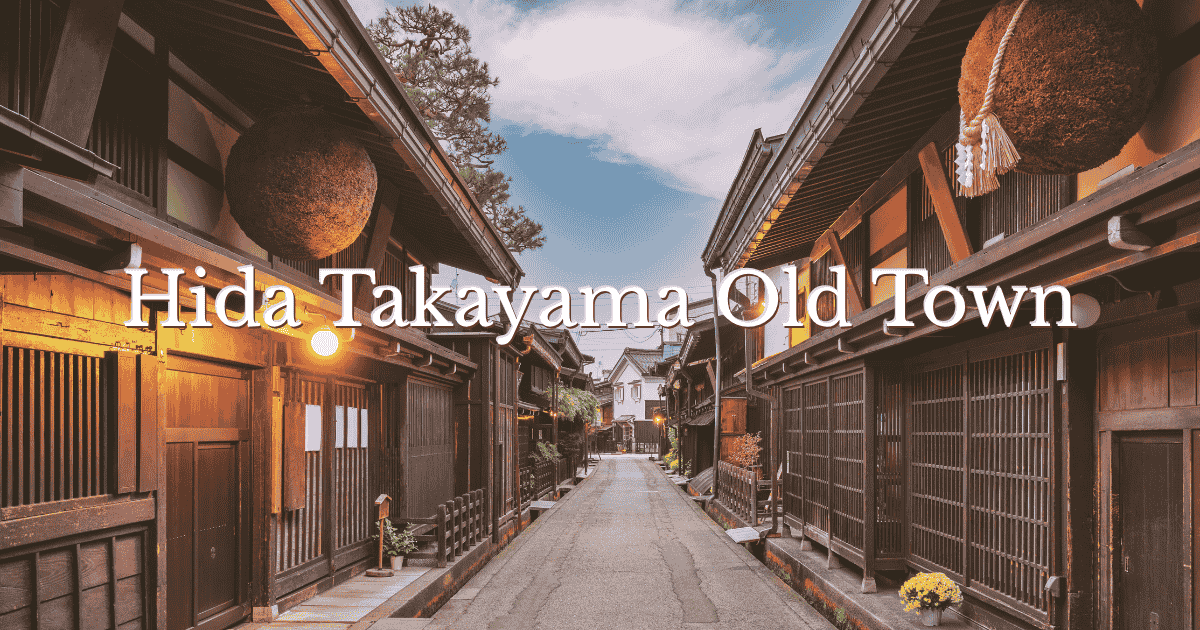
When you walk past a brewery, you will see a large ball made of cedar leaves hanging outside. At first, you might think, “Is that a giant beehive?” But it is actually a traditional “sign” that has been used since the Edo period.
Here is the secret: When a brewery finishes making new sake, they hang up a fresh green Sugidama. As time passes, the sake inside the brewery matures and gets better. At the same time, the cedar leaves slowly dry and turn from green to brown.
This means the color of the ball tells you how aged the sake is! When you visit Takayama, be sure to check the color. Try to judge the maturity of the sake with both your eyes and your taste buds.
The Story of “Brewing Water”
Why is Takayama’s sake so delicious? One secret is the water. Takayama is located in a basin surrounded by the Northern Alps. Pure snowmelt water flows deep underground. For over 300 years, this natural mineral water has supported the high-quality sake brewing in this town.
Winter Only! Rare “Namazake”
If you visit from winter to early spring, look for Namazake. This is fresh, unpasteurized sake that you can usually only find at the brewery. It is very rare and has a fresh, lively taste. Each brewery has a different flavor, so winter is the best time to taste the “real” fresh sake of Hida.
02. [Food] Your Best Food Base: "Heianraku" and "Suzuya"
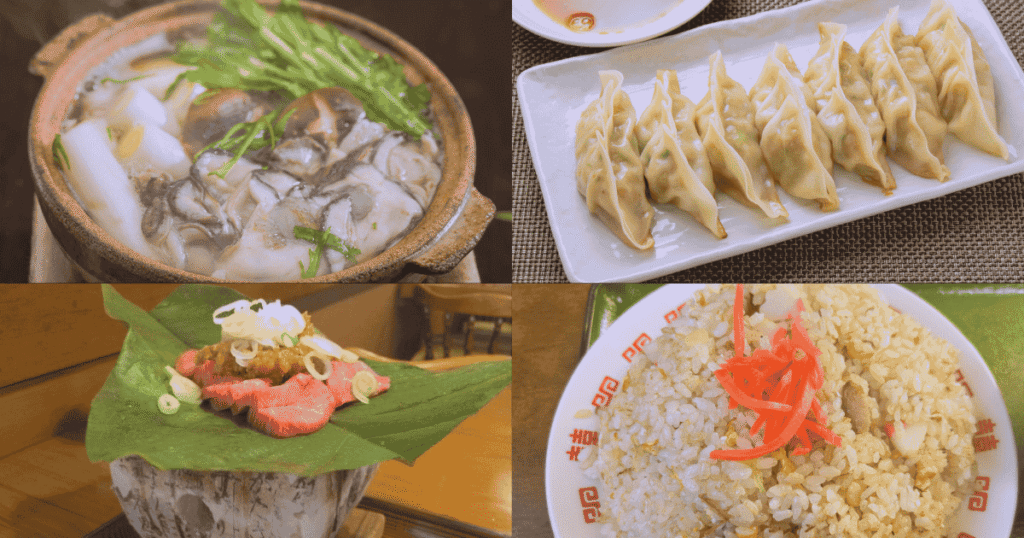
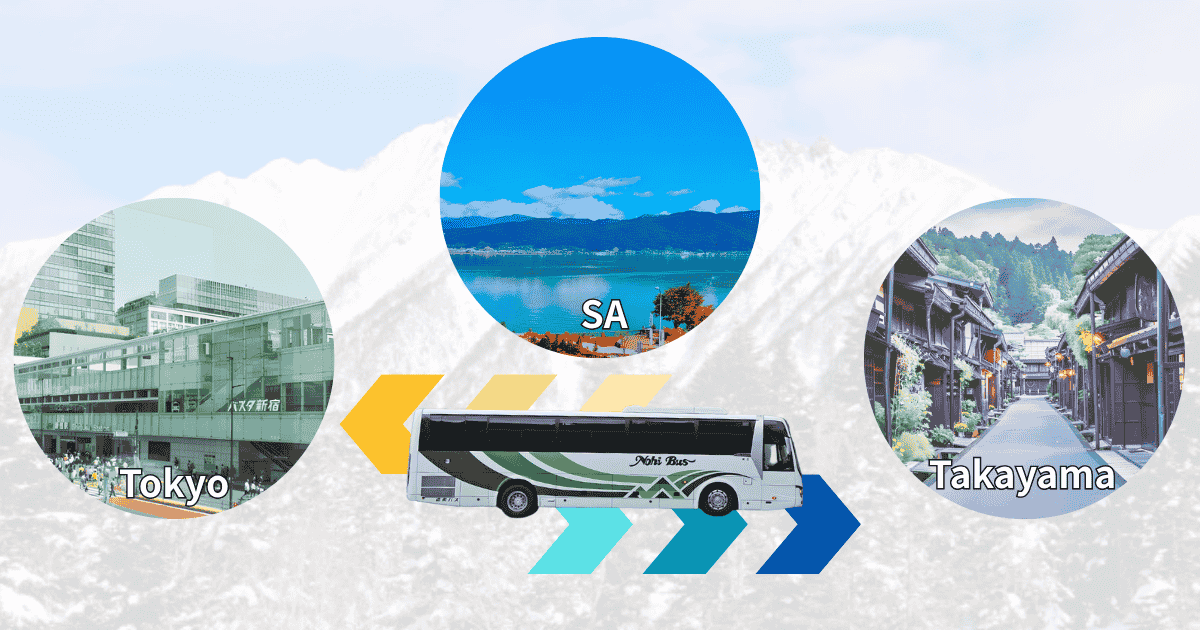
Most tourists take the shortest route from the station to the Red Bridge, but smart travelers use the shopping arcade as their base. As we shared in my post about [Direct Bus Lines to Hida Takayama], the arcade is very close to the bus terminal.It is perfect for rainy or snowy days, and more importantly, it is a “treasure map” for local food! Here are two restaurants you must remember:
Heianraku (平安楽)
Located right along the arcade, this restaurant is a local favorite loved by vegetarians and vegans from all over the world. They serve Japanese-style Chinese food. While Chinese food originally came from China, it has been changed to fit Japanese tastes, and locals love it! Look for the sign that says, “We have Gluten-free, vegetarian and vegan menus available.” (Google Map)
Pro-tip: The shop is very small, and there is only one chef. It is a good idea to avoid the busiest lunch or dinner hours.
Suzuya (寿々や)
Just a few steps away from the arcade, you will find this restaurant in a beautiful old-style Japanese house. It is a historic spot and a “gold mine” for the true “Taste of Hida.” (Google Map)
- Hida Beef: You can enjoy the highest quality Hida beef in “Shabu-shabu” (hot pot) or “Sukiyaki.”
- Mountain Vegetables: They use plenty of fresh mountain vegetables in their “Sansai Miso-nabe.” Also, don’t miss the “Hoba-yaki”—it is Hida beef cooked with savory miso on a magnolia leaf. It is the most popular local dish in Takayama!
03. [History] Takayama Jinya: The Only Original Government Office in Japan
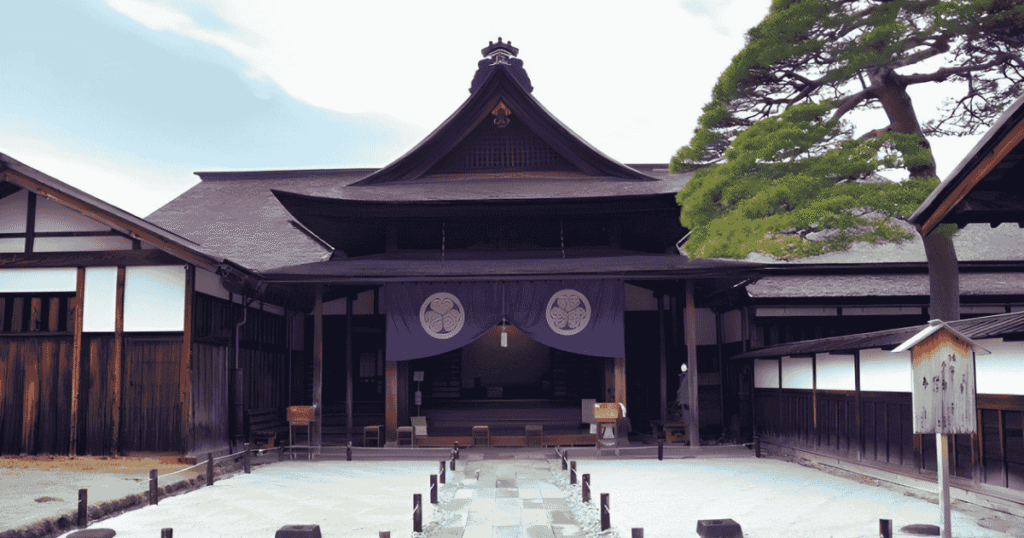
One spot you cannot miss is the Takayama Jinya, located right next to the Old Town. This was a government office for the Shogun’s officials who ruled this area directly. (Google Map)
A Mix of Fear and Beauty
The Jinya served as a police station and a courthouse. Because of this, you can see a unique contrast: the “Oshirasu” (the courtroom where the police questioned people) and the “Oku-zashiki” (elegant private rooms with beautiful garden views) exist within the same building.
Tips to Enjoy Your Visit
The museum inside displays many old books and documents. Because the lighting is very dim to protect these artifacts, some visitors might find it a bit boring at first. However, if you look for these small details, it becomes a fascinating treasure hunt:
- Mamuki-Usagi (Front-facing Rabbits): These are decorative metal covers used to hide nail heads. The rabbit has large ears to “listen to the voices of the people,” representing good politics. They were also believed to protect the building from fire.
- Seigaiha (Blue Ocean Wave): Look for this traditional Japanese pattern in the decorations. It is a beautiful symbol of peace and luck.
“Living History” Found Only Here
After the era of the Shoguns ended, this building continued to be used as a real government office until 1970. Because it was an active workplace for so long, it is in excellent condition. Today, it is the only original Jinya remaining in Japan. In Takayama, you aren’t just looking at a museum—you are touching “living history.”
04. [Architecture] The Secret of the Black Houses and Low Roofs
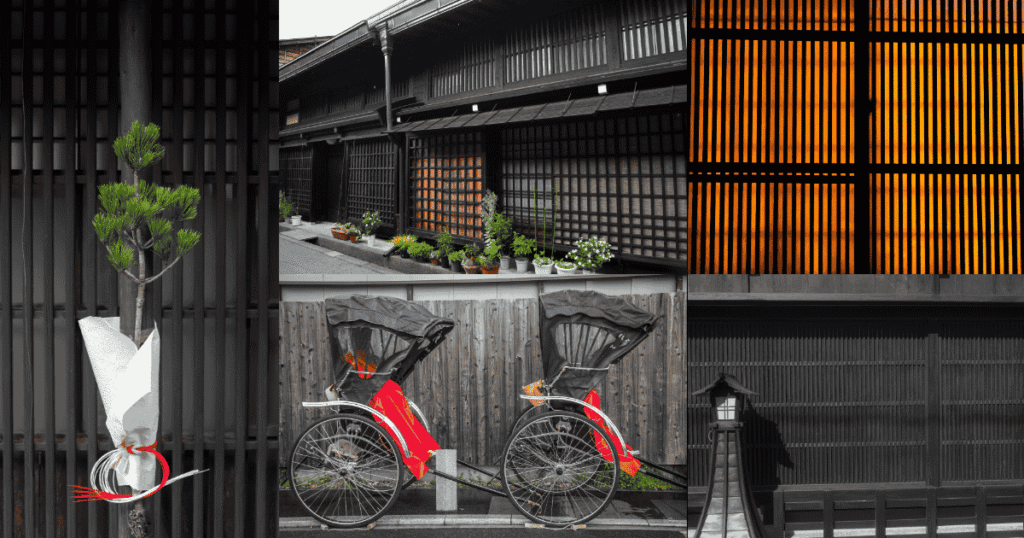
Many people think the Old Town is just a “tourist spot,” but they are wrong. Its true beauty lies in the “pride of the craftsmen” and the daily lives of people that have continued for centuries. It is not a theme park; it is a place where history is still breathing.
The Aesthetic of “Deep Black” and Natural Wood
If you look at other famous old towns in Japan, like Kurashiki or Hagi, you often see white plaster walls. Even in Magome or Tsumago (on the famous “Nakasendo” Samurai Road), the style is different. Takayama is unique because most of its buildings are black. This black color is not just from old age. Long ago, the Shogun’s government strictly forbade merchants from showing off their wealth. In response, Takayama’s merchants created their own style of “hidden luxury.” They used expensive black lacquer and soot (Susu) to make their houses look simple on the outside while maintaining high quality.
The Magic of Low Roofs
As you walk, you will notice the roofs (Noki) are built very low, and the second-floor windows are small. This makes the second floor look like a tiny attic. However, when you step inside, you will be surprised to find a very wide, open space. This “low roof” design creates a feeling of being “squeezed” into the street, giving you a deep sense of immersion—as if you have truly traveled back to the Edo period.
Privacy and Beauty: The Takayama Lattice
The most famous feature is the “Takayama Lattice” (Takayama-koshi). These are very fine, dense wooden grids on the windows. They were a clever way for merchants to protect their privacy while still being able to see what was happening outside. The beauty of these repeating vertical lines is considered some of the finest in all of Japan.
05. [Walking Guide] How to Navigate the 6 Areas of the Old Town
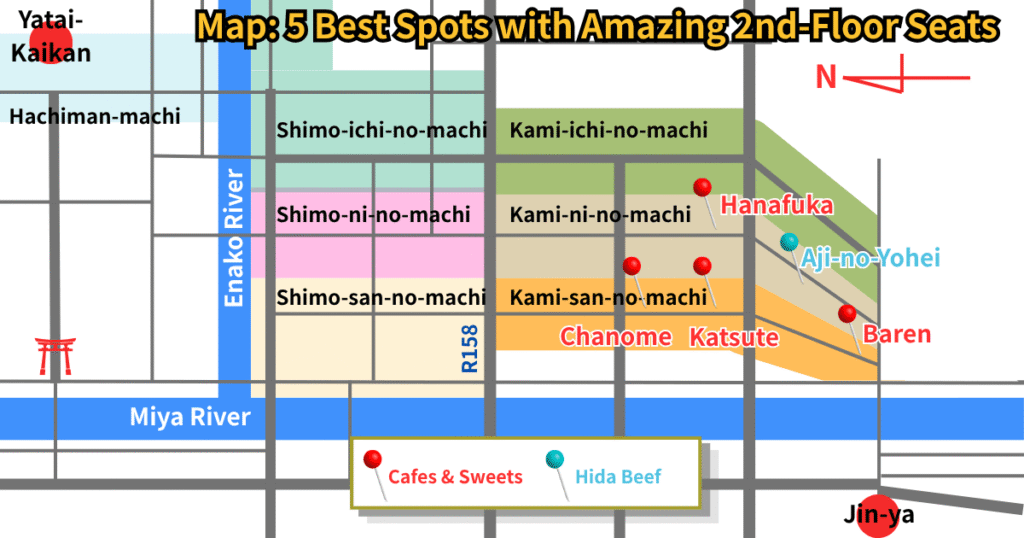
The preservation districts are divided into several sections, but each area has a very different atmosphere. To enjoy your walk, you should understand how the streets are organized.
The South vs. North Logic: The “3+3” Streets
The town is divided into two areas by Yasukawa Street (Route 158), which runs through the center. Each area has three main streets:
- South Side (Kami): Ichinomachi, Ninomachi, and Sannomachi.
- North Side (Shimo): Ichinomachi, Ninomachi, and Sannomachi.
Together, these six streets make up the “Old Town.” Usually, the South (Kami) area is better preserved and looks more like “traditional Japan” than the North.
Also, here is a simple rule for both sides: the streets closer to the Miyagawa River are busier and more developed. As you walk further away from the river, the atmosphere becomes much quieter and more relaxed.
Kami-Sannomachi (The Famous Main Street)
Located on the South side of Yasukawa Street and closest to the river. This is the “iconic” Takayama street. It is incredibly beautiful and looks exactly like old Japan, but it is always crowded with tourists. If you want a photo without people, you must go very early.
Shimo-Ichinomachi (The Quiet Escape)
Located on the North side and further from the river. If you want to escape the crowds, head North. Although the buildings are just as old and historic as the main street, there are far fewer tourists.
06. [Street Food] Mitarashi Dango: The Savory Takayama Style
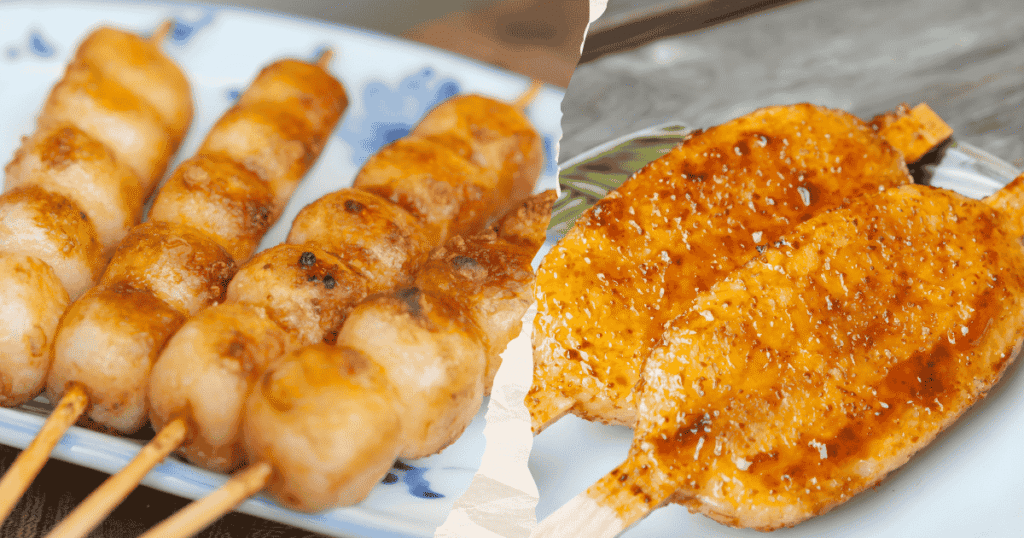
When people think of “Mitarashi Dango” in Tokyo or Kyoto, they imagine a sweet and salty glaze. However, in Takayama, the “correct” style is strictly savory soy sauce.
Follow Your Nose, Not Your Eyes
You don’t need to look for a sign to find dango in Takayama. As you walk through the Old Town, the nostalgic smell of grilled soy sauce—just like toasted rice crackers—will fill the air and lead you to the stalls. These dumplings are dipped in pure soy sauce and grilled until they are perfectly aromatic. They are not sweet at all!
Hungry? Try the “Gohei-mochi”
If you want something more filling than a small dango, I highly recommend “Gohei-mochi.” Unlike the dango, this is a larger, flat rice cake made from mashed rice. It is usually coated in a rich, sweet, and savory nut-miso paste. It is one of the most famous comfort foods in the Hida region.
A Local Secret: Escape the Crowds
The dango stalls on the main tourist streets (like Kami-Sannomachi) often have long lines. Here is a local “pro-tip”: if it’s too busy, head over to the food stalls in front of Takayama Jinya. The quality is just as good, but the atmosphere is often more relaxed.
07. [Cafes & Hida Beef] Finding a Haven: The Magic of "2nd Floor Seats"

The Old Town is a long street filled with houses, souvenir shops, and food stalls. Exploring it takes a lot of time and energy. When you feel tired or hungry, don’t just pick any spot—look for one with a second floor.
Don’t Judge a Place by its Entrance
Many shops and restaurants in the old town have very narrow entrances and tiny windows. You might see a dim yellow lamp through a small window and think, “Is it too cramped in there?” or “Is it even open?” But please, don’t give up!
Unexpectedly Open Spaces
Whether it’s a Hida beef restaurant like “Ajino Yohei” (味のよへい) or charming cafes like “Hanafuuka” (花風花), “Katsuite” (かつて), “Chanome” (ちゃのめ), and “Baren” (ばれん), these places have spacious second floors. Once you go upstairs, you will be amazed. The ceilings are high, and you can see the massive, beautiful wooden beams (Hari) that support the 150-year-old buildings. It is an open, airy space that you could never imagine from the street.
The Best View in Town
These windows are designed to be “private from the outside, but open from the inside.” You can sit by a window that has existed since the Samurai era and look down at the bustling street below. Whether you are savoring premium Hida beef or enjoying a local sweet, drinking a cup of coffee while watching the world go by through a 150-year-old window is an experience you will never forget.
08. [Photography] Capturing the Magic: The Best Times for Cinematic Photos
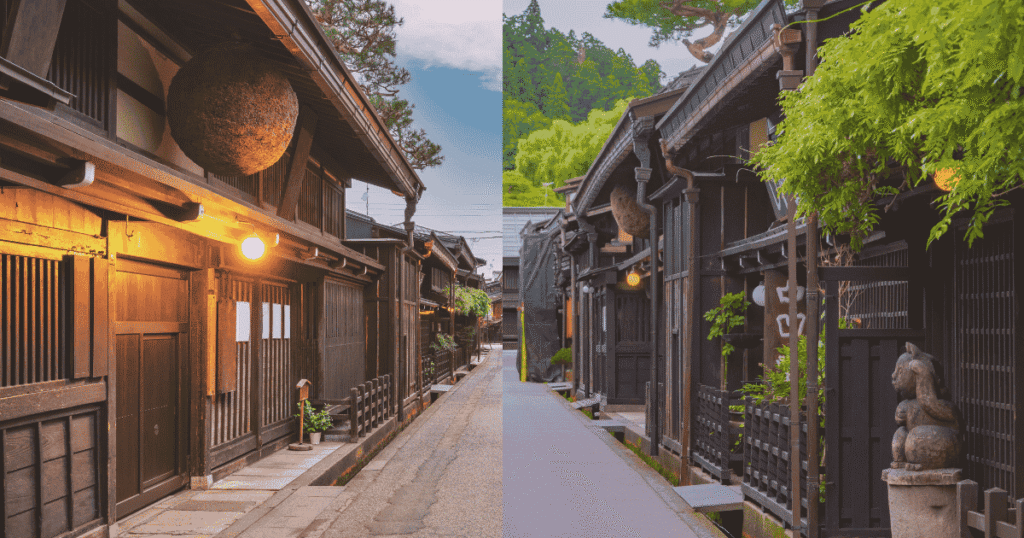
Most tourists leave the Old Town by 5:00 PM, moving to hotels or the downtown bar area. But for photographers, this is when the real magic begins.
The Blue Hour Time Travel
As the sun sets and the sky turns a deep blue, the yellow lanterns along the Old Town light up. The empty streets look exactly as they did 300 years ago. It feels like you have stepped back into the Edo period. To capture this beautiful silence, I recommend using a “fast lens” (a lens that works well in low light).
The Silent Morning (Summer Tip)
If you visit in the summer when the sun rises early, I highly recommend staying at a hotel near the Old Town. If you wake up early, you can have the entire street to yourself. It is so quiet that you can clearly hear the sound of the water flowing in the canals. This “exclusive” view of the empty streets is a special reward for early risers.
09. [Climate] From Frozen "Mohawks" to Morning Mist: Local Weather Lore
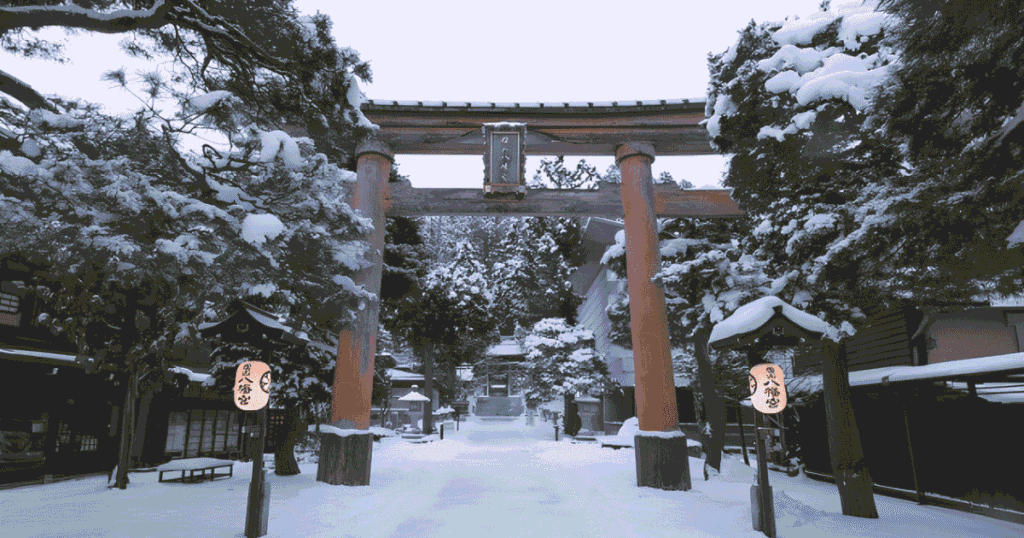
Takayama’s weather can be surprising because it is located in a basin surrounded by mountains. Here is what you need to know to stay comfortable.
The Winter “Mohawk” Look
Winter in Takayama is colder than you might imagine. On very cold days, the moisture from your breath rises and freezes on the top of your head. This creates a patch of white frost from your forehead to the crown of your head. Because only that part turns bright white, it looks like you are wearing a “White Mohawk”! However, don’t be too afraid—the temperature rarely drops below -10°C (14°F). If you wear enough layers and a good coat, you will be perfectly fine.
The Mystery of the Morning Mist
In the morning, the entire city is often covered in thick, white mist. If you see this, don’t be disappointed! This is a special phenomenon of the basin. Local people have a saying: “Morning mist means a sunny afternoon.” The mist is actually a sign that a beautiful, clear sky is waiting for you later in the day.
The Summer Heat Tip
Even though Takayama is high in the mountains, it is a basin, so summer can get very hot—sometimes over 30°C (86°F). To enjoy the Old Town without the heat, I highly recommend exploring in the early morning before the temperature rises.
10. [Activities] Choose Your Experience: Retro Games, Crafts, and Strategy
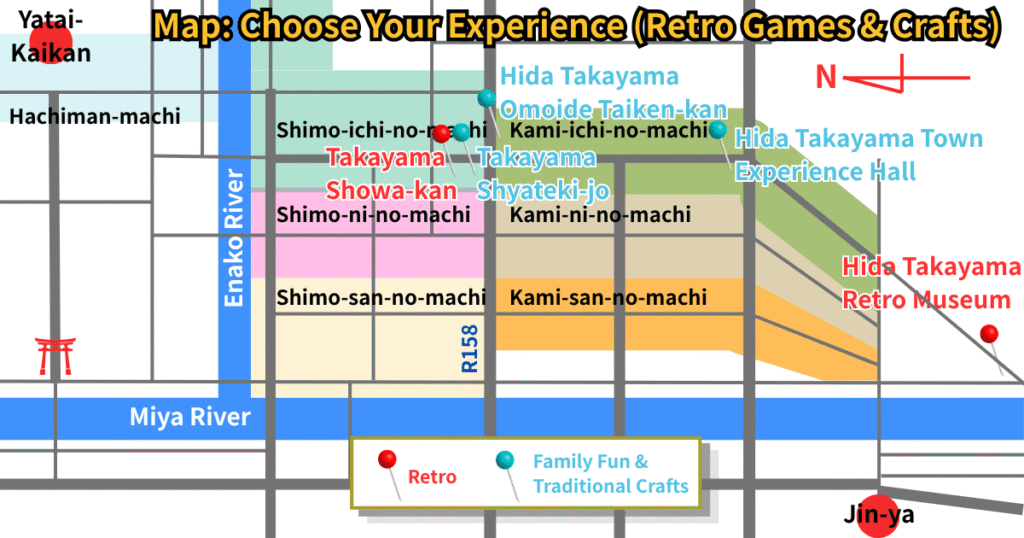
Takayama offers many ways to get “hands-on” with culture. Here is how to choose the best experience for your trip.
Family Fun & Traditional Crafts
For those traveling with family, I recommend two main activities:
- The Shooting Gallery (Shateki): Visit the “Takayama Shateki-jo” near the Old Town. You use a toy wooden gun to knock down prizes—it is a nostalgic Japanese game that everyone loves.
- Making a “Sarubobo”: You can make your own version of Takayama’s famous red charm at the “Hida Takayama Omoide Taiken-kan“ or the “Hida Takayama Town Experience Hall (Machi no Taiken Koryu-kan).” These are great places to create lasting memories.
The “Retro” Strategy:
Should you visit? Absolutely! Both “Takayama Showa-kan” and “Hida Takayama Retro Museum” are incredible places that transport you back to mid-20th century Japan. They are meticulously designed, fun, and offer a unique glimpse into the “Showa Era” that you won’t easily find elsewhere. I highly recommend them for anyone looking for a touch of Japanese nostalgia.
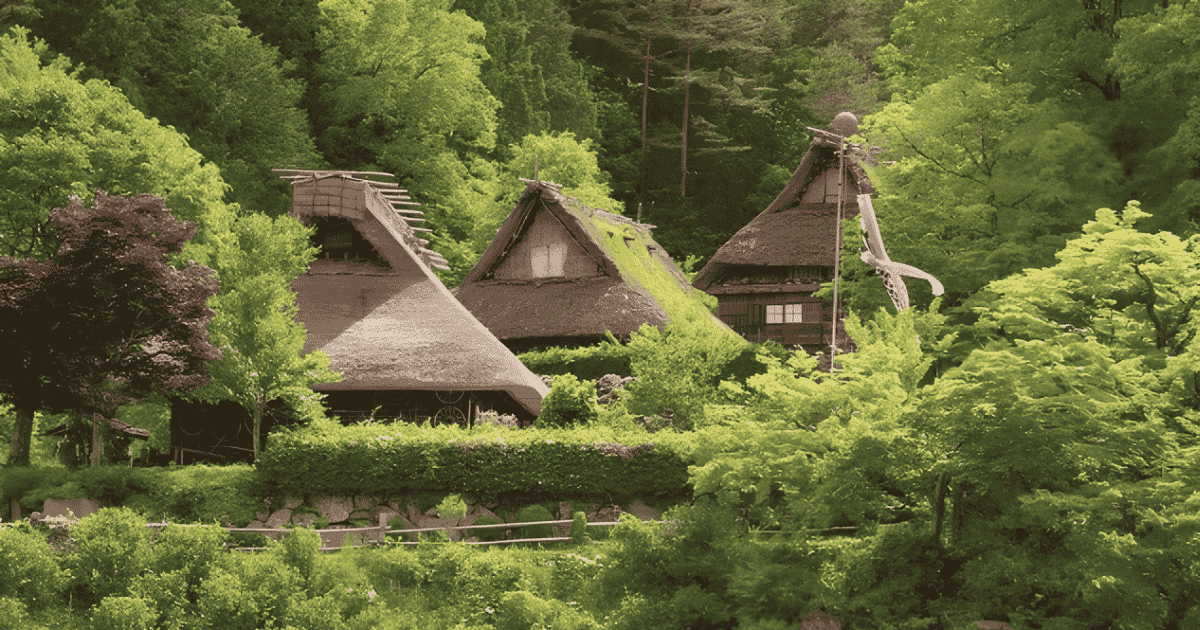
However, if you are on a tight schedule, here is my honest “traveler-to-traveler” advice: If you are already planning to visit (or have visited) the “Showa Daily Life Museum” in Aichi or the “Showa Town” in Oita, you might want to skip these. Instead, spend that time at “Hida no Sato” (Hida Folk Village) to see authentic Gassho-zukuri (thatched-roof) houses. Deciding what to “skip” will help you have a better trip!
11. [Festival] The Takayama Festival: Golden Floats and the Secret of "Kura-biraki"
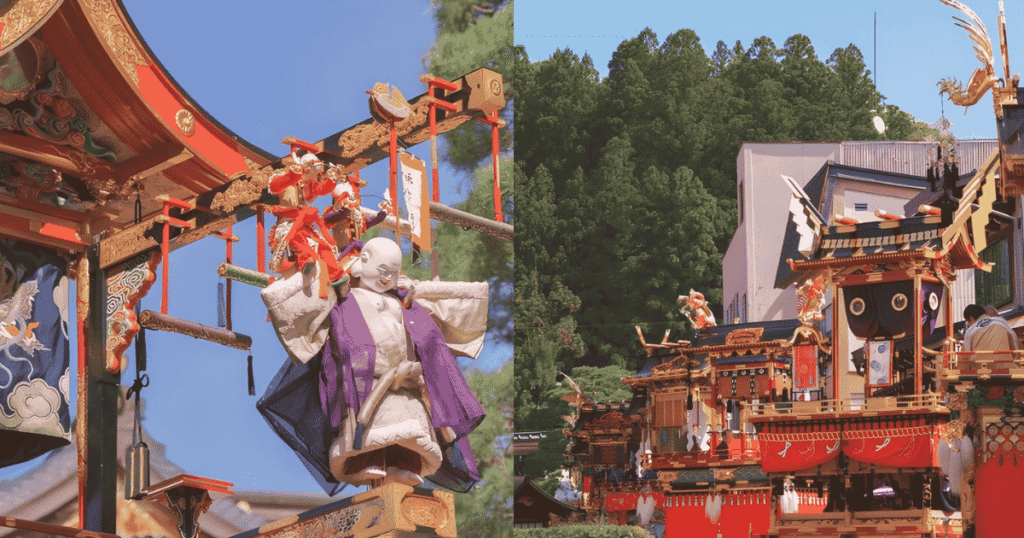
The Takayama Festival is held twice a year: April 14–15 (Spring) and October 9–10 (Autumn). It is ranked as one of the three most beautiful festivals in Japan.
Craftsmanship from Ancient Kyoto
The festival features magnificent floats called “Yatai.” These were built by the same legendary master craftsmen who supported the temple and shrine architecture of Kyoto. The golden carvings and complex details are breathtaking.
What if it Rains? The “Kura-biraki” Chance
The beautiful floats are very fragile, so the parade is canceled if it rains. But don’t worry! In that case, the owners open the doors of the “Kura” (traditional storehouses) scattered throughout the Old Town. This is called “Kura-biraki.” It is actually a rare opportunity to see the massive golden floats up close inside their storage rooms.
Important Tip: Know Your Location
The festival location changes by season, so please check the map carefully so you don’t go to the wrong side!
- Spring Festival: Held on the South side of Yasukawa Street.
- Autumn Festival: Held on the North side of Yasukawa Street.
12. [Atmosphere] The Sound of Welcome: The Heartbeat of Takayama
As you walk near the “Red Bridge” (Nakahashi) or the Jinya, you might suddenly hear the powerful, rhythmic sound of a drum.
Not a Festival, but a Welcome
This isn’t a street performance or a festival—it is the sound of the staff at “Honjin Hirano-ya Kofukan“ (the annex of a famous historic inn) welcoming their arriving guests. Even if you are not staying there, just hearing that heartbeat-like sound will make you feel the warm and welcoming spirit of Takayama.
A Secret Tip for Special Occasions
If you are traveling to celebrate a special occasion, like a birthday or anniversary, I highly recommend staying at this inn. Here is a local secret: Don’t tell your partner or family about the drum. Keep it a surprise! When you arrive and the powerful drum sounds just for you, it will become an unforgettable highlight of your trip.
Summary: Takayama Reveals its Authentic Side the More You Walk
How was your journey through this guide? While it may look like “just another old town” at first, Takayama is actually filled with traditions protected by local people and clever secrets to keep every traveler happy.
- Use the arcade as your base during rain or snow.
- Trust the morning mist—it is a promise that a sunny afternoon is coming.
- Follow the savory smells to find the true “Taste of Hida” hidden in the back alleys.
I hope this guide helps turn your sightseeing trip into a truly unforgettable experience. If you hear the powerful sound of a drum near the Jinya, remember: it is the heartbeat of the city welcoming you. Please, take a moment to stop and listen to that sound.
Ready to explore the Old Street? Check out our comprehensive guide on [Getting to Hida Takayama: A Complete Transport Guide] to find the smoothest way to start your adventure! Takayama is always waiting for you.