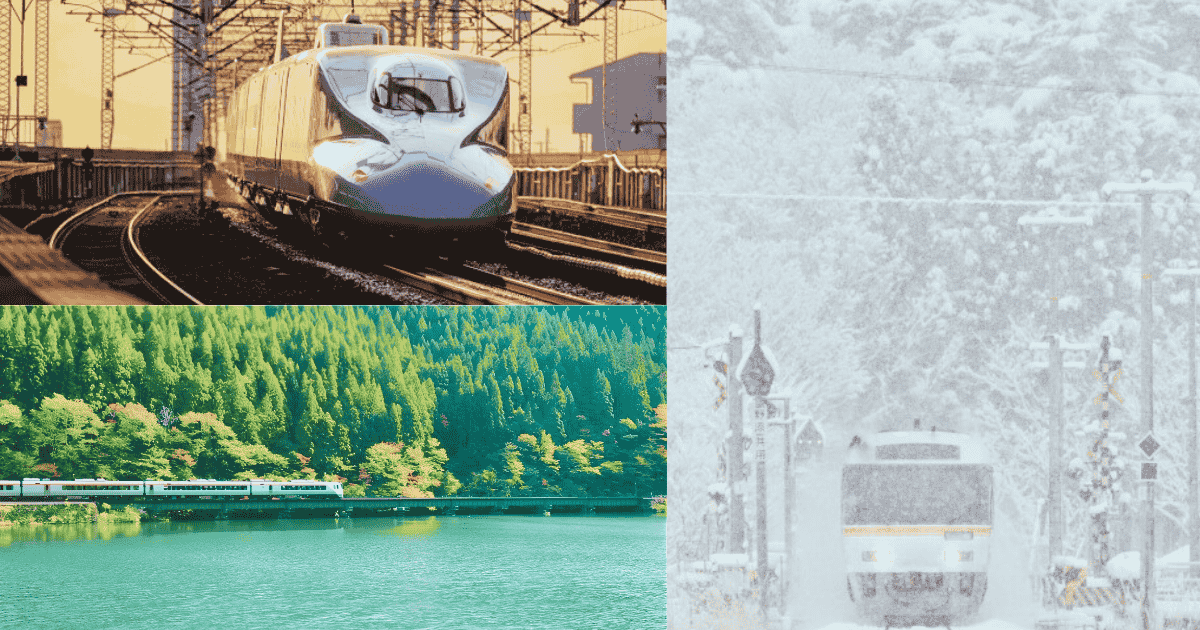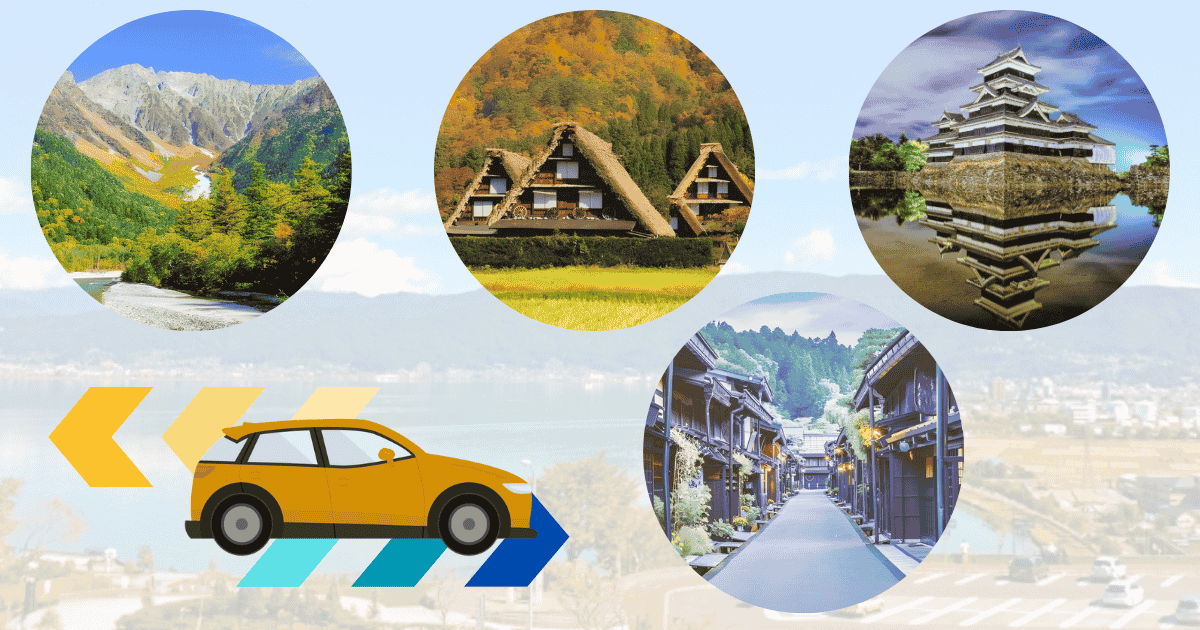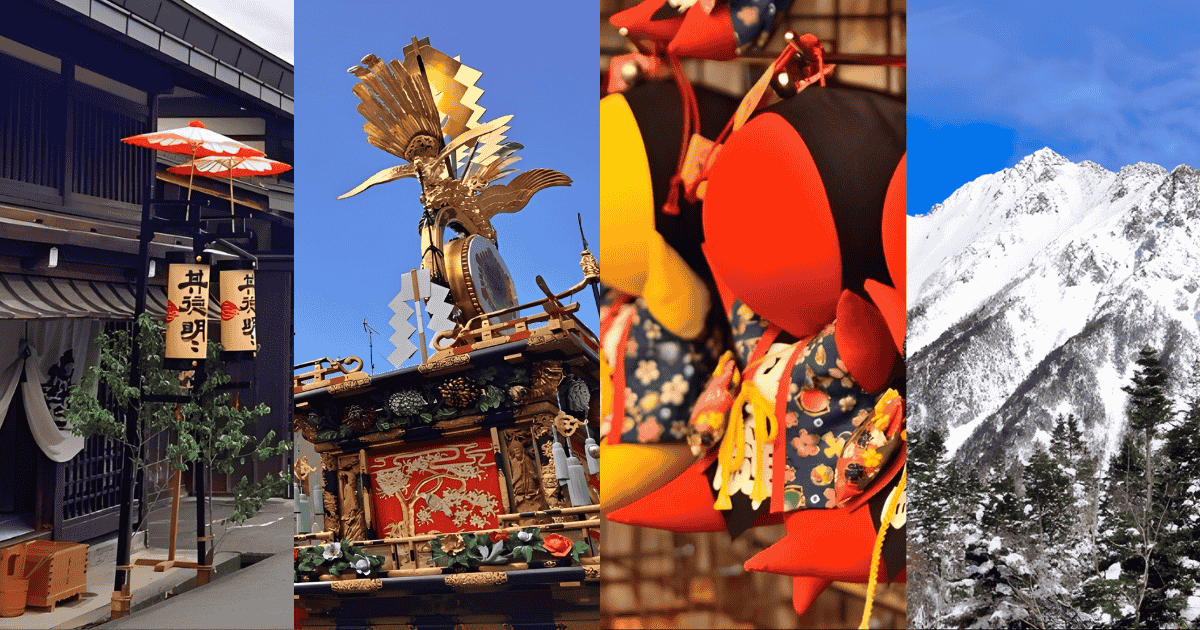
Many travelers think taking the Shinkansen or JR trains is the only way to visit the Japanese Alps. However, there is a “secret” that many locals know: the Highway Bus.
If you want to save money and avoid the stress of changing trains at busy stations, the bus is your best friend. In this guide, I will show you why taking a direct bus line from major cities like Tokyo (Shinjuku), Osaka, Kyoto, Nagoya, Toyama, or Kanazawa to Hida Takayama is a fantastic choice for international travelers.
Drawing from my past experience living in the Hida region, I will explain everything you need to know:
- No Transfers: How to get to Takayama by sitting in one comfortable seat.
- Cost Savings: Why the bus is much cheaper than the JR train (especially without a JR Pass!).
- Step-by-Step Booking: How to reserve your seat online in English.
- The “Service Area” Experience: How to enjoy beautiful views and local snacks during the long ride.
- Luggage Rules: Why the bus is easier for travelers with big suitcases.
Let’s find out if the Highway Bus is the perfect way for your adventure to the heart of Japan!
Table of Contents
Toggle1. Why Choose the Bus? (Pros & Cons)
Is the highway bus the best choice for your trip? While it is the “budget king” and offers the easiest luggage handling, the best transport method depends on your starting point and priorities.
[Read our Comparison Matrix & Diagnostic Chart] in the main guide to see how the bus compares to the train or a rental car.
In this guide, we will focus on the details of the bus routes and how to book them.
Direct Routes from Shinjuku – No Transfers Needed!
One of the most stressful parts of traveling in Japan is transferring between trains at huge stations like Nagoya.
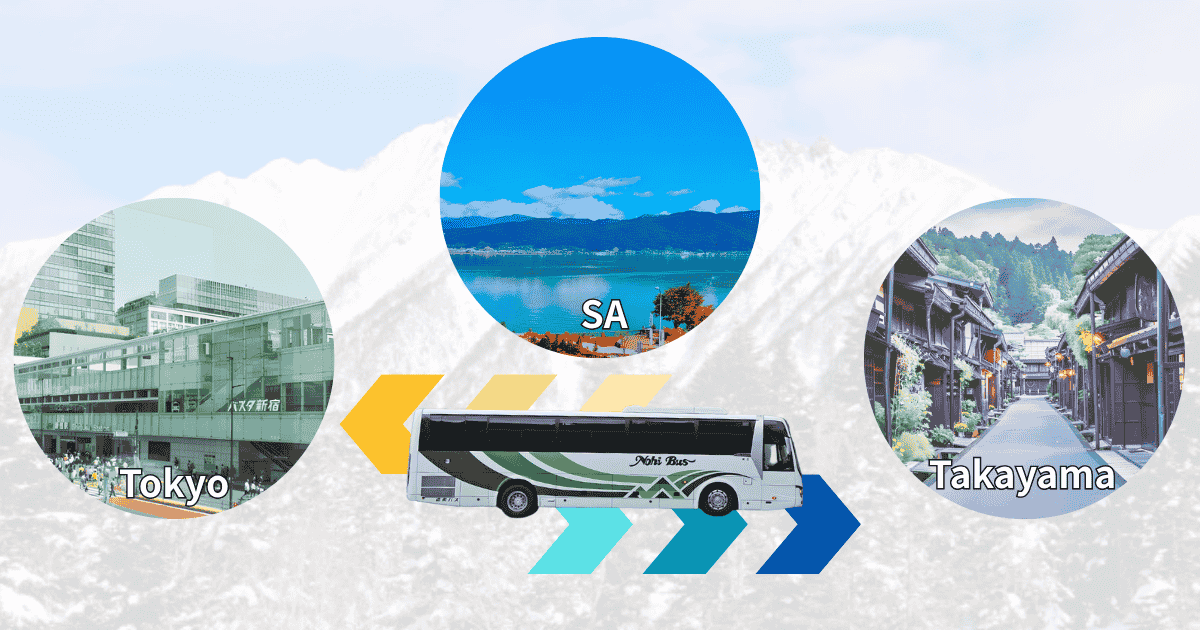
If you take the highway bus from Shinjuku Busta (the big bus terminal in Tokyo), you can go all the way to Takayama Nohi Bus Center in one go. You just put your big bags in the trunk, sit down, and relax. You can sleep, watch a movie, or look at the mountains until you arrive in the heart of Takayama. It’s that simple!
Cost Comparison: How Much Can You Save?
If you don’t have a JR Pass, the price difference is surprising. Let’s look at the average cost for a one-way trip from Tokyo to Takayama:
- JR Train (Shinkansen + Limited Express): Around ¥15,000 – ¥16,000
- Highway Bus: Around ¥7,000 – ¥9,000
You can save about ¥8,000 per person! That is enough money to enjoy a high-quality Hida Beef dinner or stay in a nicer hotel. If you are traveling as a family or a group, the savings are even bigger.
2. Major Bus Routes & Booking Platforms
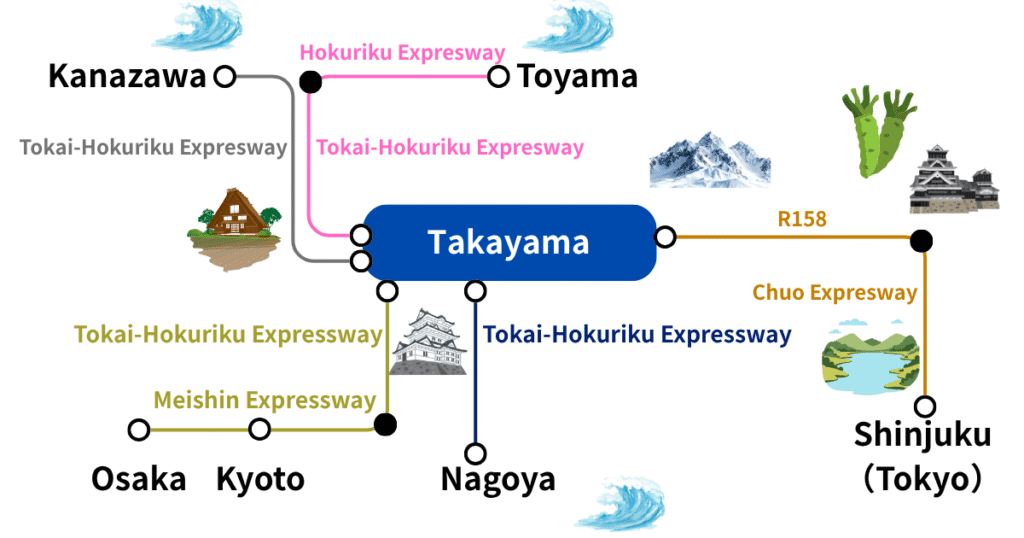
Booking a bus in a foreign country can feel scary, but it is actually very easy once you know which websites to trust. For the Tokyo-Takayama route, there are two options: Daytime buses and Overnight buses.
For Tokyo and Nagoya: The “Keio & Nohi Bus” Alliance
The most famous and popular bus is operated by two trusted companies: Keio Bus (from Tokyo) and Nohi Bus (from Takayama). They work together to give you a smooth experience.
- Departure Points:
- From Tokyo: Shinjuku Busta (4th Floor)
- From Nagoya: Meitetsu Bus Center (3rd Floor, Gate 7)
- Arrival Point: Takayama Nohi Bus Center (right next to JR Takayama Station)
- Frequency: There is a bus almost every hour during the day.
Where to Book? The best website for English speakers is “https://highway-buses.jp/“. This is the official booking site for Keio and Nohi Bus. It is safe, easy to use, and you can see all the departure times clearly.
Overnight Bus: Saving a Night on Accommodation
If you are traveling from Tokyo and want to save both time and money, consider the Overnight Bus. It leaves Shinjuku around 11:00 PM and arrives in Takayama early the next morning (around 5:00 AM).
- Pros: You don’t have to pay for a hotel for one night, and you can start exploring Takayama as soon as the sun comes up!
- Cons: It can be hard to sleep if you are not used to traveling on a bus.
- Important: Check the 2026 Schedule! Overnight buses do not run every day throughout the year. For 2026, they are only available during the following periods:
- Spring: April 13 – April 14, and April 24 – May 5.
- Summer & Autumn: Every day from July 10 to October 10.
Please check the official booking website for the latest seat availability.
For Osaka, Kyoto, Kanazawa, and Toyama: Trusted Booking Site
Booking through the partner website used by Nohi Bus is safe and reliable.
- Departure Points:
- From Osaka: Osaka Station Bus Stop (Higashi-Umeda)
- From Kyoto: Kyoto Station Bus Stop (Hachijo-guchi Exit)
- From Kanazawa: Kanazawa Station Bus Stop
- From Toyama: Toyama Station Bus Stop
- Arrival Point: Takayama Nohi Bus Center (right next to JR Takayama Station)
- Frequency: There is a bus almost every hour during the day.
- Where to Book? :The best website for English speakers is “https://japanbusonline.com/en“. This is the official partner site used by Nohi Bus and other major bus companies in this region.
How to Book Your Seat: The Online Process
Here is a quick guide to booking your bus online. The process is simple:
- Search & Enter Details: Choose your departure point, destination (Takayama), and travel date. You will also need to enter the number of passengers and your personal information.
- Select Your Seat:
- Tip: Choose a window seat for the best views!
- On highway-buses.jp: You can choose your preference, such as a window or aisle seat, or the front or back of the bus.
- On japanbusonline.com: You can pick a specific seat from the seat map (Available for new bookings only).
- Payment: Pay online using a Credit Card (VISA, Master, Diners, AMEX, etc.). After payment, you will receive an email with your booking details.
- Boarding (Go Paperless!):
- For Highway-buses.jp: Click the link in your email and show the screen to the bus driver.
- For Japanbusonline.com: Your ticket will be issued in your “My Page” 2 hours before your bus leaves.
Important Tip on Cancellations: You can cancel your booking online, but there is usually a small fee (around ¥100–¥500). Please check the rules when you book, as there are time limits for cancellations. If you miss the bus, you cannot get a refund, so please arrive at the terminal at least 15 minutes early!
3. The "Bus Stop Experience": Departure Points & Takayama Terminal
The journey starts and ends at two very different places. You will begin at a huge, modern terminal in the city or a bus stop near a busy station. Your journey ends at a cozy station surrounded by the fresh air and beautiful mountains of the countryside.
Navigating Your Departure Point
Tokyo: Surviving Shinjuku Busta (The World’s Busiest Terminal)
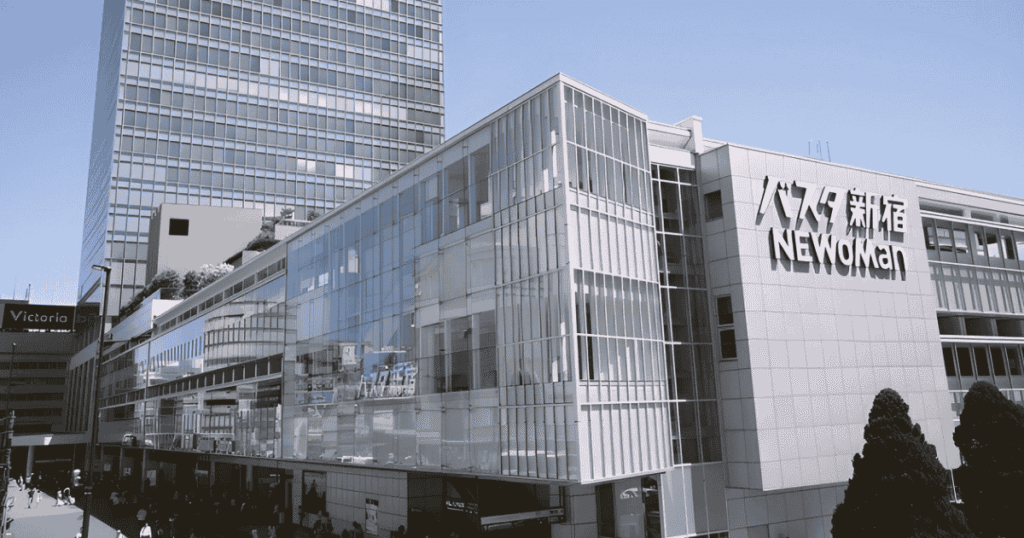
“Busta Shinjuku” is located directly above Shinjuku Station. It is very clean and modern, but it can be very crowded! Here are three tips to help you:
- Go to the 4th Floor: All highway buses depart from the 4th floor. Take the elevator or escalator directly to the top level.
- If you are arriving by JR: Use the Shinnami Gate, which is directly connected to the 2nd floor of Busta Shinjuku. Be careful not to confuse it with the “South Gate.”
- Check the Big Screen: Look at the massive electronic board to find “Takayama” and your departure time. It will show your departure time and your Gate Number (for example, Gate B4 or B5).
- Buy Snacks Early: There is a convenience store (Daily Yamazaki) near the waiting area on the 4th floor. However, it can be very busy, and you might have to wait for 15 minutes or more. I recommend buying your drinks and sandwiches at a shop before you enter the terminal building.
Nagoya: Navigating Meitetsu Bus Center
“Meitetsu Bus Center” is located adjacent to JR Nagoya Station. Departure floors are split between the 3rd and 4th levels, and it can get very crowded! Here are three tips to help you navigate it smoothly:
- Go to the 3rd Floor: Highway buses for Takayama depart from the 3rd floor. Take the elevator or escalator directly to that level.
- Buy Snacks First: There is a convenience store on the 3rd floor, but it can be very busy at certain times. I recommend buying your drinks and sandwiches at a shop before you enter the bus center.
- Find Gate 7: Your bus will depart from Gate 7 (Bus Stop No. 7), which is located near the convenience store.
Departing from Bus Stops Near the Station
If you are starting from Osaka, Kyoto, Kanazawa, or Toyama, you will use a bus stop located right in front of or very close to the station. Since booking websites often link to Google Maps, please check the location in advance so you don’t arrive late!
- Osaka: Use the Osaka Station Bus Stop located near Exit 7 of the underground passage.
- Kyoto: Use Bus Stop F3 in front of the Kyoto Station Hachijo-guchi Exit.
- Kanazawa: Use Bus Stop No. 4 at the Kanazawa Station West Exit.
- Toyama: Use Bus Stop No. 1 at the Toyama Station South Exit.
Arriving at Takayama Nohi Bus Center: Next Steps
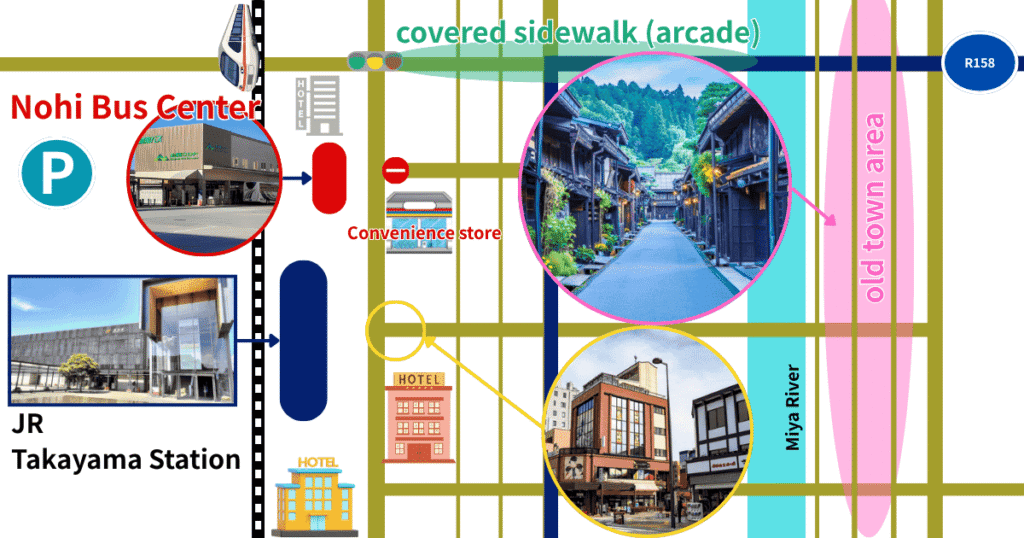
When you arrive in Takayama, you will step off the bus at the Nohi Bus Center. It is located right next to JR Takayama Station, so it is very convenient!
- Arriving Early in the Morning: If you take the overnight bus, you will arrive around 5:00 AM. This is too early to check into your hotel. Nearby cafes don’t open until 7:30 AM, and the famous morning markets start around 7:00 AM (or 8:00 AM in winter).
- What to do? You can leave your luggage in the coin lockers at the bus center or the train station and explore the quiet city. Visit JR Takayama Station (which opens for the first train after 5:00 AM) to see models of festival floats and traditional woodworking. It is also a great time to take photos of the Old Town without any crowds!
- Information Desks: The staff at the ticket counter speak English. There is also a Tour Desk for sightseeing info and tours. You can buy bus tickets here for your next trip to Shirakawa-go or nearby hot springs and mountain areas.
- Hida Takayama Tourist Information Office: For even more local details, visit the office located between the bus center and JR Takayama Station. It is usually open from 8:30 AM to 5:00 PM.
- Walking to the Old Town: The famous “Sanmachi” (Old Town) is about a 15-minute walk from the terminal. Exit the station’s East Entrance and walk straight, cross the river, and the second street will be the Old Town.
- Rainy or Snowy Day Tip: If it’s raining or snowing, don’t walk straight. Instead, turn left from the East Entrance and take the second street. This street has a covered sidewalk (arcade) that goes all the way to the river, helping you stay dry!
- Note: The roof is interrupted at intersections, so keep your umbrella handy. In winter, this route is especially helpful because other roads can have deep snow, making it difficult to pull heavy suitcases.
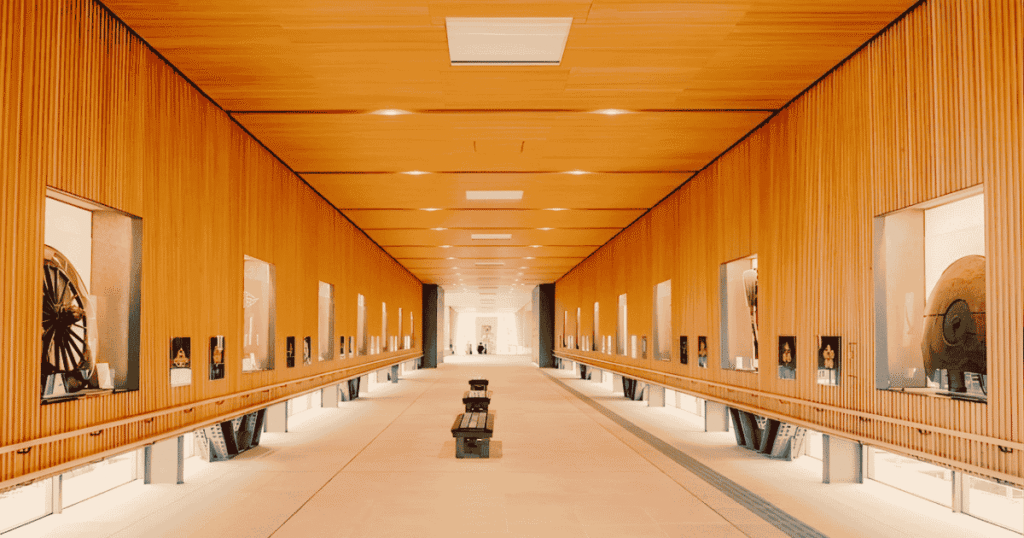
The East-West public walkway at JR Takayama Station.
4. Comfort on Board: Tips for the Long Ride
Taking the highway bus takes time, but don’t worry! With a little preparation, your bus ride can become a fun part of your adventure.
Restroom Breaks & Scenic Service Areas (SA)
You don’t have to stay on the bus the whole time. The bus usually stops two or three times at “Service Areas” (large rest stops).
- The Highlight: Lake Suwa SA: If you are departing from Tokyo, this is the best stop! You can see a beautiful view of Lake Suwa from the hill. It is the perfect place to take photos and stretch your legs.
- Local Snacks: Service areas have amazing food that you can only find there. Try some fresh Oyaki (steamed buns with vegetables) or local ice cream.
- Time Limit: Be careful! The break is usually only 10 minutes. Make sure you remember your bus’s number and return quickly so the bus doesn’t leave without you!
On-Board Amenities: Wi-Fi, Outlets, and Reclining Seats
Most highway buses are equipped with modern features to keep you comfortable. You can check the specific amenities for your bus when you book.
- Stay Connected: There is free Wi-Fi and a power outlet (or USB port) at every seat. You can watch movies or plan your Takayama itinerary without losing battery.
- Note: The internet connection may drop when the bus passes through tunnels or deep mountains.
- Relax: Most seats can recline, so you can sit back and rest.
- What to Bring: I recommend bringing a light jacket or scarf (the air conditioning can be cold) and your own headphones.
Dealing with Motion Sickness: Route Conditions & Tips
Most of the way to Takayama is on the highway. When coming from Tokyo, you’ll pass through the beautiful Japanese Alps. Thanks to long tunnels that cut through the peaks, you don’t need to cross any steep mountain passes, though the road still has several curves as it winds through the mountains.
- For Sensitive Travelers: On the Tokyo route, the last 1 to 2 hours before arriving in Takayama will be on curvy roads. If you get motion sickness easily, try to book a seat in the middle or front of the bus. It shakes less than the back.
- Medicine: You can buy motion sickness medicine at any drugstore before you leave.
- On-Board Restroom: Most buses have a small restroom at the back, so you can feel safe even between the service area stops. You can confirm if your bus has a restroom on the booking screen.
5. Large Luggage Policies: Why the Bus is the Best Choice
For many travelers, the biggest stress in Japan is moving with a giant suitcase. While trains have strict rules and limited space, the Highway Bus is much easier.
Trunk Space Rules: Size and Weight Limits
When you travel by bus, you don’t have to carry your heavy bags up to the seat. You can put them in the large trunk under the bus.
- The Rule: Generally, you can check one large suitcase per person for free (the total of length, width, and height should be between 120cm and 155cm).
- Size & Weight: Most companies allow bags up to 30kg. A standard large suitcase will fit perfectly.
- Valuables: Keep your passport, money, and electronics in a small “carry-on” bag to take with you to your seat. The driver will help you put your big bag in the trunk and give you a luggage tag.
- Important Note: Luggage rules may change depending on the bus. If your bag is very large, consider using a delivery service (Takkyubin) to send it to your hotel, or check with the bus company in advance.
“Door-to-Door” Ease Compared to Train Station Stairs
Huge stations in Tokyo, Osaka, or Nagoya have many stairs and long hallways. Even if you use an elevator, walking for 15 minutes with a heavy bag to find your platform is exhausting!
With the bus, the experience is almost “door-to-door”:
- You arrive at the bus terminal.
- You give your bag to the driver at the gate.
- You sit down and relax.
- When you arrive in Takayama, your bag is waiting for you right outside the bus. No stairs, no long walks, and no stress!
6. Summary: Is the Highway Bus Right for Your Trip?
The Highway Bus is a fantastic way to reach the Japanese Alps. But is it the right choice for you?
Choose the Bus if:
- You want to save money: It is about half the price of the train!
- You want a direct trip: You can sit back and relax without changing trains.
- You have large luggage: It’s much easier to avoid stairs and crowded stations.
Choose the Train if:
- You are in a hurry: The train is the fastest way to travel.
- You have a JR Pass: It’s a great choice if your pass covers the whole trip.
- You get very motion-sick: Trains are more stable on mountain roads.
The Highway Bus offers a relaxing, affordable, and scenic journey to the heart of Hida. Are you ready to see the beautiful mountains from your window?
Still Deciding on Your Transport?
If you want to compare other ways to get to Takayama, check out our other deep-dive guides:
Back to the Main Guide: Not sure if this is the right route for you? Go back to our [How to Get to Takayama (2026): The Ultimate Transport Guide] to compare all transport methods at a glance.