Are you wondering, “What is Goshuin?” and how to begin your spiritual journey in Japan? If so, you have found the right place. In this guide, you will discover the sacred world of seals and explore the Ultimate Enoshima-Kamakura Seven Gods Tour.
Are you planning a visit to Kamakura and Enoshima? Perhaps you are tired of the usual tourist routes. If so, it is time to discover the Goshuin. This is a unique spiritual souvenir. You can embark on an adventure known as the Enoshima-Kamakura Seven Lucky Gods Stamp Tour. This journey is more than just collecting stamps. Actually, it is a sacred pilgrimage dedicated to the Shichifukujin (Seven Lucky Gods). This guide focuses on the Seven Gods Tour, which is a locally cherished way to visit these deities.
This pilgrimage offers a deep dive into Japanese culture and faith. In this guide, we will explain the spiritual significance of Goshuin, why this specific tour includes eight sacred seals for seven deities, and the most efficient route to complete your journey through this stunning coastal region.
Table of Contents
Toggle1. What Exactly is a Goshuin?
More Than Just a Souvenir: The Spiritual Significance
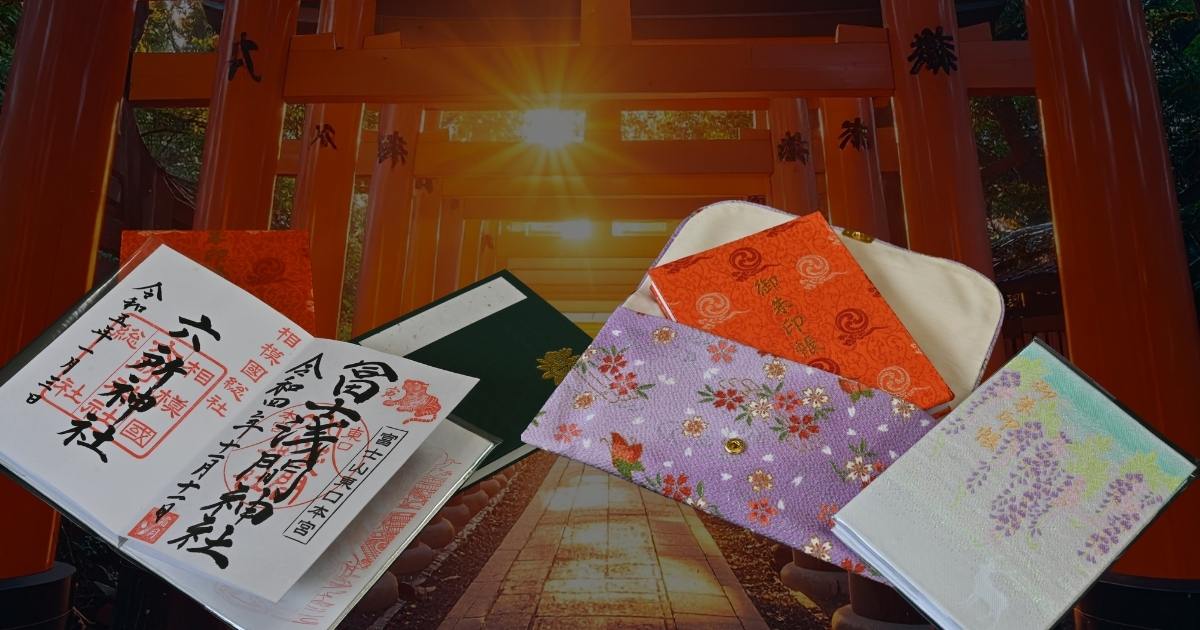
A Goshuin is an official “proof of worship.” It is definitely not a casual stamp. You receive it in exchange for a small offering. This fee is called hatsuhōryō. Basically, it is a unique piece of art. It features the temple or shrine’s seal. Additionally, it has beautiful, hand-drawn calligraphy. This writing shows the deity’s name and the date of your visit. It is considered a direct connection to the spiritual power of the place. Therefore, it is a profound record of your pilgrimage.
This YouTube video by Suzi Curran does a great job of explaining exactly what Goshuin are.
Choose Your Format: Goshuincho (Stamp Book) vs. Special Shikishi (Art Board)
Once you begin your pilgrimage to the Seven Gods, there are two main places to receive goshuin stamps. Both are wonderful, but each has a different purpose.
- Goshuincho (Shrine Stamp Book): A goshuincho is like a soul passport. It is specially designed for collecting goshuin. Unlike typical souvenirs, this book serves as a chronological record and covers your entire trip to Japan. It is filled with unique artwork from each temple and shrine you visit. If you are planning to visit various cities in Japan, we highly recommend purchasing one.
- Special Shikishi (square paper-board): For this specific Seven Lucky Gods pilgrimage, many choose a Special Shikishi. This is a sturdy, decorative board that allows you to collect all eight seals on a single surface. Unlike a book, you can frame the finished Shikishi and display it on your wall as a beautiful piece of Japanese art—a perfect memento of your spiritual journey.

This year’s colored paper design can be seen on the official website of the Kamakura Enoshima Seven Lucky Gods Association .
Goshuin Etiquette: How to Request and Receive Your Stamp
Receiving a Goshuin requires a small amount of respectful etiquette. First, you must locate the Nokyosho (office for dedications) or Shamusho (shrine office). Next, hand your Goshuin book (open to the correct page) or your shikishi to the clerk. Then, prepare the fee. This is usually ¥300 to ¥500. After that, wait quietly. The priest or staff will carefully craft your seal. Once you receive it back, offer a polite thank you. You should say “Arigatou gozaimasu” (Thank you very much).
2. Meet the Seven Lucky Gods (Shichifukujin) of Japan
Who are the Seven Lucky Gods? (Shichifukujin History)
The Shichifukujin are a cheerful group of deities. People believe they grant good fortune. They are unique because they are an eclectic mix. They originate from three different cultures:
- Japan: Ebisu
- India (Buddhism): Daikokuten, Bishamonten, and Benzaiten
- China (Taoism/Folk Religion): Hotei, Jurōjin, and Fukurokuju They are said to arrive together on the Takarabune (Treasure Ship). Their goal is to grant wishes for prosperity, health, and happiness.
Guide to the 7 Deities: Meaning and Blessings
- Ebisu (夷尊神): He is the only god of Japanese origin. He specializes in business prosperity and fishing.
- Daikokuten (大黒天): He is the god of wealth, harvest, and the kitchen. (Origin: India)
- Bishamonten (毘沙門天): He is the god of warfare and victory. He protects the faithful. (Origin: India)
- Benzaiten (弁財天): She is the goddess of water, music, arts, and money. (Origin: India)
- Fukurokuju (福禄寿): He is the god of long life, wisdom, and happiness. (Origin: China)
- Jurōjin (寿老人): He is also a god of longevity. He is often seen with a deer. (Origin: China)
- Hotei (布袋尊): He is the pot-bellied god of contentment and family harmony. (Origin: China)
3. The Essential Enoshima-Kamakura Seven Lucky Gods Tour
Why This Pilgrimage? Unique Seals and Tradition
The Kamakura-Enoshima Seven Lucky Gods Tour is a locally cherished pilgrimage. It is particularly popular as a New Year’s tradition. People seek good fortune for the year ahead. Note that dedicated shikishi paper boards often feature new designs in January. Thus, this encourages an annual pilgrimage.
- Why are there 8 stops for 7 gods?: Although there are only Seven Lucky Gods, this pilgrimage consists of eight locations. This is because Benzaiten, the goddess of music and fortune, is enshrined at two different sites: Enoshima Shrine and Tsurugaoka Hachimangu. To complete the set, you will need to visit both.
- Pilgrimage Completion: Collecting all eight seals completes the design on the board. This marks the successful end of your journey.
- The Ultimate Keepsake: For this tour, you can purchase exclusive paper boards (shikishi). These cost between ¥500 and ¥1,000. You can buy the board at any of the eight locations. However, designs vary. Some locations may have limited stock. Therefore, it is recommended to call ahead for specific designs. Having the finished board at home is a beautiful memory. As mentioned before, framing this board makes it a perfect piece of home decor. It is a unique conversation starter for visitors. It ensures your spiritual adventure is never forgotten.
The Eight Sacred Stops: Temples and Shrines of the Pilgrimage
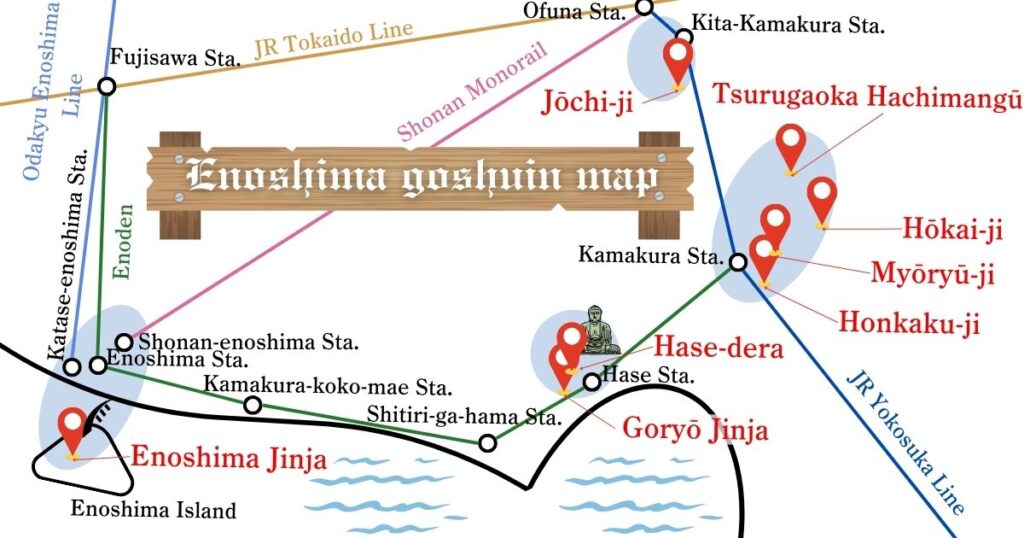
Here are the eight indispensable stops. Please note that fees and hours vary. Thus, careful planning is essential.
- Stop1: Jōchi-ji (Temple)
- Deity: Hotei
- Key Feature: Large Hotei statue. Rub his belly.Famous for stunning ginkgo leaves and a “yellow carpet” of fallen leaves (Best from late Nov to early Dec).
- Operating Hours (Approx.): 9:00 AM – 4:30 PM
- Goshuin Fee (Approx.): ¥500
- Stop2: Tsurugaoka Hachimangū (Shrine)
- Deity: Benzaiten
- Key Feature: Located in the Genpei Pond.Famous for winter peonies (Jan–Mar) and stunning cherry blossoms (late Mar to early Apr).
- Operating Hours (Approx.): 6:00 AM – 8:00 PM
- Goshuin Fee (Approx.): ¥500
- Stop3: Hōkai-ji (Temple)
- Deity: Bishamonten
- Key Feature: Known as the “Temple of Hagi.”(Best from mid-to-late September)
- Operating Hours (Approx.): 9:30 AM – 4:00 PM
- Goshuin Fee (Approx.): ¥500
- Stop4: Myōryū-ji (Temple)
- Deity: Jurōjin
- Key Feature: A quiet temple for longevity.
- Operating Hours (Approx.): 10:00 AM – 4:00 PM
- Goshuin Fee (Approx.): ¥500
- Stop5: Honkaku-ji (Temple)
- Deity: Ebisu
- Key Feature: Site of Yoritomo’s mansion
- Operating Hours (Approx.): 9:00 AM – 4:00 PM
- Goshuin Fee (Approx.): ¥500
- Stop6: Hase-dera (Temple)
- Deity: Daikokuten
- Key Feature: Famous for hydrangeas(Best from early to late June).
- Operating Hours (Approx.): 8:00 AM – 4:30 PM
- Goshuin Fee (Approx.): ¥500
- Stop7: Goryō Jinja (Shrine)
- Deity: Fukurokuju
- Key Feature: Train passes in front of the gate, and famous for hydrangeas(Best from early to late June).
- Operating Hours (Approx.): 9:00 AM – 5:00 PM
- Goshuin Fee (Approx.): ¥500
- Stop8: Enoshima Jinja (Shrine)
- Deity: Benzaiten
- Key Feature: Located on Enoshima Island.Famous for summer and winter illumination events, and colorful tulips from late December to late January.
- Operating Hours (Approx.): 9:00 AM – 5:00 PM
- Goshuin Fee (Approx.): ¥300
Note: Furthermore, you may also need to pay an admission fee (200 to 400 yen) to enter the temple grounds or view the main halls at some stops.
The Best Route: How to Complete the Goshuin Tour Efficiently
The most efficient route starts in the north. Then, it moves south. You should use the Enoden train for the final legs.
- Start: Go to Kita-Kamakura Station (JR) for Jōchi-ji.
- Kamakura Central: Walk to Tsurugaoka Hachimangū, Hōkai-ji, Myōryū-ji, and Honkaku-ji.
- Hase Area: Take the Enoden train to Hase Station. Visit Hase-dera and Goryō Jinja.
- Enoshima: Take the Enoden to Enoshima Station. Walk to Enoshima Jinja.
Time Commitment & Practical Travel Advice
How Long Does the Pilgrimage Take? The entire route takes approximately 7.5 hours. This is a very tight schedule that leaves little time for photography, relaxed meals, or exploring temple grounds. You should also account for potential waiting times at Goshuin offices.
Depending on your pace, we recommend one of the following approaches:
The One-Day “Power” Tour: If you want to complete the tour in a single day, efficiency is key. We highly recommend the Enoden One-Day Pass (Noriorikun) for about ¥800. This allows unlimited travel between Kamakura, Hase, and Enoshima, saving you both money and the time spent buying individual tickets.
The Two-Day Relaxed Tour (Highly Recommended): To truly enjoy the scenery and local cafes, consider splitting the journey into two days. This allows you to visit major landmarks like the Great Buddha or the Enoshima Sea Candle without rushing. For this option, using a rechargeable IC card (like Suica or PASMO) is the most convenient way to pay for transport.
- Be aware of the Route Limits: Please note that this specific Goshuin route focuses on central Kamakura, Hase, and Enoshima. As a result, it does not naturally include other famous sites. For example, it misses the Zeniarai Benzaiten (West of Kamakura Station) and Hōkoku-ji (famous for the bamboo grove on Kinza-kaidō). It also does not include the Zaimokuza area. If you wish to visit these highly popular locations, you will definitely need to adjust your itinerary. In fact, you might need to dedicate three full days to the region to see everything properly.
4. Practical Tips for Your Goshuin Pilgrimage and Day Trip
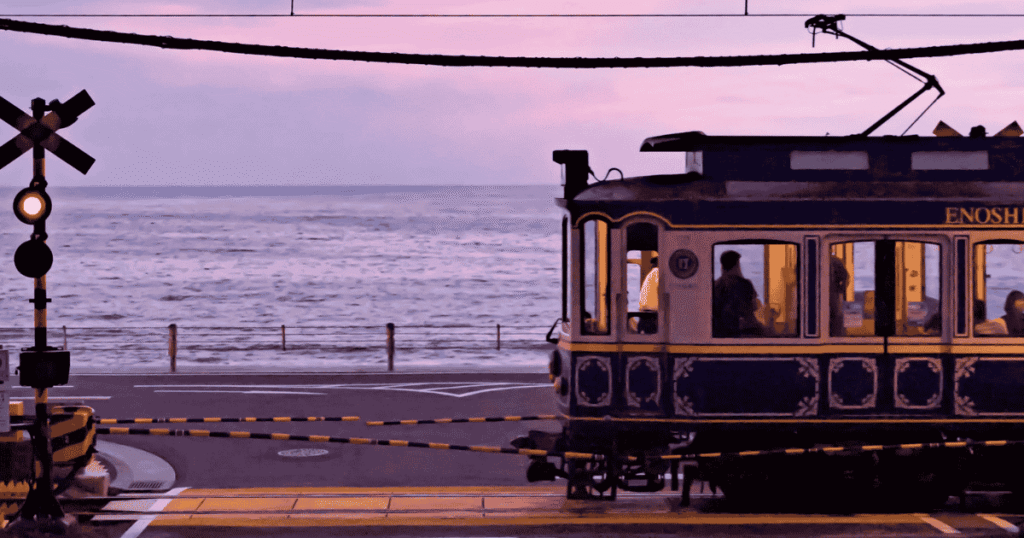
Access: Transportation Guide to Enoshima and Kamakura
Your main transport will be the JR Yokosuka Line and the Enoden Railway. For detailed tips from Tokyo, please see our other guides:
Where to Refuel: Top Local Cafes and Restaurants
Don’t forget to reward yourself! You should look for the famous Tako Senbei (Giant Octopus Crackers) at Asahi Honten on Enoshima. In Kamakura, try traditional sweets near the station. Also, you can check out a trendy spot like LONCAFE on Enoshima for a great view.
Beyond the Stamps: Other Must-See Spots Nearby
Combine your pilgrimage with these famous sights:
- The Great Buddha of Kamakura (Kōtoku-in) in the Hase area.
- The panoramic views from the Enoshima Sea Candle.
- The mystical Enoshima Iwaya Caves at the far end of the island.
5. Conclusion
Collecting Goshuin on the Enoshima-Kamakura Seven Gods Tour is a profoundly rewarding way to experience the spiritual and historical depth of this region. By following our guide, you are well-equipped to navigate the eight sacred sites for the ultimate experience. You will collect your unique, personalized keepsake while walking through Japan’s most beautiful landscapes. Whether you choose to power through in one day or take a relaxed two-day approach, you will leave with a greater understanding of Japanese fortune and a beautifully crafted board to commemorate your pilgrimage. Start your quest for luck today!
6. FAQ: Enoshima and Kamakura Goshuin Details
How can I find the Enoshima goshuin map?
You can find the map on the official Seven Lucky Gods association website. Additionally, many of the Enoshima goshuin temples provide free pamphlets or guidance signs that will help you navigate between the eight sacred sites.
What is the Enoshima goshuin history?
The history is linked to ancient Buddhist and Shinto traditions. Pilgrims have visited these sites for centuries. Today, collecting these seals on a board to display at home is a popular way to keep the tradition alive.
Can I get a Kamakura goshuin in my own Goshuin book?
Yes, you certainly can. Most temples offer stamps for your personal book. However, if you want to display your progress as a single piece of art, we recommend the special shikishi board instead.